




Stationery Scissors OEM: Quality, Design, and Sourcing Guidance
Stationery scissors may look simple, but for distributors, office supply brands, promotional product buyers, and retail sourcing teams, they involve many product decisions. An OEM stationery scissors project can include blade material, handle shape, color matching, packaging, logo placement, carton requirements, and quality inspection standards. The right choices help create a product that is comfortable to use, consistent in production, and suitable for its intended sales channel.
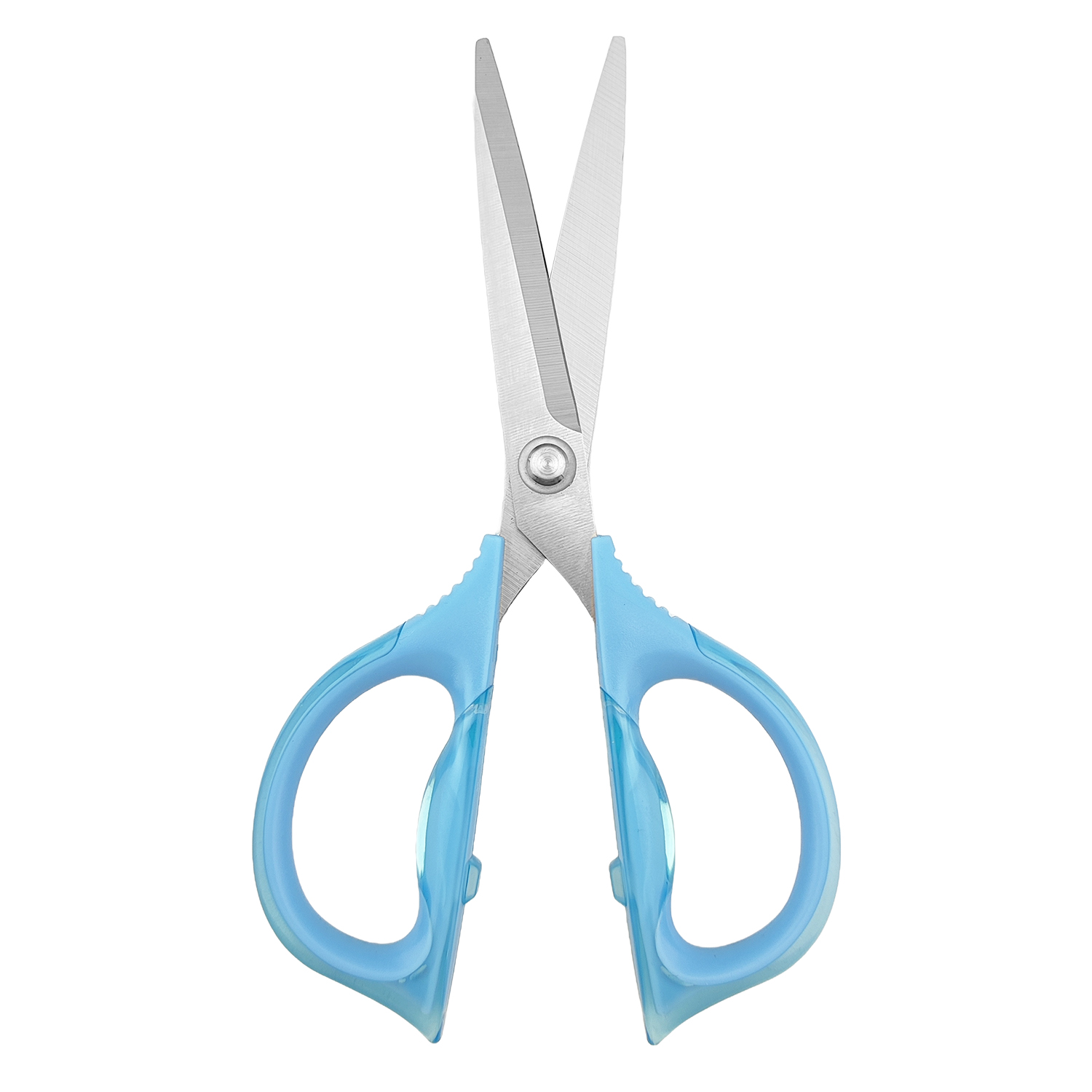
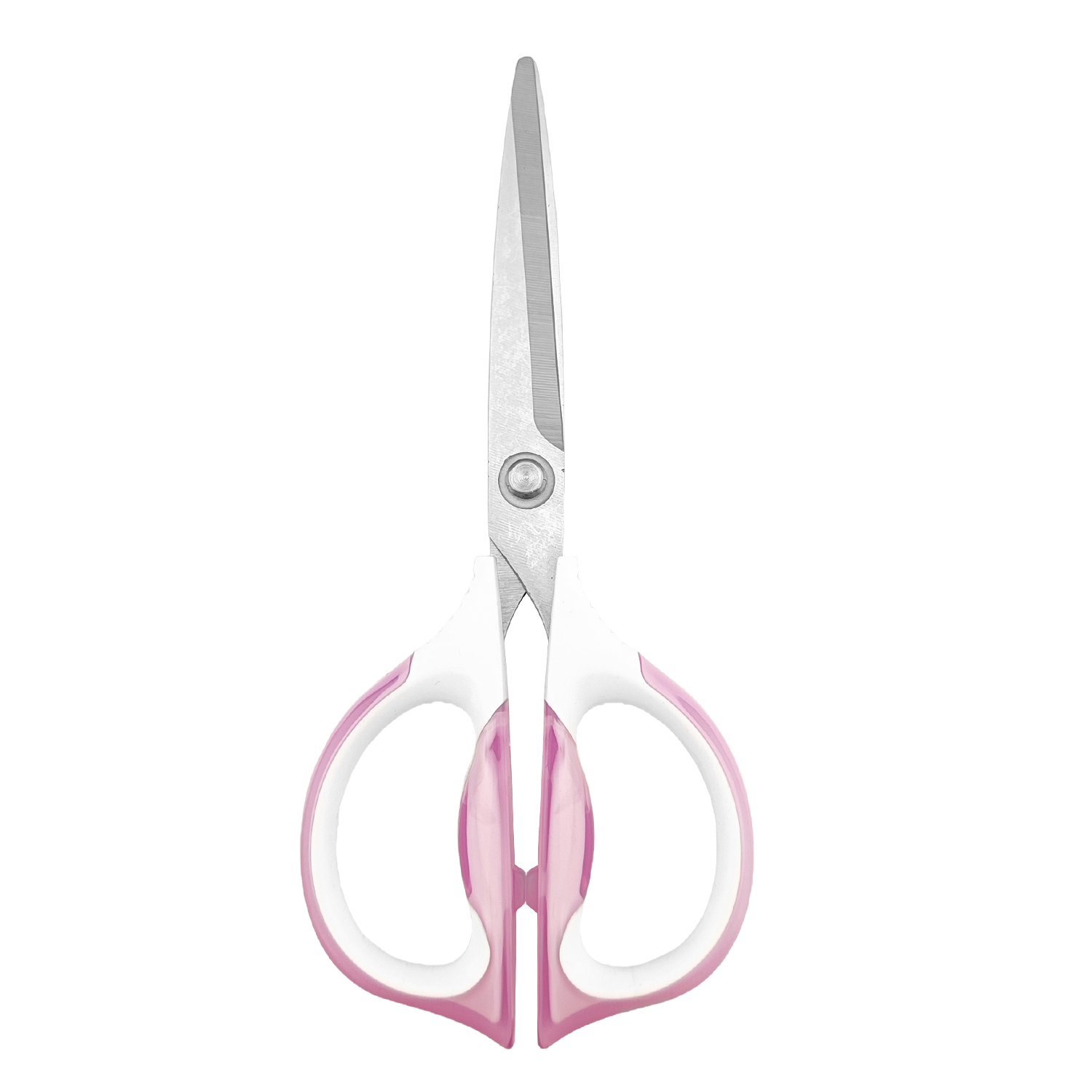
The original product concept highlights a modern pair of office scissors with a chic transparent design, ergonomic handles, a subtle pink and white color combination, and stainless steel blades. Those details point to a useful direction for buyers: stationery scissors do not need to be purely basic, but design should still support cutting performance and user comfort. This guide explains how to evaluate stationery scissors OEM options without relying on vague claims or unverified specifications.
Key Takeaways
- Start with the target user and application before choosing handle style, blade size, or packaging.
- Ask the supplier to confirm blade material, hardness, sharpness standard, and corrosion-resistance expectations instead of assuming technical details.
- Transparent handles and pink-white color accents can create a clean office look, but comfort, strength, and finish consistency should be checked during sampling.
- For OEM orders, clarify artwork, packaging, inspection criteria, lead time, MOQ, and replacement policy in writing.
- A good stationery scissors supplier should provide samples, clear communication, and practical answers to quality-control questions.
Understanding the OEM Opportunity for Stationery Scissors
OEM sourcing allows a buyer to develop stationery scissors under a private label, retail brand, promotional program, or customized packaging plan. The scope can be simple, such as selecting an existing scissors model and adding a logo, or more involved, such as adjusting handle colors, packaging format, blade finish, and display presentation.
For office and stationery categories, scissors often sell as everyday tools. They are used for paper, envelopes, labels, craft materials, light sewing tasks, school projects, and general home projects. Because the product is frequently handled, small differences in comfort and cutting feel matter. A handle that looks attractive but is uncomfortable may lead to complaints, while a plain-looking product with consistent cutting performance may earn repeat orders.
Buyers should define the sales scenario early. A budget office pack, a school supplies program, a craft-focused retail item, and a premium desk accessory may all require different choices. The transparent design described in the original article may suit buyers looking for a clean, modern appearance for offices, gift sets, or lifestyle stationery collections. However, design should be evaluated together with durability and quality control.
Product Design: Balancing Appearance and Practical Use
The featured concept includes a transparent visual style with subtle pink and white handle colors. This type of design can help a stationery scissors item stand out from standard black or blue office tools. For retailers, color and transparency may support shelf appeal. For corporate gifts or branded office kits, the color direction can also create a softer, more contemporary look.
However, OEM buyers should not select a design based only on photos. Ask for physical samples and assess the following points:
- Grip comfort: Check whether the handle openings suit the intended user group. Adult office users, students, and craft users may need different handle dimensions.
- Edge finish: Inspect the handle edges for roughness, burrs, or uncomfortable pressure points.
- Color consistency: If the project uses pink and white accents, ask how color matching will be controlled between sample and mass production.
- Transparency quality: Transparent parts should be reviewed for bubbles, cloudiness, scratches, or uneven molding marks.
- Left-hand or right-hand use: Confirm whether the selected model is suitable for the intended user base.
Ergonomic handles are mentioned in the original article, but buyers should define what that means for their order. In sourcing, the word ergonomic can be subjective unless it is connected to measurable features such as handle opening size, finger clearance, weight, surface smoothness, and comfort during repeated cutting.
Blade Quality and Cutting Performance
The source article states that the scissors use stainless steel blades and are intended for tasks such as crafting, sewing, general home projects, and office use. Stainless steel is commonly chosen for stationery scissors because it can support a clean appearance and everyday corrosion resistance, but buyers should still ask the supplier for specific blade details. Do not assume the grade, hardness, thickness, or edge angle unless the supplier confirms them.
Cutting performance should be checked through real-use testing. For office stationery scissors, typical tests may include cutting copy paper, envelopes, thin card, adhesive labels, or light craft paper. If the product is marketed for sewing or fabric work, the buyer should test appropriate fabric samples and confirm whether the scissors are genuinely suitable for that use. A product that cuts paper well may not perform equally well on fabric.
Important blade questions to ask a stationery scissors factory include:
- What stainless steel type is used for the blade?
- What blade thickness and hardness are available for this model?
- How is sharpness checked during production?
- What cutting materials are recommended and not recommended?
- How is blade alignment controlled?
- What corrosion or surface-finish checks are normally performed?
Buyers should also inspect the pivot area. A loose pivot can reduce cutting accuracy, while an overly tight pivot can cause hand fatigue. Consistency from one unit to another is especially important for wholesale and retail orders.
Comparison Checklist for OEM Buyers
The following checklist can help compare suppliers, samples, or design options before confirming an OEM stationery scissors order.
| Evaluation Area | What to Check | Questions to Ask the Supplier |
|---|---|---|
| Blade | Sharpness, alignment, stainless steel finish, pivot smoothness | What blade material, thickness, hardness, and inspection method are used? |
| Handle | Comfort, molding quality, transparent appearance, pink-white color accuracy | Can the handle color be matched to our reference or Pantone target? |
| Application | Paper, craft, sewing, office, home project suitability | Which materials are recommended for this model, and which should be avoided? |
| Branding | Logo position, print durability, packaging artwork | What logo methods are available, and can pre-production samples be approved? |
| Packaging | Retail card, blister, box, set packing, barcode placement | What packaging options are available, and what information is required for artwork? |
| Quality Control | AQL plan, appearance criteria, cutting test, carton inspection | What inspection standard will be used before shipment? |
| Commercial Terms | MOQ, lead time, payment terms, sample fees, spare quantity | What are the current terms for this exact model and customization level? |
Packaging and Branding Considerations
Packaging is often as important as the scissors themselves, especially for retail and wholesale buyers. A low-cost office item may need compact bulk packaging, while a stationery boutique product may require a printed card, hanging hole, clear window, or coordinated color design. For e-commerce, packaging should also protect the blade tips and reduce movement during shipping.
When planning private-label stationery scissors, provide the supplier with complete artwork files and written instructions. Confirm logo size, print location, barcode placement, warning text, and any market-specific labeling requirements. If the supplier offers packaging templates, review dielines carefully before approving production.
Because compliance rules vary by destination market and sales channel, buyers should ask what documentation is available for the product and packaging. Avoid assuming that a scissors factory automatically meets every retailer or country requirement. If your project needs specific testing, age grading, labeling, or documentation, state this before quotation and sampling.
Sampling and Quality Control Before Mass Production
A reliable OEM process should include sample review before mass production. For a stationery scissors project, sample approval should not be limited to appearance. Test the scissors repeatedly with the materials your customers are likely to cut. Check comfort over several minutes, not only for one quick cut. Inspect multiple samples if possible, because one good sample does not always prove batch consistency.
Before placing an order, create a written approval standard. This may include acceptable color tolerance, blade finish requirements, handle surface expectations, logo position, packaging layout, cutting test method, and defect categories. If you work with a third-party inspection company, share the inspection checklist with the supplier before production starts.
Common defects to watch for include uneven blade alignment, rough handle edges, inconsistent handle color, scratches on transparent parts, loose screws or pivots, poor logo printing, damaged retail packaging, and cartons that are not suitable for export handling. Some issues can be corrected early if they are found at the pre-production or in-line inspection stage.
How to Communicate With a Stationery Scissors Supplier
Clear communication reduces delays and misunderstandings. Instead of asking only for the lowest price, provide a complete sourcing brief. Include your target market, expected application, preferred appearance, order quantity estimate, packaging needs, branding requirements, delivery schedule, and quality expectations. If you are comparing suppliers, send the same brief to each one so quotations are easier to evaluate.
Useful questions include:
- Is this an existing model or does it require new tooling?
- Which parts can be customized: handle color, logo, packaging, blade finish, or size?
- What is the sample lead time for the exact customization requested?
- What is the current MOQ for standard and customized versions?
- Can the supplier provide a pre-production sample for approval?
- How are defects handled if inspection finds a quality issue?
- What export carton details and shipping marks are required?
The goal is to make the product specification clear enough that both buyer and supplier understand what will be produced. This is especially important when the design includes visible style elements such as transparent handles and soft color combinations.
Practical FAQ
What makes stationery scissors suitable for OEM projects?
They are widely used, easy to brand, and available in many handle colors, packaging formats, and design styles. OEM buyers can often adapt an existing model for office, school, retail, or promotional programs.
Can transparent handle scissors be customized?
Customization may be possible, but it depends on the supplier's tooling, materials, and production process. Ask whether the handle color, transparency level, logo method, and packaging can be changed for your order.
Are stainless steel blades enough to guarantee good cutting?
No. Stainless steel is only one part of blade performance. Buyers should also confirm blade thickness, hardness, edge quality, alignment, pivot tension, and cutting-test standards.
What should I test in a stationery scissors sample?
Test cutting smoothness, handle comfort, blade alignment, pivot tightness, surface finish, logo quality, packaging strength, and consistency across multiple units.
How should buyers handle missing specifications?
Ask the supplier to confirm details in writing. If a material grade, certification, MOQ, or test result is not provided, do not include it in your product claims until it is verified.
Final Thoughts for OEM Buyers
Stationery scissors OEM sourcing works best when design, function, and quality control are considered together. A transparent handle with pink and white details can create a fresh look for office and stationery programs, while stainless steel blades support everyday cutting needs. Still, buyers should verify every important specification through samples, supplier documentation, and inspection criteria.
Whether you are sourcing for retail shelves, office supply distribution, craft sets, or branded promotional kits, the most effective approach is practical: define the user, test the sample, confirm the packaging, and document the quality standard before production. That process helps turn a simple pair of scissors into a reliable product your customers can use with confidence.
