




Stationery Scissors OEM: Practical Sourcing Guide for Buyers
Stationery scissors are simple products, but sourcing them well is not always simple. For office supply brands, school distributors, promotional product companies, craft retailers, and wholesale buyers, the right stationery scissors OEM partner can affect product consistency, packaging accuracy, delivery reliability, and customer satisfaction. A low-cost pair of scissors that feels uncomfortable, cuts poorly, or arrives with inconsistent packaging can create returns and damage a buyer’s brand reputation.
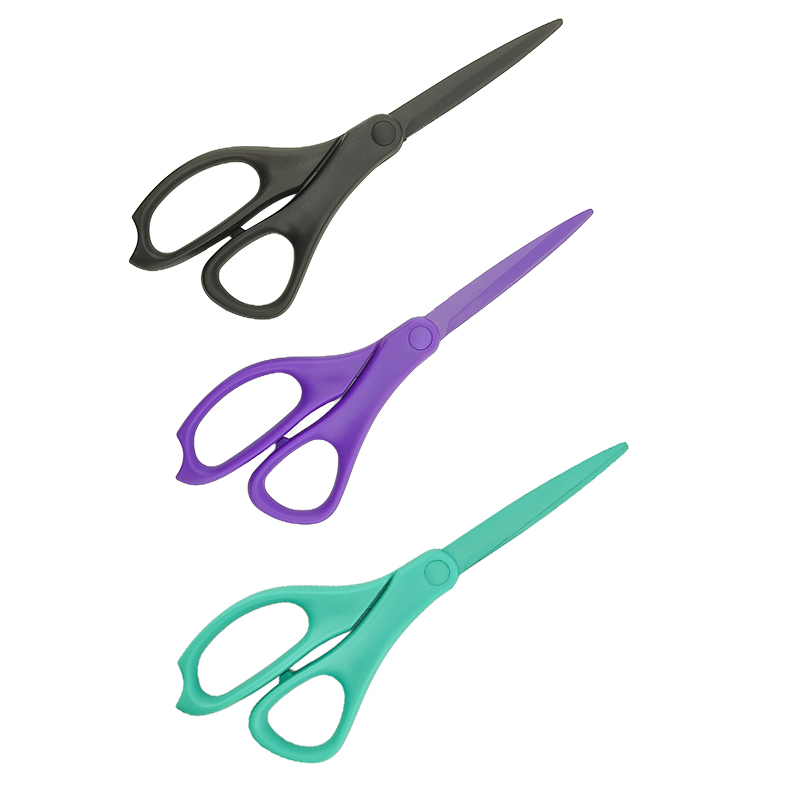
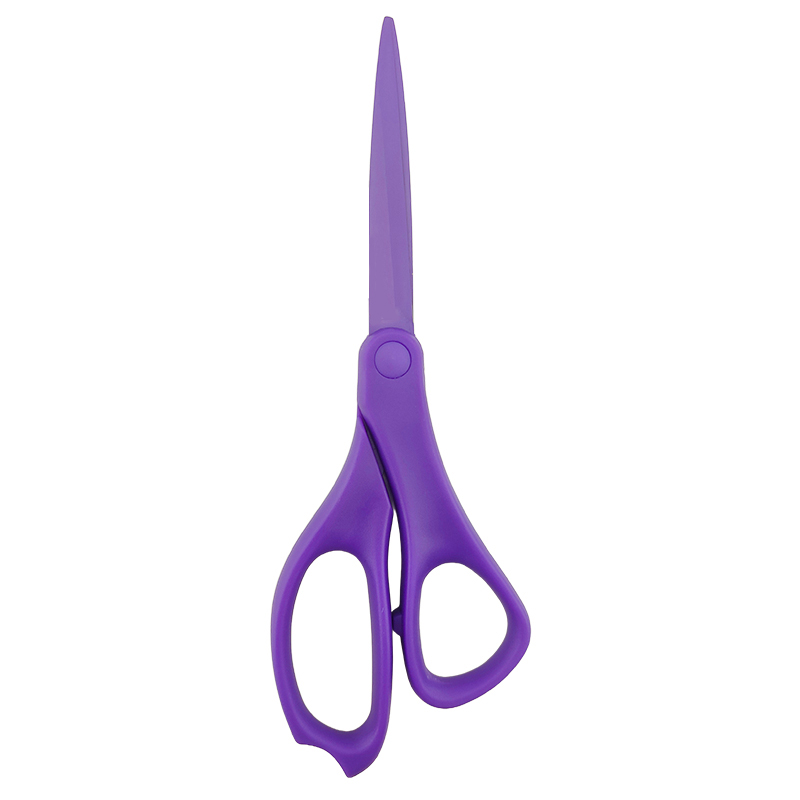
The original product information highlights stationery scissors with a non-stick blade coating and color options including deep black, bold purple, and tranquil teal. Those details are useful starting points, especially for buyers looking for scissors for office, school, and crafting tasks. However, a professional sourcing decision should go beyond appearance. Buyers should evaluate materials, handle comfort, blade performance, packaging, inspection processes, customization support, and communication from the factory.
This guide explains how to approach stationery scissors OEM sourcing with practical questions and quality checkpoints. It is written for B2B buyers who need to compare suppliers, prepare RFQs, and reduce sourcing risk before placing a wholesale or private-label order.
Key Takeaways
- Choose a stationery scissors OEM based on product consistency, communication, sampling process, and quality controls—not price alone.
- Non-stick coating can be a useful feature for cutting adhesive materials, but buyers should ask how the coating is applied, tested, and protected during packing.
- Color options such as black, purple, and teal can support retail differentiation, but color matching and packaging artwork should be confirmed with approved samples.
- Before confirming an order, request clear answers about materials, dimensions, customization options, inspection standards, lead time, and after-sales handling.
- A detailed RFQ and pre-shipment inspection plan can prevent misunderstandings between buyer, supplier, and logistics partners.
What Buyers Should Expect from a Stationery Scissors OEM
An OEM supplier should be able to produce scissors according to a buyer’s target design, branding, packaging, and performance expectations. In practice, this may include handle color selection, logo placement, retail packaging, carton labeling, assortment planning, and documentation needed for internal purchasing approval. The supplier may also offer existing product models that buyers can adapt instead of creating a fully new mold or design.
For stationery scissors, common purchase channels include office supply wholesalers, supermarket programs, school supply kits, e-commerce private labels, craft and hobby retailers, and corporate promotional programs. Each channel has different requirements. A retail buyer may focus on shelf packaging and consumer appeal, while an office distributor may prioritize carton efficiency, repeat availability, and consistent quality across batches.
When contacting a stationery scissors factory, avoid asking only for a catalog and price list. A more useful conversation begins with intended users, cutting tasks, target packaging, expected order quantity, delivery market, and any branding needs. This allows the supplier to recommend suitable product structures and identify what needs confirmation before sampling.
Product Features to Evaluate Before Ordering
The source article mentions non-stick blade coating, ergonomic design, and a choice of deep black, bold purple, and tranquil teal. These are relevant features, but they should be verified through samples and written specifications. For example, “ergonomic” can mean different things to different suppliers. Buyers should test handle comfort with the intended user group, especially if the scissors will be used in offices, schools, or craft settings for longer periods.
Non-stick scissors are often selected for cutting labels, tape, stickers, adhesive paper, and craft materials. The coating may help reduce residue buildup, but performance depends on the coating quality, blade alignment, sharpening, and the material being cut. Buyers should request samples and conduct practical cutting trials using the materials their customers are likely to use.
Color can also be more than a visual detail. In retail, assorted colors may help create a broader shelf offer. In office environments, different colors may support departmental use or simple identification. If color consistency matters, ask whether the supplier can match a Pantone reference or provide a pre-production sample for approval.
Comparison Checklist for OEM Selection
The table below can help buyers compare stationery scissors suppliers in a structured way. It is not a substitute for factory due diligence, but it provides a practical starting point for RFQs and supplier meetings.
| Evaluation Area | What to Check | Questions to Ask the Supplier |
|---|---|---|
| Product construction | Blade finish, handle comfort, screw or pivot stability, cutting smoothness | What materials are used for the blades and handles? Can you provide a written specification sheet? |
| Non-stick coating | Coating coverage, appearance, resistance to peeling, performance on adhesive materials | How is the non-stick coating applied? What inspection steps are used before packing? |
| Customization | Color options, logo method, packaging format, assortment plans | Which parts can be customized, and what sample approval process do you recommend? |
| Quality control | Incoming material checks, in-process checks, final inspection, defect classification | What quality checks are performed during production and before shipment? |
| Commercial terms | MOQ, lead time, payment terms, sample cost, tooling needs if applicable | What MOQ and lead time apply to standard models and customized orders? |
| Export readiness | Carton labeling, packing method, documentation support, communication speed | What export documents and packing details can you provide for our market? |
How to Prepare a Clear RFQ
A clear request for quotation saves time and reduces the chance of receiving prices that cannot be compared. Many buyers send a general inquiry such as “Please quote stationery scissors,” but that leaves too many details open. A supplier may quote a basic product while the buyer expects customized packaging, better finishing, or multiple color assortments.
Include the following details in your RFQ whenever possible:
- Target product type, such as office scissors, craft scissors, school scissors, or non-stick scissors.
- Approximate size, handle style, and intended user group if known.
- Required colors, including whether black, purple, teal, or custom colors are needed.
- Logo and branding requirements, including location and preferred method if known.
- Packaging style, such as bulk pack, blister card, paper card, display box, or e-commerce-ready packing.
- Estimated order quantity and whether it is a trial order, seasonal order, or long-term program.
- Destination country or region so the supplier can consider packing, labeling, and shipping requirements.
- Any internal quality expectations, inspection standards, or customer-specific requirements.
If you do not know all specifications yet, say so clearly. A capable supplier should help you identify the missing details and may suggest existing product options that fit your target market.
Sampling and Quality Checks
Samples are essential for stationery scissors sourcing. Photos can show colors and general design, but they cannot confirm cutting feel, blade alignment, handle comfort, or coating behavior. Request samples in the exact colors and packaging you are considering when possible. If the first sample is only for product evaluation, follow up with a pre-production sample before mass production.
During sample review, test the scissors on common materials such as copy paper, envelopes, labels, tape, light card, and craft paper. Check whether the scissors open and close smoothly, whether the handles have rough edges, and whether the blades cut from base to tip without tearing. For non-stick scissors, cut adhesive materials repeatedly and observe whether residue builds up or coating damage appears.
For wholesale orders, buyers should also define inspection criteria before production starts. Typical inspection areas may include appearance, color, packaging accuracy, barcode or label placement, quantity per carton, and functional cutting tests. Do not assume that the supplier and buyer share the same definition of an acceptable defect. Write down what should be checked and what level of variation is acceptable.
Packaging, Branding, and Retail Readiness
Stationery scissors often compete in crowded retail and online categories, so packaging needs to communicate the product clearly. If the scissors feature non-stick coating, the packaging should explain that benefit accurately without overclaiming. If the product is offered in black, purple, and teal, confirm whether the order will be shipped as a fixed color assortment or as separate color SKUs.
Private-label buyers should check artwork dimensions, print colors, barcode quality, and legal text requirements for their market. The supplier can usually support packaging production, but the buyer remains responsible for approving artwork content and ensuring it matches the sales channel’s requirements. For e-commerce, ask how the scissors will be protected from movement, scratches, and packaging damage during parcel shipping.
Carton planning is also important. Confirm inner box quantity, master carton quantity, carton dimensions, gross weight, and labeling format before shipment. These details affect warehouse receiving, freight planning, and retailer compliance.
Supplier Communication and Risk Control
A reliable office stationery scissors supplier should answer technical and commercial questions clearly. Fast replies are helpful, but accuracy matters more. Be cautious if a supplier confirms every request immediately without asking for details. For OEM work, the supplier should clarify specifications, sample timing, packaging artwork, inspection expectations, and production schedule.
Buyers should ask practical questions such as: What happens if the pre-production sample is not approved? How are color differences handled? Who approves packaging artwork? Can production photos be shared during manufacturing? What is the process if defects are found before shipment? These questions do not imply distrust; they help both sides prevent disputes.
It is also wise to keep an approval record. Save confirmed quotations, sample photos, specification sheets, packaging files, and inspection requirements. If a future reorder is needed, this documentation helps maintain consistency and reduces repeated negotiation.
Practical FAQ
What is the difference between OEM and wholesale stationery scissors?
Wholesale usually means purchasing existing scissors in standard packaging or supplier-branded packaging. OEM typically involves customization, such as buyer branding, colors, packaging, or specification adjustments. The exact scope should be confirmed with the supplier.
Are non-stick scissors suitable for office and craft use?
They can be suitable for many office and crafting tasks, especially when cutting adhesive materials such as labels or tape. Buyers should test samples with the actual materials their customers use before placing a bulk order.
What should I ask before confirming a stationery scissors order?
Ask about materials, dimensions, coating details, color options, logo method, packaging, MOQ, lead time, sample approval, inspection process, carton details, and after-sales handling. If compliance or market-specific labeling is required, raise it early.
Can I order multiple colors such as black, purple, and teal?
The source product information mentions deep black, bold purple, and tranquil teal. Buyers should ask the supplier whether these colors are available for the current model, whether custom color matching is possible, and how color assortments are packed.
How can I reduce quality risk when buying from a stationery scissors factory?
Use approved samples, written specifications, packaging artwork approval, production communication, and pre-shipment inspection. Clear defect criteria and documented approvals are especially important for private-label and retail programs.
Final Sourcing Advice
Stationery scissors may look like a routine purchasing item, but successful OEM sourcing depends on careful product evaluation and clear supplier communication. Non-stick coating, comfortable handles, and attractive colors can add value, but they should be verified through samples rather than assumed from descriptions. For B2B buyers, the best results come from combining a detailed RFQ, practical cutting tests, packaging review, and a documented quality plan.
When comparing a stationery scissors OEM or factory, focus on whether the supplier can consistently produce the product your market needs, communicate limitations honestly, and support repeat orders with stable quality. That approach helps buyers build a stationery scissors program that is practical, reliable, and easier to scale.
