




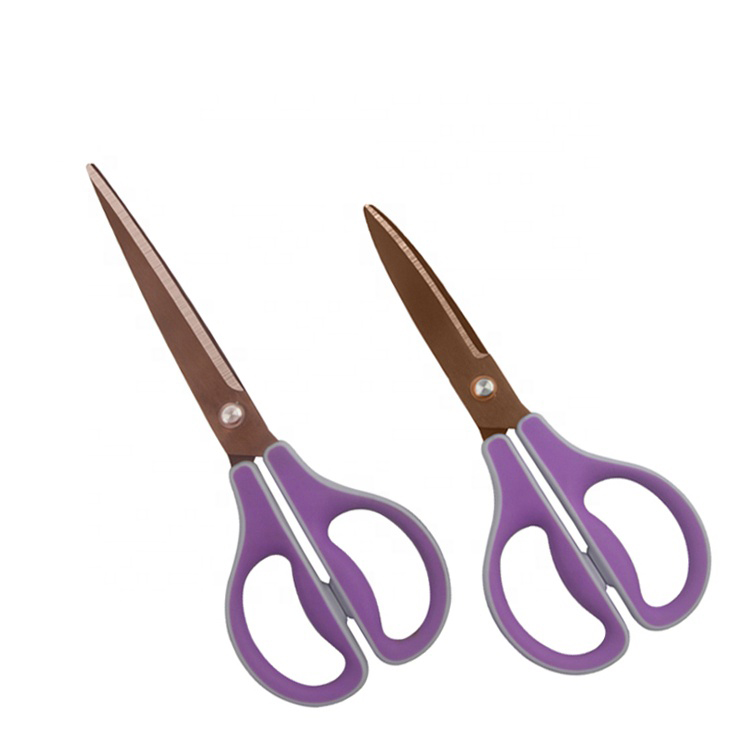
Stylish Paper Scissors Used in Schools: Practical Selection Guide
Paper scissors used in schools need to do more than cut paper. In a classroom, a pair of scissors may be used for handwriting practice sheets, art projects, posters, notebooks, card making, and group craft activities. The right choice should balance cutting performance, comfort, durability, safe handling, and easy storage. The original product described here is a pair of Titanium-Coated Scissors with a rose-gold titanium blade and purple ergonomic soft-grip handles. Those details make it useful for schools, home study areas, craft rooms, and stationery sets where both appearance and function matter.
This guide explains how to evaluate school paper scissors without relying on vague claims. It focuses on what teachers, parents, students, and stationery buyers can check before choosing scissors for regular classroom and craft use.
Key Takeaways
- Paper scissors for schools should cut cleanly, feel comfortable, and be easy to control during repetitive craft work.
- The featured scissors are described with a rose-gold titanium-coated blade, corrosion resistance, and purple soft-grip ergonomic handles.
- For classroom use, buyers should also ask about age suitability, blade length, packaging, safety guidance, and replacement options.
- Good care habits, such as wiping blades and storing scissors dry, help maintain smooth cutting performance.
What Makes School Paper Scissors Different?
Scissors used in schools are handled more often than many household scissors. They may be shared by several students, used with glue-backed paper, stored in crowded stationery boxes, or placed in classroom supply baskets. Because of that, school scissors should be selected with practical use in mind rather than appearance alone.
A reliable pair should open and close smoothly, align well at the blade tips, and cut paper without tearing or bending it. For craft lessons, students often need to cut curves, narrow strips, folded paper, or small shapes. Poorly aligned scissors can make those tasks frustrating and may slow down classroom activities. Comfort is also important because cutting exercises can take several minutes, especially for younger students who are still building hand strength and coordination.
Blade Design and Titanium Coating
The original article describes the scissors as Titanium-Coated Scissors with a rose-gold titanium blade. A coated blade can be attractive for stationery collections, and the source text states that the blade provides corrosion resistance and a sharp edge. For school and craft use, those are helpful qualities because scissors may be exposed to frequent handling, paper dust, and occasional adhesive residue.
When comparing options, buyers should look closely at how the blades meet. The two blades should touch consistently along the cutting path and should not feel loose at the pivot. A sharp edge matters, but smooth action matters too. If the scissors catch, wobble, or require too much pressure, they may not be suitable for detailed craft work.
Schools, wholesalers, and stationery buyers should ask suppliers practical questions rather than assuming all coated scissors perform the same. Useful questions include: What materials are recommended for cutting? Are the scissors intended only for paper, or can they handle light craft materials? Is the coating designed to reduce corrosion under normal indoor use? What care instructions are provided?
Handle Comfort for Classroom and Craft Sessions
The featured scissors are described with ergonomic handles and soft-grip technology in a vibrant purple hue. For students and craft users, handle design can be just as important as the blade. Hard or poorly shaped handles may cause discomfort during long cutting sessions. A soft-grip handle can help users maintain control, especially when cutting detailed shapes or working on repeated classroom tasks.
Comfort should be evaluated by hand size and use case. A pair that feels comfortable for an adult teacher may be too large for a younger student. If scissors are intended for mixed-age use, it is sensible to test samples with the expected users before buying in quantity. Also check whether the handle openings allow a relaxed grip. Students should not need to squeeze hard to keep the scissors steady.
Comparison Checklist for Choosing School Scissors
| Selection Factor | What to Check | Why It Matters |
|---|---|---|
| Blade performance | Clean cutting on standard paper and smooth opening and closing | Helps students complete tasks neatly and reduces frustration |
| Coating and finish | Ask how the titanium coating should be cleaned and maintained | Supports long-term appearance and normal classroom use |
| Handle comfort | Soft grip, ergonomic shape, and suitable size for intended users | Improves control during longer craft sessions |
| Classroom suitability | Age guidance, safe handling instructions, and storage recommendations | Helps teachers manage shared supplies responsibly |
| Craft use | Ability to cut curves, small shapes, and folded paper cleanly | Important for art lessons, posters, cards, and project work |
| Bulk sourcing | Packaging, labeling, replacement policy, and sample availability | Useful for schools, distributors, and stationery buyers |
Best Uses in Schools and Creative Workspaces
Paper scissors used in schools are most useful when they match the activities planned. The titanium-coated scissors described in the source article are positioned for classroom tasks, craft projects, and stationery collections. Suitable uses may include cutting worksheets, colored paper, construction paper for simple crafts, labels, collage pieces, and decorative paper shapes.
For detailed craft work, control is important. Students cutting curves, petals, stars, or layered shapes benefit from scissors that feel steady in the hand. The original description highlights controlled, intricate cuts and reduced hand fatigue during long crafting sessions. When selecting scissors for an art room or shared supply cabinet, it is helpful to keep several pairs available so students are not forced to rush or use tools that do not fit their hands.
- Match the scissors to the user age and classroom activity.
- Test cutting quality on the paper types most often used.
- Check handle comfort during repeated open-and-close movements.
- Store scissors in a dry, visible place after each lesson.
- Replace scissors that become loose, damaged, or difficult to control.
Care, Storage, and Everyday Maintenance
Even good scissors can perform poorly if they are stored carelessly. Paper fibers, tape residue, glue, and moisture can affect cutting quality over time. After craft sessions, wipe the blades with a dry or slightly damp cloth and dry them before storage. Avoid leaving scissors in sinks, damp bins, or outdoor activity boxes. If adhesive residue builds up, follow the supplier’s cleaning guidance and avoid harsh methods that could damage the blade finish or handle.
Classrooms should also have a clear storage routine. A labeled container, drawer insert, or teacher-managed supply basket makes it easier to count scissors before and after activities. This is especially useful when scissors are shared across classes or used by younger students. For home use, keeping scissors separate from kitchen tools or utility cutters helps preserve them for paper and craft work.
Practical FAQ
Are titanium-coated scissors suitable for school paper cutting?
The product described in the original article is intended for paper scissors used in schools and craft tasks. The rose-gold titanium-coated blade is described as corrosion resistant with a sharp edge, which can support clean paper cutting when used and maintained properly.
Can these scissors be used for all craft materials?
The source focuses on paper and craft use but does not list every compatible material. For bulk purchase or classroom planning, ask the supplier which materials are recommended and which materials should be avoided.
How should schools evaluate scissors before buying many pairs?
Request samples if available, test them with common classroom paper, check handle comfort, review age guidance, and confirm packaging, storage, and care instructions. Do not rely only on color or appearance.
Do soft-grip handles matter?
Soft-grip ergonomic handles can improve comfort and control, especially during longer cutting activities. They are particularly helpful when students need to cut detailed shapes or repeat the same motion many times.
How can scissors last longer in a classroom?
Use them mainly for the recommended materials, wipe blades after messy craft work, keep them dry, store them properly, and remove damaged or loose scissors from shared classroom use.
