





Tailor Scissors China: Sourcing Guide for Reliable Fabric Cutting Tools
For retailers, craft brands, sewing schools, garment workshops, and online sellers, sourcing tailor scissors China can be a practical way to build a consistent product range. China has a broad manufacturing base for cutting tools, including scissors for fabric, paper, cardstock, and general craft use. However, successful sourcing depends on more than finding an attractive product photo. Buyers need to evaluate materials, cutting performance, handle comfort, packaging, supplier communication, and wholesale terms before placing repeat orders.
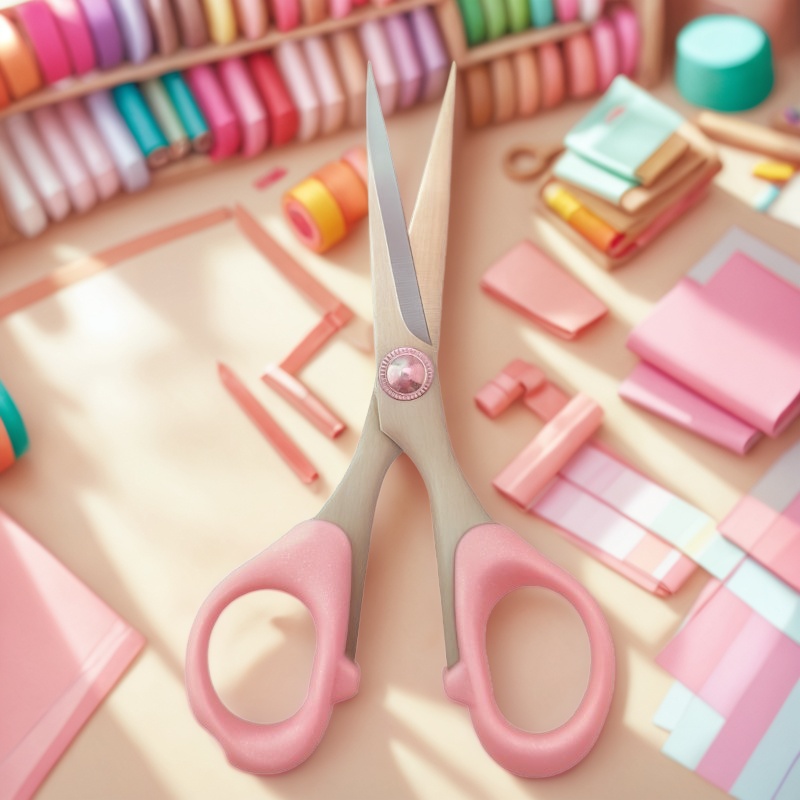
The original product description highlights several useful points: stainless-steel blades, an ergonomic handle design, suitability for both left-handed and right-handed users, a sturdy pivot screw, pastel pink handles, an anti-slip grip, and use across fabric, paper, cardstock, and other creative materials. These features are relevant, but buyers should still confirm every specification directly with the supplier before ordering in volume.
Why Buyers Source Tailor Scissors from China
China is often considered by B2B buyers because it offers a wide range of product styles, handle colors, packaging options, and wholesale purchasing structures. A buyer may be sourcing for a sewing accessory line, a craft store, a fabric shop, a promotional bundle, or a private-label product. In each case, the goal is not simply to buy the lowest-priced scissors. The better goal is to find a stable supplier that can deliver repeatable quality.
Tailor scissors are small tools, but their quality is easy for end users to judge. If the blades drag through fabric, if the pivot loosens quickly, or if the handle causes hand fatigue, customers will notice. For this reason, procurement teams should treat scissors as performance products rather than basic accessories.
Core Product Features to Confirm
The source article mentions stainless-steel blades, smooth cutting, ergonomic handles, a sturdy pivot screw, and anti-slip grip details. These are useful buying points, but the buyer should convert them into clear supplier questions. Ask what stainless steel is used, whether the blades are heat treated, how sharpness is checked, and whether the pivot screw can be adjusted. If the supplier cannot answer clearly, request a sample and test it before committing.
- Check whether the scissors cut cleanly from the heel of the blade to the tip.
- Test fabric, paper, cardstock, and any other material your customers are likely to use.
- Hold the scissors for several minutes to assess handle comfort and grip.
- Open and close the blades repeatedly to check smoothness and pivot stability.
- Inspect the finish for burrs, rough edges, coating defects, or handle gaps.
Comparison Checklist for Wholesale Evaluation
A structured checklist helps buyers compare multiple suppliers fairly. Do not rely only on catalog descriptions. Use the same review process for every sample so that differences are easy to identify.
| Evaluation Area | What to Check | Questions to Ask the Supplier |
|---|---|---|
| Blade performance | Clean cutting on fabric, paper, and cardstock | How is blade sharpness inspected before shipment? |
| Blade material | Stainless-steel construction as described | What steel type is used, and can it be documented? |
| Pivot screw | Smooth opening, stable alignment, no wobble | Is the pivot adjustable, and how is tension controlled? |
| Handle comfort | Ergonomic shape, anti-slip feel, left- and right-hand use | Has the handle design been tested with different hand sizes? |
| Appearance | Pastel pink handle consistency and clean finishing | What color tolerance is acceptable between batches? |
| Packaging | Retail-ready, safe for transport, clear labeling | What packaging options are available for wholesale or OEM orders? |
Wholesale and OEM Questions to Ask
When sourcing tailor shears wholesale, commercial terms matter as much as product appearance. Avoid assuming minimum order quantity, price, lead time, packaging, or branding options unless they are provided in writing. If you plan to sell under your own brand, ask whether OEM or private-label packaging is available and what artwork requirements apply.
Buyers should also ask how the supplier manages batch consistency. A good first sample is helpful, but the real test is whether bulk goods match the approved sample. Request a pre-production sample when possible, and define acceptable inspection criteria before mass production begins. For online sellers, packaging durability is especially important because scissors may pass through parcel networks before reaching the customer.
How to Test Samples Before Bulk Ordering
Sample testing should be practical and repeatable. Create a simple test sheet for each supplier and record the results. Cut several layers of common fabric if the scissors are intended for sewing or tailoring. Cut paper and cardstock if the product will be marketed for craft use. Note whether the blades pull, snag, or leave uneven edges.
- Photograph the sample, packaging, and any labels on arrival.
- Check blade alignment and handle finish before use.
- Perform cutting tests on the same materials for every supplier.
- Open and close the scissors repeatedly to observe pivot smoothness.
- Compare the sample against the supplier's written product description.
- Share written feedback with the supplier and ask how issues will be corrected.
Packaging, Labeling, and Market Fit
The original article notes a modern aesthetic, including soft pastel pink handles and an anti-slip grip. This can be useful for craft retailers, hobby sewing kits, and giftable stationery ranges. Still, product style should match the target buyer. A professional tailor may value weight, blade length, and cutting strength more than color. A craft customer may care more about comfort, safety packaging, and attractive retail presentation.
Ask the supplier what packaging formats are available, such as blister cards, hanging cards, boxes, or bulk packing. Confirm whether safety warnings, barcode placement, recycling marks, country-of-origin statements, or other labeling details are required for your sales market. Do not assume compliance details; confirm them with the supplier and, when necessary, with a qualified compliance adviser.
Key Takeaways
- Sourcing tailor scissors from China can work well when buyers verify performance, not just appearance.
- Important checks include stainless-steel blade details, pivot stability, handle comfort, and cutting consistency.
- Wholesale buyers should ask about MOQ, lead time, packaging, branding, inspection, and batch consistency.
- Samples should be tested on the same materials your customers will actually cut.
- All commercial and technical claims should be confirmed in writing before bulk production.
FAQ
What should I ask a Chinese tailor scissors supplier first?
Start with blade material, available sizes, handle design, sample policy, MOQ, lead time, packaging options, and whether bulk production will match the approved sample.
Are stainless-steel blades enough to guarantee quality?
No. Stainless steel is only one factor. Buyers should also test sharpness, edge retention, blade alignment, pivot smoothness, and handle durability.
Can tailor scissors also be sold for craft use?
The source description says the scissors can cut fabric, paper, cardstock, and other materials. If you market them for multiple uses, test each material and avoid overstating performance.
How can I reduce risk before placing a wholesale order?
Order samples, define inspection standards, confirm packaging, request written specifications, and keep an approved sample for comparison with bulk goods.
Should I choose the lowest quote?
Not automatically. Compare total value, including sample quality, defect handling, communication, packaging strength, production consistency, and after-sales support.
