




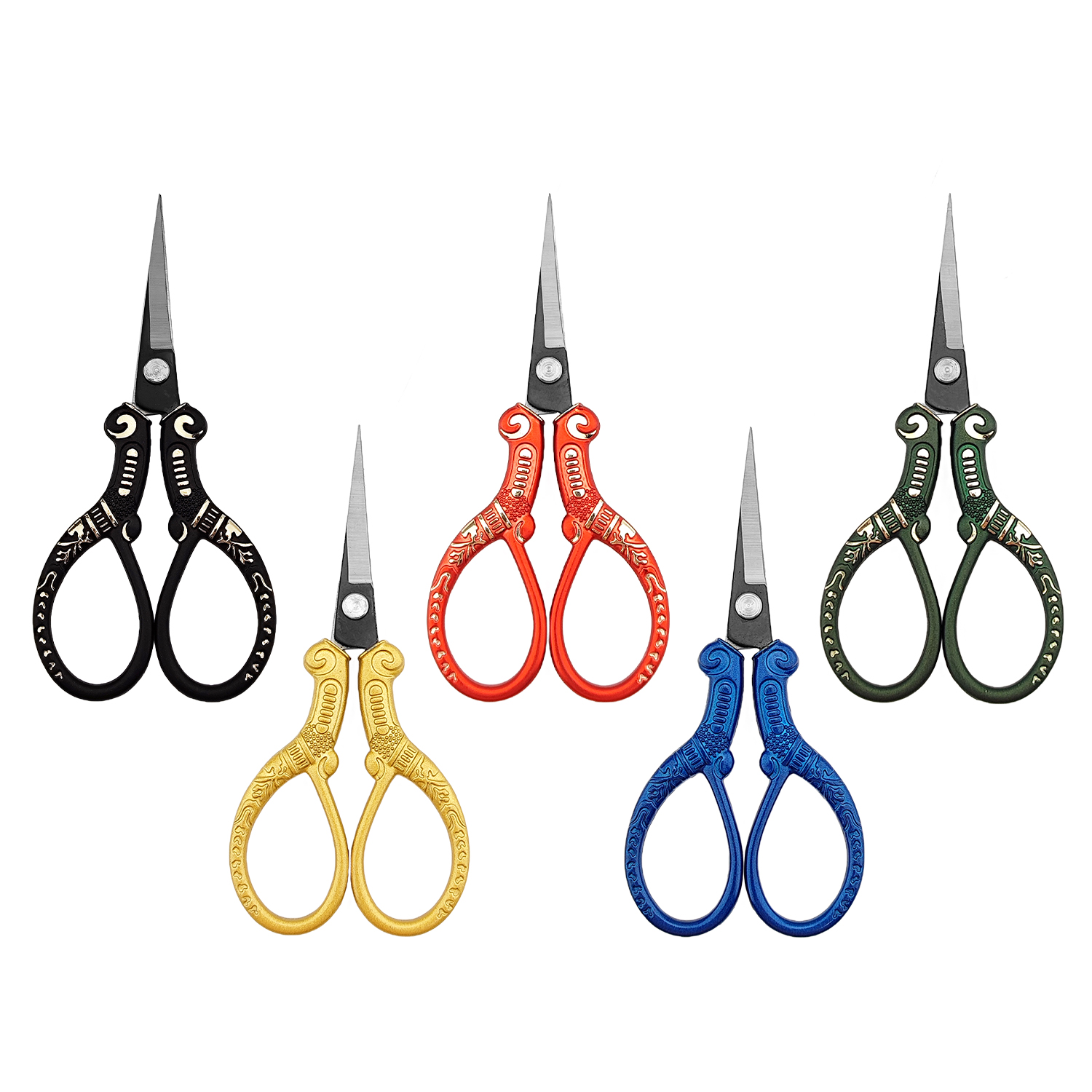
Tailor Scissors Manufacturer: Precision & Style
For apparel studios, sewing tool distributors, craft retailers, and private-label buyers, tailor scissors are a category where small details matter. A pair that looks attractive but cuts poorly will quickly create returns and complaints. A pair that cuts well but feels uncomfortable may not satisfy professional users who work for long hours. That is why choosing a tailor scissors manufacturer should involve more than checking a catalog photo.
The original product article introduced a line of professional sewing scissors from Yangjiang, a city known for blade-making heritage. It highlighted sharp cutting performance, ornate handle styling, ergonomic comfort, and color options including black, gold, red, blue, and green. This rewritten guide turns those points into a practical B2B sourcing framework so buyers can evaluate OEM tailor scissors with clearer questions and fewer assumptions.
Product reference: professional sewing scissors artisanal elegance.
Key Takeaways
- Evaluate tailor scissors by cutting consistency, hand comfort, finish quality, and packaging readiness, not appearance alone.
- Color options can help retail differentiation, but buyers should confirm coating durability, color matching, and sample approval.
- For OEM or wholesale orders, ask the supplier direct questions about materials, tolerances, packaging, labeling, inspection steps, MOQ, and lead time.
- Do not assume blade grade, certifications, or test results unless the manufacturer provides written documentation.
What Buyers Should Expect From Professional Tailor Scissors
Tailor scissors are commonly purchased by users who cut fabric repeatedly: tailors, dressmakers, sample rooms, upholstery workshops, sewing schools, and serious home sewing customers. Their expectations are specific. They want clean fabric separation, smooth blade movement, stable alignment, and handles that do not create pressure points during long cutting sessions.
The original article described the scissors as suitable for fabrics ranging from delicate chiffon to heavy-duty denim. When sourcing, buyers should verify that claim through sample testing with the fabric types their customers actually use. A craft retailer may prioritize general fabric performance, while a workwear supplier may care more about heavier textiles. A sewing school may need durable, easy-to-maintain scissors that tolerate frequent shared use.
Blade Performance: What to Check Before Ordering
The most important feature of any sewing scissors is the cut. Catalog descriptions often use words such as sharp, precise, or professional, but buyers should translate those terms into inspection points. Ask for samples and test them across lightweight, medium, and heavier fabrics. Observe whether the blades push fabric forward, snag threads, leave uncut areas near the tip, or require excessive hand force.
Also check the pivot action. The blades should open and close smoothly without feeling loose. If the pivot is too tight, users may feel fatigue; if it is too loose, cutting control may suffer. Because material grade and heat treatment were not specified in the source article, buyers should ask the manufacturer what blade material is used and whether any hardness or durability testing reports are available.
Handle Design, Comfort, and Visual Appeal
The original article emphasized ornate, swirling handle patterns and an ergonomic grip. For B2B buyers, this combination is valuable because the handle influences both product feel and shelf appeal. Decorative handles can help a product line stand apart in retail displays, gift sets, sewing kits, and boutique craft assortments. However, comfort should still be tested with real users.
Ask sample testers to cut for several minutes rather than making only one or two quick cuts. Note whether the handle edges feel smooth, whether the finger openings suit the target customer, and whether the scissors remain controllable through long fabric cuts. If the product will be sold in multiple markets, hand size preferences may vary, so feedback from different users can reduce the risk of choosing a design that looks good but feels limiting.
Color Options and Private-Label Planning
The source article lists black, gold, red, blue, and green as available colors. These options can support range planning for retailers or brand owners. For example, a distributor may use conservative colors for professional sewing channels and brighter colors for hobby craft channels. Color also helps create bundled sets or seasonal assortments.
Before confirming a wholesale order, request color samples under normal lighting and compare them with the supplier's production sample. Ask whether the finish is painted, plated, coated, or treated by another process, and request care instructions if available. Buyers should also ask how the supplier controls color consistency between batches, especially if repeat orders are expected.
Comparison Checklist for OEM Tailor Scissors
| Evaluation Area | What to Review | Questions to Ask the Supplier |
|---|---|---|
| Cutting performance | Clean cuts on target fabrics, tip control, smooth blade action | Can samples be tested on chiffon, cotton, denim, or the buyer's own fabric? |
| Blade details | Material, edge retention, alignment, pivot stability | What blade material is used, and are any test reports available? |
| Handle comfort | Grip shape, finger opening, edge smoothness, fatigue during use | Can handle dimensions or finish be adjusted for an OEM project? |
| Color and finish | Black, gold, red, blue, green, surface consistency | How is color consistency controlled across production batches? |
| Packaging | Retail card, box, protective sleeve, barcode, instructions | What packaging options are available, and can private labeling be supported? |
| Commercial terms | MOQ, lead time, sample cost, inspection process | What are the current MOQ, production schedule, and pre-shipment inspection steps? |
Supplier Questions for Wholesale and OEM Buyers
When the search intent is a tailor scissors manufacturer, buyers usually need sourcing clarity rather than general product praise. A professional inquiry should cover both product and business details. Since the original article does not provide MOQ, capacity, certifications, pricing, or compliance claims, these should be requested directly instead of assumed.
- What blade material, handle material, and surface finish are used for the selected model?
- Can the supplier provide production samples before bulk order approval?
- Which color options are currently available, and can custom colors be discussed?
- What private-label options are supported, such as logo placement, packaging artwork, or barcode labels?
- What are the current MOQ, lead time, payment terms, and carton packing details?
- What quality checks are performed before shipment, and can inspection photos or reports be shared?
How to Test Samples Before Placing a Bulk Order
A structured sample test is one of the simplest ways to avoid sourcing mistakes. Start with a visual inspection: check blade symmetry, handle finish, color consistency, screw or pivot appearance, and packaging condition. Then test practical use. Cut straight lines, curves, and small notches in several fabrics. Include the fabric types most relevant to the sales channel.
Record results in a simple scoring sheet. Rate sharpness, smoothness, hand comfort, appearance, and packaging from one to five. If several team members test the same sample, compare their comments. This process is especially useful when choosing between several OEM sewing scissors because it turns subjective impressions into a more consistent decision.
Use and Care Guidance for End Customers
Even well-made tailor scissors need proper use. Retailers and brand owners can reduce complaints by including clear care guidance in packaging or product pages. Customers should use fabric scissors for fabric only, because cutting paper, plastic, wire, or other hard materials can dull the edge. Scissors should be wiped clean after use, stored dry, and kept away from moisture.
If the pivot becomes stiff, users should follow the supplier's recommended maintenance method rather than forcing the blades. If sharpening is needed, it should be handled by a suitable sharpening service or according to the manufacturer's instructions. These simple points help protect the customer experience after purchase.
FAQ
What makes tailor scissors different from ordinary household scissors?
Tailor scissors are designed for fabric cutting. Buyers should look for clean blade contact, comfortable handles, and stable control through long cuts. Exact materials and specifications should be confirmed with the supplier.
Are colored tailor scissors suitable for professional use?
They can be, provided the cutting performance and handle comfort meet the user's needs. Color is useful for branding and retail appeal, but sample testing should confirm that the finish quality is consistent.
Can OEM buyers request private-label packaging?
Many manufacturers discuss OEM packaging, but details vary. Buyers should ask about logo placement, artwork requirements, barcode labels, carton packing, MOQ, sample approval, and lead time.
What should be checked before a wholesale order?
Check sample cutting performance, blade alignment, handle comfort, color finish, packaging quality, commercial terms, and inspection procedures. Request written confirmation for any material, testing, or compliance claims.
Final Thoughts
Tailor scissors combine utility, comfort, and presentation. The Yangjiang OEM product described in the original article offers a visually distinctive direction with ornate handles and multiple colors, while the core buying decision still depends on verified cutting performance and supplier transparency. For wholesale and OEM sourcing, the best approach is practical: test samples, document requirements, ask clear commercial questions, and approve production only after the product matches the needs of the intended market.
