




Tailor Scissors: Precision Cutting Meets Safety
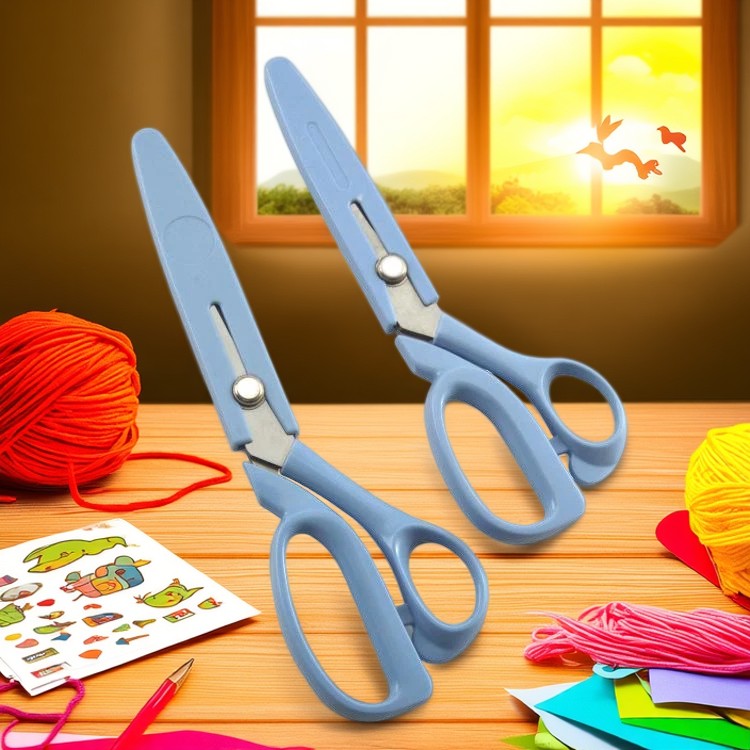
Tailor scissors are used for more than sewing rooms. They appear in craft drawers, home offices, classrooms, packaging stations, and small workshops where clean cutting and safer storage both matter. The original Safety Blade Scissors article highlights several practical features: a protective blade design, a matte powder blue finish, oval-shaped handles, a stainless steel core, and usability for fabric, delicate paper designs, heavier fabrics, and light plastic packaging. This rewritten guide explains how to evaluate those features before choosing tailor scissors with a cover.
Key Takeaways
- Choose tailor scissors based on the materials you cut most often, not only on appearance.
- A protective blade cover can reduce accidental contact during storage and handling, but it does not replace careful use.
- Oval handles and balanced weight help reduce hand fatigue during repeated cutting tasks.
- Keep dedicated fabric scissors away from paper, tape, wire, and sticky packaging when clean fabric edges matter.
- For wholesale or OEM sourcing, ask suppliers direct questions about materials, samples, packaging, quality checks, and replacement parts.
What Makes Tailor Scissors Different?
Tailor scissors are designed to make long, controlled cuts through fabric and similar sheet materials. Compared with general household scissors, they are usually selected for blade stability, grip comfort, and predictable cutting lines. For sewing and pattern work, a jagged edge can waste material or affect fit. For craft and packaging tasks, an unstable pair of scissors can slow work and increase strain.
The source article describes Safety Blade Scissors as a modern tailor scissors option with a partial sheath or protective blade design. This is useful for users who store scissors in drawers, tool rolls, sewing boxes, or shared work areas. The cover is especially relevant in homes where children may be nearby, although any sharp tool should still be stored responsibly and used with supervision where appropriate.
Why a Protective Cover Matters
A protective cover on fabric scissors serves two practical purposes. First, it helps reduce accidental contact with the blade when the scissors are not in use. Second, it can help protect the cutting edge from bumps against other tools, clips, pins, rulers, or craft supplies. A blade that stays protected is less likely to become nicked or dulled by careless storage.
The original article refers to a premium protective blade design and a partial sheath that helps prevent accidental injuries while maintaining sharpness and precision. Buyers should understand this as a safety-supporting feature, not a guarantee against injury. The scissors should still be closed before storage, kept away from small children, and handled by the grips rather than the blade area.
How to Select Tailor Scissors for Your Use Case
Start with the materials you cut most frequently. If your work is mainly garment fabric, look for scissors that move cleanly through cotton, linen, or synthetic blends without dragging. If you often cut heavier fabrics, you will want a strong core and a comfortable grip. The original article states that the scissors have a stainless steel core and can be effective against tough materials such as heavier fabrics or light plastic packaging.
Next, consider whether you need one dedicated pair or several task-specific pairs. Many sewing users keep fabric scissors separate from paper scissors because paper and adhesive packaging can dull the edge faster. If your environment involves mixed tasks, such as craft kits, gift wrapping, and occasional fabric cutting, a covered pair may be a practical everyday option.
Comparison Checklist for Buyers
| Selection Point | Why It Matters | What to Check |
|---|---|---|
| Blade protection | Helps reduce accidental blade contact and protects the edge in storage. | Confirm whether the cover is built in, partial, removable, or supplied separately. |
| Cutting materials | Different tasks place different stress on the blade and pivot. | Ask whether the scissors are intended for fabric, paper, packaging, or mixed use. |
| Handle shape | Comfort affects control during repeated cutting. | Test the oval-shaped handle fit for your hand size and cutting angle. |
| Hand orientation | Left- and right-handed users may experience different comfort levels. | The source notes accommodation for both right- and left-handed users; verify with samples if buying in bulk. |
| Core material | Material affects durability, maintenance, and edge stability. | The original article states a stainless steel core; ask suppliers what grade and finish are used if required. |
| Finish and color | Color can support product identification or retail presentation. | The source mentions a matte powder blue finish; confirm color consistency for larger orders. |
Comfort and Ergonomics in Daily Cutting
Handle comfort is not a minor detail. Repeated cutting can strain the thumb, knuckles, and wrist, especially during long craft sessions or fabric preparation. The original article notes oval-shaped handles designed for an ergonomic and strain-free experience. In practical terms, buyers should look for a grip that allows firm control without forcing the fingers into a tight angle.
If possible, test the scissors with the actual material you plan to cut. A pair that feels comfortable for paper may feel different when cutting folded fabric. Check whether the pivot opens smoothly, whether the blades meet evenly from base to tip, and whether the handle edges create pressure points. For shared environments, choose a design that works for different hand sizes rather than only one user.
Use-and-Care Tips for Longer Performance
- Store the scissors closed and covered when not in use.
- Wipe the blades after cutting dusty, fibrous, or adhesive materials.
- Keep fabric scissors separate if clean textile cuts are important.
- Avoid cutting metal wire, hard plastic, or materials beyond the intended use.
- Check the pivot area regularly for lint, thread, or debris.
- Dry the scissors before storage if they are exposed to moisture.
These basic habits help maintain cutting quality. Stainless steel can support durability, but it still benefits from sensible care. If the scissors begin to snag fabric or crush rather than cut, inspect the blades and pivot before assuming the product has failed. Sometimes residue or lint is the cause.
B2B Sourcing Notes for Wholesale and OEM Buyers
For distributors, retailers, craft brands, or OEM buyers, the same product feature can create different sourcing questions. A protective blade design may affect packaging dimensions, retail display, labeling, user instructions, and replacement policy. Before placing a larger order, request samples and test them with the materials your customers commonly use.
Do not assume commercial details that are not published. Instead, ask the supplier direct questions: What blade and core materials are used? Is the protective cover integrated or separate? Can the handle color be customized? What packaging formats are available? Are samples offered before bulk production? What quality checks are performed before shipment? Are there specific use warnings or care instructions that should appear on retail packaging?
If you sell into regulated markets, ask the supplier for documentation relevant to your destination market rather than relying on general product descriptions. Claims about safety, compliance, testing, or material grade should be supported by supplier documents before they appear in your own sales materials.
Practical FAQ
Are tailor scissors with a cover safe for children?
A protective cover can reduce accidental blade contact during storage, but tailor scissors are still sharp tools. Children should use scissors only when age-appropriate and supervised.
Can these scissors cut fabric and paper?
The source article describes use for fabrics, delicate paper designs, heavier fabrics, and light plastic packaging. For best fabric performance, many users keep one pair only for textiles.
What does a stainless steel core mean for daily use?
The original article states that the scissors have a stainless steel core, which supports durability. If you need a specific steel grade, ask the supplier before purchasing.
Are they suitable for left-handed users?
The source states that the oval-shaped handles accommodate both right- and left-handed users. Bulk buyers should still test samples with actual users to confirm comfort.
What should wholesale buyers confirm first?
Confirm blade protection design, intended cutting materials, packaging options, sample availability, customization limits, quality checks, and any documents needed for your market.
Final Buying Advice
Good tailor scissors should cut cleanly, feel stable in the hand, and store safely between uses. The Safety Blade Scissors described in the original article focus on a protective blade design, oval handles, a matte powder blue finish, and a stainless steel core. Those details make them relevant for home sewing, crafting, school supplies, packaging stations, and retail assortments where safety-conscious storage is important. Choose based on real cutting tasks, verify supplier details when buying in quantity, and maintain the scissors properly so the edge remains useful over time.
