





Tailor Scissors: Precision Cutting Redefined
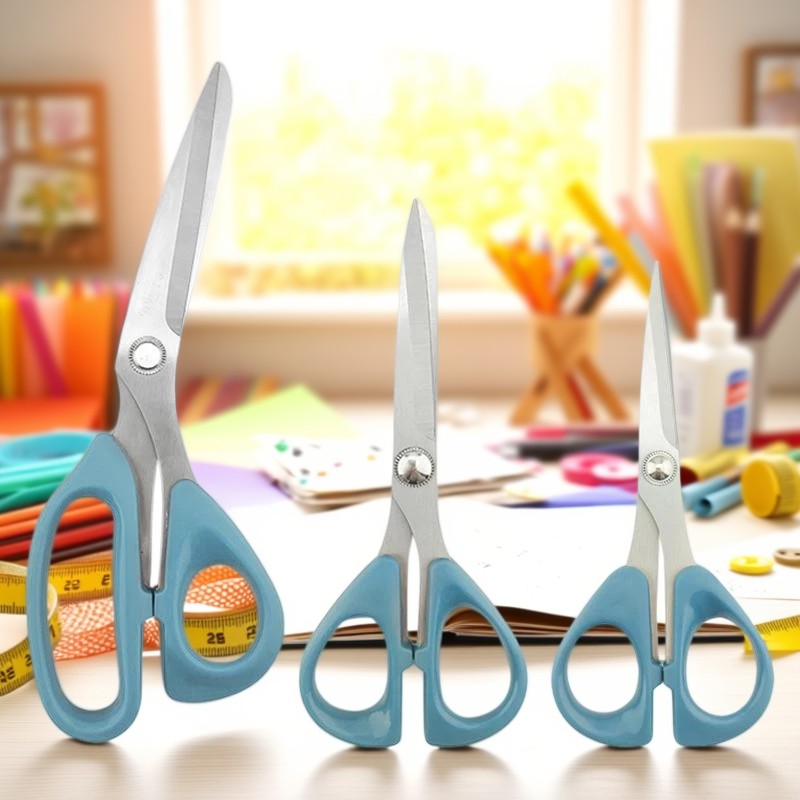
Tailor scissors are a basic tool, but the right pair can make a noticeable difference in fabric preparation, craft work, thread trimming, and general cutting tasks. The original Tailo Scissors Series article highlights several practical features: ergonomic soft-grip turquoise handles, stainless steel blades, and three size options for different jobs. This guide expands on those points with a more useful look at how to choose, use, and care for tailor scissors without overcomplicating the decision.
Key Takeaways
- Tailor scissors should match the material, task, and cutting duration, not just the visual design.
- Stainless steel blades are valued for clean cutting and practical durability when properly maintained.
- Soft-grip ergonomic handles can reduce discomfort during repeated or extended cutting sessions.
- A three-size scissors set is useful when switching between fabric cutting, crafting, office work, and detail trimming.
- Good care habits, such as keeping blades clean and dry, help preserve cutting performance.
What Makes Tailor Scissors Different?
Tailor scissors are designed for controlled cutting, especially where a straight, smooth edge matters. Unlike general household scissors, a good tailor-focused pair should feel stable in the hand and allow the user to cut along marked lines without dragging, snagging, or forcing the blades through the material. For sewing, alterations, and craft projects, that control helps reduce wasted fabric and repeated corrections.
The Tailo Scissors Series is described as suitable for both professionals and hobbyists. That broad use case is important: some users need reliable fabric shears for repeated tailoring tasks, while others want a dependable pair for occasional DIY projects, paper patterns, or fine crafting. The best choice depends on how often the scissors will be used, what they will cut, and how much comfort the user needs during longer work sessions.
Blade Material and Cutting Performance
The original product description states that the series uses stainless steel blades. Stainless steel is a common choice for scissors because it is practical, relatively easy to maintain, and suitable for everyday cutting environments. For tailor scissors, sharp blades matter because dull edges can compress fabric, pull threads, or create uneven cuts.
When evaluating fabric cutting scissors, users should check how smoothly the blades open and close, whether the tips meet cleanly, and whether the pivot feels stable. If scissors are intended for thicker fabrics, the larger size in a set may provide better leverage. For delicate paper, light fabric, or thread trimming, a smaller pair may offer better accuracy. Buyers should avoid assuming that one pair will be ideal for every task; using the right size reduces strain on both the tool and the user.
Handle Comfort for Long Cutting Sessions
Ergonomics are not just a comfort feature. They can affect accuracy, especially during repeated cutting. The Tailo Scissors Series is described with soft-grip turquoise handles designed to improve comfort and control. A soft-grip handle can help reduce pressure points on the fingers, while a stable grip can make it easier to guide the blade along a cutting line.
Before selecting tailor scissors, consider hand size, cutting hand, and typical working time. A comfortable handle should not require the user to over-tighten their grip. If scissors are used in a studio, workshop, school, or craft room, it may be useful to test whether different users can hold them securely. Comfort becomes especially important for tailors, sewing students, sample makers, and DIY users who cut multiple pieces in one session.
Choosing the Right Size for Each Task
The original article notes that the Tailo Scissors Series comes in three distinct sizes. A multi-size approach is practical because cutting jobs vary widely. Large scissors can help with longer cuts and heavier fabric work. Medium scissors are often easier for everyday cutting and general crafts. Small scissors are useful for detail work, thread trimming, and tight corners where a larger blade would feel clumsy.
| Scissors Size | Best Use | Selection Tip |
|---|---|---|
| Large | Heavy-duty fabric cutting and long straight cuts | Choose when leverage and cutting length matter most. |
| Medium | Crafting, office cutting, paper patterns, and general use | Good for users who want one balanced everyday option. |
| Small | Thread trimming, detail crafting, and precise small cuts | Use for control, corners, and finishing work. |
How to Use Tailor Scissors More Effectively
Even sharp tailor scissors perform better with proper technique. Keep the material flat, avoid lifting fabric too high while cutting, and use long, steady strokes for straight lines. For detailed work, switch to the smaller scissors instead of forcing a large pair around curves. If the scissors are used for fabric, avoid using the same pair on abrasive materials unless the tool is intended for mixed use, because that can reduce cutting quality over time.
- Reserve one pair for fabric if clean textile edges are important.
- Cut on a stable surface so the material does not shift.
- Wipe the blades after use, especially if cutting materials that leave residue.
- Store scissors closed and dry to protect the blade edges.
- Do not force the blades through materials that feel too thick for the selected size.
Care and Maintenance Checklist
Scissors do not need complicated maintenance, but they do benefit from consistent care. Stainless steel blades should still be kept clean and dry. If adhesive, lint, or fabric dust builds up near the pivot, the blades may feel less smooth. A simple care routine can help preserve cutting accuracy and make the tool more pleasant to use.
- Clean blades with a soft, dry cloth after cutting.
- Keep the pivot area free from lint and debris.
- Store scissors away from moisture and loose drawer impact.
- Use the correct size for the job to avoid unnecessary blade stress.
- Ask the supplier whether sharpening or adjustment guidance is available.
Practical FAQ
Are tailor scissors only for fabric?
They are commonly used for fabric, but the Tailo Scissors Series is also described for crafting, office work, paper, thread trimming, and DIY tasks. If fabric precision matters, keeping one pair dedicated to textiles is a good practice.
Why does handle design matter?
A comfortable handle helps the user maintain control. Soft-grip ergonomic handles can be helpful during longer cutting sessions because they reduce pressure and slipping compared with hard or poorly shaped handles.
Which size should I choose first?
If you need one general-purpose option, start with a medium size. Choose large scissors for long fabric cuts and thicker materials, and small scissors for thread trimming, curves, and detailed craft work.
Do stainless steel blades stay sharp forever?
No blade stays sharp forever. Stainless steel is practical and durable, but cutting performance still depends on proper use, storage, cleaning, and whether the scissors are used on suitable materials.
What should buyers ask before ordering?
Ask about available sizes, handle material, blade material, packaging options, care instructions, and whether the scissors are intended for fabric-only use or mixed household and craft use. If purchasing for resale or workplace supply, also ask for current commercial terms directly from the supplier.
Final Thoughts
Tailor scissors should be selected for control, comfort, and the type of cutting work they need to handle. Based on the original product information, the Tailo Scissors Series focuses on stainless steel blades, soft-grip turquoise handles, and three practical sizes. Those features make the series relevant for sewing, crafting, DIY, and everyday cutting. The best result comes from matching the size to the task, using careful cutting technique, and maintaining the blades with simple, regular care.
