




Tailor Scissors Yangjiang: Precision and Comfort
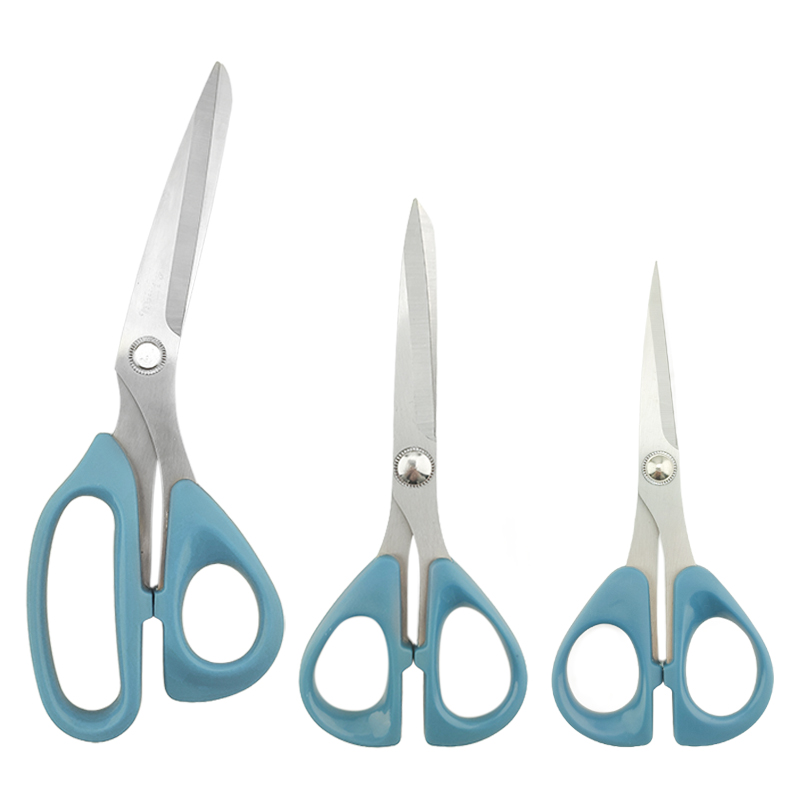
Yangjiang is widely associated with cutlery and hand-tool manufacturing, so buyers searching for tailor scissors Yangjiang are usually looking for more than a single attractive sample. They want reliable cutting performance, comfortable handling, consistent finishing, and a supplier that can support repeat orders without creating avoidable quality problems. The original product article introduced a three-piece scissors set with large, medium, and small sizes, stainless steel blades, aqua-blue ergonomic handles, and use across fabric, cardstock, household, office, and craft tasks. This rewritten guide turns those points into practical sourcing criteria for importers, wholesalers, private-label buyers, and product managers.
Because commercial details such as MOQ, packaging options, customization scope, testing, and lead time were not stated in the source, buyers should confirm them directly with the supplier before placing an order. A good sourcing decision should be based on samples, written specifications, inspection standards, and clear communication rather than broad claims about quality.
Key Takeaways
- Yangjiang tailor scissors are often considered by buyers seeking factory or wholesale supply of cutting tools.
- The described set includes three sizes intended for different cutting tasks, from heavier work to detailed craft use.
- Stainless steel blades and ergonomic aqua-blue handles are explicit features from the original article.
- Buyers should test cutting consistency on target materials before confirming bulk production.
- Important supplier questions include MOQ, tolerances, packaging, branding, inspection process, and after-sales handling.
What Buyers Should Look for in Tailor Scissors
Tailor scissors are judged first by how cleanly they cut. For fabric-related use, the blades should pass through material without pushing, chewing, or leaving uneven edges. For mixed-use sets, performance on paper, cardstock, thread, light craft materials, and sample fabrics may also matter. The original description says the blades are made from stainless steel and designed for sharp, durable cutting. That is a useful starting point, but it should be verified through sample testing and not treated as a final purchasing guarantee.
Ask the supplier to define the blade material more specifically if your market requires it. “Stainless steel” is a broad category, and the original text does not state a grade. If grade, hardness, edge angle, surface finish, or corrosion-resistance expectations are important for your buyers, include those points in the product specification sheet and confirm whether they can be tested or documented.
Blade Performance and Cutting Tests
A sample review should include more than opening the scissors and making a few quick cuts. Test the full blade length, from the pivot area to the tips. A good pair should cut smoothly near the handle, through the middle, and at the point. If the tips fail to meet cleanly, detailed work becomes difficult. If the pivot is too loose, the blades may separate during cutting. If it is too tight, users may feel hand fatigue during repeated use.
The original article mentions a smooth opening and closing motion with reduced snagging or friction. To confirm this in a sourcing context, buyers can request several random samples and compare them for consistency. The goal is not only to find one good sample but to understand whether the supplier can repeat that quality across a shipment.
Comfort, Handle Shape, and User Control
Comfort is especially important for tailors, craft users, packaging staff, and anyone who cuts for long periods. The described scissors use aqua-blue ergonomic handles with a curved shape intended to support control and reduce strain. For retail products, that visual identity may also help the item stand out, but comfort should be assessed by real handling rather than color alone.
When evaluating handles, check the finger openings, grip surface, molding finish, edge smoothness, and balance between blade and handle. A handle that looks comfortable in photos may feel awkward for users with larger or smaller hands. If the product is intended for different markets, consider whether one handle size suits the expected customer base or whether multiple sizes are necessary.
Three-Piece Set: How to Match Size to Use
The source article describes a versatile trio: large, medium, and small scissors. This format can work well for retail, promotional, craft, and general household channels because it gives users a tool for different tasks. For wholesale buyers, the question is whether the set composition matches the actual selling scenario. A sewing-focused channel may value a strong large pair and precise small pair. A household channel may place more value on all-purpose usability and safe packaging.
| Set Component | Likely Use Case | Buyer Checkpoint |
|---|---|---|
| Large scissors | Heavier cutting tasks and larger materials | Check blade alignment, pivot strength, and hand comfort during repeated cuts. |
| Medium scissors | Daily office, household, or general craft use | Confirm it performs well on the most common materials for your channel. |
| Small scissors | Detail trimming, thread cutting, and precision craftwork | Test tip closure, point accuracy, and ease of control. |
| Full three-piece set | Retail bundle or multipurpose toolkit | Review packaging, barcode needs, labeling, and consistency between sizes. |
Supplier Questions for OEM, Wholesale, and Factory Orders
If you are sourcing from a Yangjiang scissors supplier, build a question list before requesting a quotation. Price is important, but incomplete specifications often create problems later. The original article does not provide commercial terms, so the following items should be confirmed directly with the supplier:
- What is the MOQ for standard products and for customized packaging or branding?
- Can the supplier provide a written specification for blade material, handle material, size, weight, and finish?
- What packaging formats are available for retail, e-commerce, or bulk wholesale?
- What sample cost, sample time, production lead time, and payment terms apply?
- How does the supplier inspect blade sharpness, pivot smoothness, handle finish, and final packing?
- Can the supplier support logo printing, color changes, or private-label cartons, and what are the limits?
For regulated markets, buyers should also ask what documentation is available and whether any claims are supported by current test reports. Do not assume compliance, certification, or market approval unless the supplier provides suitable evidence for your destination market.
Quality Inspection Before Shipment
A practical inspection checklist helps reduce returns and customer complaints. For tailor scissors, inspection should include visual appearance, blade edge condition, tip alignment, handle defects, pivot action, oil marks, rust spots, packaging condition, and carton labeling. Random cutting tests should be performed on materials similar to those used by end customers. If the scissors are marketed for fabric, include fabric in the test plan. If the set is intended for household and craft use, add paper and cardstock samples.
Buyers should define acceptable and unacceptable defects before production. For example, minor cosmetic variation may be acceptable in some wholesale channels, while poor blade alignment or cracked handles should not be accepted. Agreeing on inspection standards in advance helps both buyer and supplier avoid disputes.
Use and Care Guidance for End Customers
Clear care instructions improve customer satisfaction and may reduce misuse. Stainless steel scissors still need basic maintenance. Users should keep the blades clean and dry, avoid cutting materials beyond the intended purpose, and store the scissors safely when not in use. If one pair is reserved for fabric, it should not be used heavily on paper or cardboard because that can reduce cutting performance over time.
- Wipe blades after use, especially after cutting adhesive materials.
- Keep the pivot area free from lint and debris.
- Store scissors closed and away from children.
- Use the correct size from the set for the task instead of forcing one pair to do everything.
FAQ
Are these Yangjiang tailor scissors only for fabric?
The original article describes use on delicate fabrics and tough cardstock, and also mentions office, household, and craft tasks. Buyers should confirm the intended material range with the supplier and test samples.
What blade material is stated?
The source states stainless steel blades. It does not state a specific stainless steel grade, hardness, coating, or test result, so those details should be requested if important.
Is the set suitable for wholesale or OEM sourcing?
It may be suitable, but commercial details are not provided in the source. Buyers should ask about MOQ, customization, packaging, lead time, inspection, and documentation.
How should buyers evaluate comfort?
Check handle shape, grip surface, finger opening size, balance, and fatigue during repeated cutting. If possible, have several users test the samples.
What is the main advantage of a three-piece scissors set?
A large, medium, and small set lets users choose a tool that fits the task, from larger cutting jobs to detailed trimming. For sellers, it can also create a clear retail bundle.
