




Tailor Shears Supplier: Professional Clothing Scissors for Garment Cutting
For apparel studios, sewing tool distributors, craft retailers, and uniform or textile businesses, tailor shears are not a casual accessory. They affect cutting accuracy, operator comfort, fabric waste, and the perceived quality of a finished garment. Choosing a tailor shears supplier should therefore involve more than comparing a photo and a unit price. Buyers need to understand blade construction, size options, handle comfort, coating choices, sample approval, packaging, and repeat-order consistency.
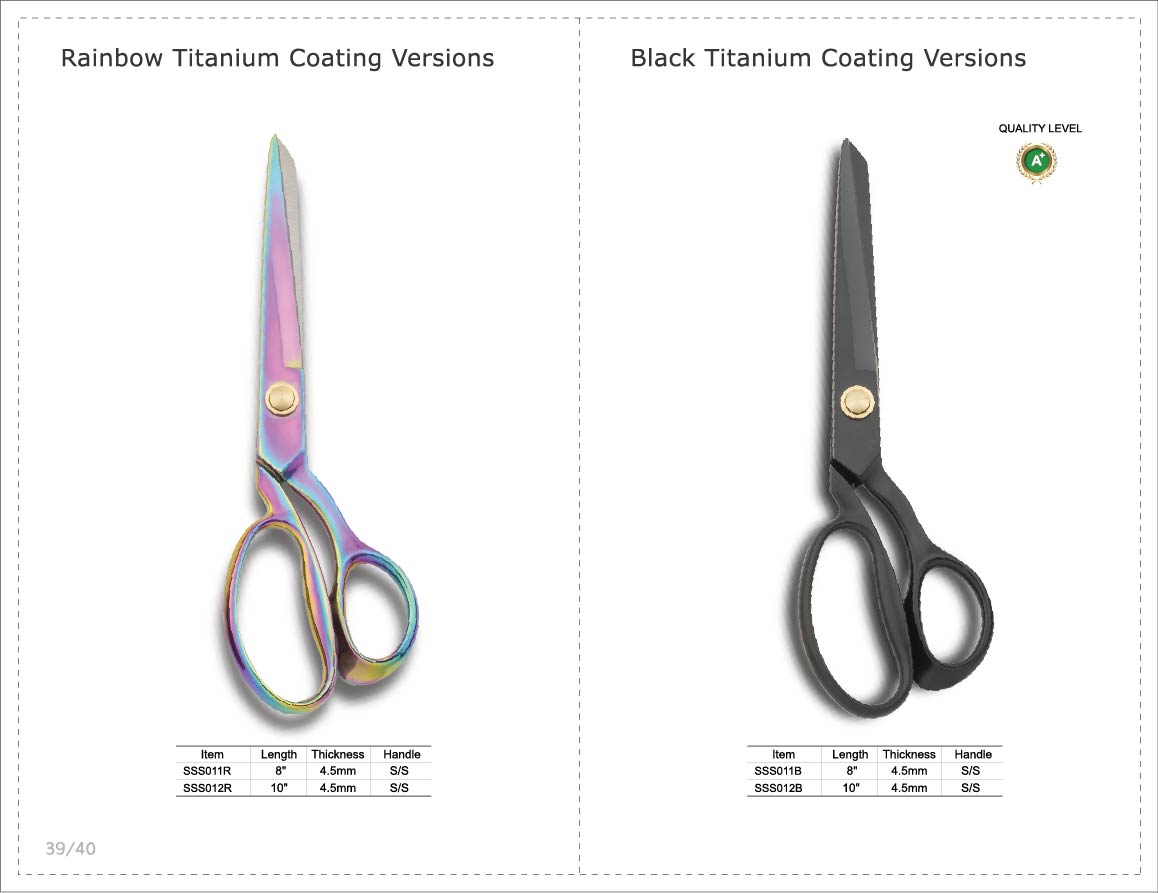
This guide rewrites the key product information into a practical sourcing checklist. Bonet Houseware presents tailor scissors for professional clothing and fabric use, including titanium coating scissors in Rainbow and Black finishes, with 8-inch and 10-inch options. The original product information also notes 4.5 mm stainless steel blades and stainless steel handles. When evaluating any supplier, use these details as a starting point and confirm all commercial and technical requirements before placing a bulk order.
Key Takeaways
- Professional tailor shears should be selected for fabric type, cutting frequency, blade thickness, handle comfort, and size.
- The referenced collection includes 8-inch and 10-inch titanium coating scissors in Rainbow and Black finishes.
- Ask suppliers for samples, packaging options, edge-retention expectations, inspection standards, and replacement procedures.
- Do not rely only on appearance; test the shears on the fabrics your customers actually cut.
What Professional Buyers Should Look For
A good pair of clothing scissors should cut smoothly through fabric without dragging, chewing the edge, or forcing the user to apply excessive pressure. For garment businesses, the most important characteristics are blade alignment, edge sharpness, screw tension, handle balance, and a comfortable grip. If the shears are used for long cutting sessions, hand fatigue becomes a real productivity issue.
For B2B buyers, consistency matters as much as the first sample. A supplier may provide an excellent sample, but the bulk shipment must match it. Before ordering, ask how the supplier checks blade sharpness, blade opening and closing, surface finish, handle fitting, and final packing. If you sell under your own brand, confirm whether logo, hang tag, barcode, inner box, or retail display packaging can be discussed.
Blade Size, Thickness, and Cutting Application
The original product information highlights 4.5 mm stainless steel blades. Blade thickness can influence stability, especially when cutting layered cloth or heavier textiles. A thicker blade may feel more stable, while a lighter tool may be preferred for detailed trimming or frequent handling. The best choice depends on the intended user: a tailoring workshop, a fashion school, a fabric store, or a retail sewing kit line may all need different product positioning.
The collection also offers 8-inch and 10-inch models. An 8-inch shear is often easier to control for general sewing, pattern cutting, and users with smaller hands. A 10-inch shear may be preferred for longer cuts across larger fabric panels, particularly when speed and straight-line cutting are important. When sourcing, do not assume one size fits all. Consider carrying both sizes if your customer base includes professionals and home sewing users.
Titanium Coating Scissors: Rainbow and Black Options
The article source mentions titanium coating scissors in Rainbow and Black editions. A coating can influence the product appearance and may help differentiate a retail range, especially when selling through craft stores, online sewing categories, or promotional product channels. Rainbow finishes can attract buyers who want a distinctive display item, while Black finishes may suit a more understated professional look.
However, buyers should still validate performance. Ask whether the coating affects cutting feel, whether the surface is resistant to normal handling marks, and how the supplier recommends cleaning the blades. Request clear photos or video from multiple angles, and compare actual samples under normal lighting. Color consistency is important if you plan to build a branded product line or reorder the same SKU repeatedly.
Comparison and Sourcing Checklist
| Decision Point | What to Check | Questions to Ask the Supplier |
|---|---|---|
| Size | 8-inch or 10-inch models | Which size sells best for professional garment cutting, and can both sizes be packed as separate SKUs? |
| Blade | 4.5 mm stainless steel blades as stated in the source | How is blade sharpness inspected before shipment? |
| Handle | Stainless steel handle noted in the source | Can you provide a sample for grip comfort and balance testing? |
| Finish | Titanium coating in Rainbow or Black | How consistent is the finish across bulk production? |
| Packaging | Retail or wholesale packing needs | What packaging options, labeling, and carton details can be confirmed before order? |
| Quality Control | Cutting feel, alignment, screw tension, surface finish | What inspection process is used, and can inspection photos or reports be provided? |
How to Test Samples Before a Bulk Order
Sample testing should reflect real use. Do not test only on a single thin fabric if your customers cut denim, canvas, felt, wool, or layered cotton. Prepare a small test set and record results consistently. This helps your purchasing team compare samples from different suppliers and prevents decisions based only on appearance.
- Check opening and closing smoothness several times before cutting.
- Cut long straight lines on cotton or similar woven fabric.
- Test curves and notches to evaluate control near the blade tip.
- Cut multiple fabric layers if your market requires it.
- Inspect the cut edge for fraying, dragging, or skipped spots.
- Ask several users to comment on weight, balance, and handle comfort.
If the product is intended for retail, also inspect the packaging after shipping. Bent cards, scratched surfaces, weak blister packs, or unclear labeling can create customer complaints even when the scissors themselves perform well.
Supplier Questions for OEM, Wholesale, or Private Label Buyers
When the search intent is “tailor shears supplier,” buyers usually need reliable communication and repeatable supply, not only a catalog page. Before confirming an order, prepare a written question list. Ask about available sizes, finish choices, packaging formats, logo options, lead time, order quantity requirements, sample fees, production photos, and after-sales handling. If your market requires any specific compliance documents, request them directly and verify whether they apply to your destination country and sales channel.
Because commercial details can change, avoid relying on assumptions. Confirm the final specification in a proforma invoice, purchase order, artwork proof, and pre-shipment checklist. For private label projects, make sure spelling, barcode placement, warning labels, and color names are checked before mass packaging begins.
Use and Care Guidance for End Users
Even a well-made pair of tailor shears can perform poorly if used incorrectly. Clothing scissors should be reserved for fabric and thread, not paper, wire, plastic straps, or kitchen materials. Wipe blades after use, keep the pivot area clean, and store the shears closed in a sleeve or box. If the shears become stiff, the user should check whether lint or thread is caught near the joint before forcing the blades.
Retailers and distributors can reduce complaints by adding simple care instructions to packaging or product pages. Clear guidance helps customers understand that professional cutting tools require proper handling and should not be treated like general household scissors.
Practical FAQ
Which size is better, 8-inch or 10-inch tailor shears?
Choose 8-inch shears for general sewing control and 10-inch shears for longer fabric cuts. Many B2B buyers test both sizes because different users prefer different balance and cutting length.
Are titanium coating scissors only for appearance?
The source highlights Rainbow and Black titanium coating options. Buyers should evaluate both appearance and cutting performance through samples, especially if the product will be sold as a professional tool.
What should I ask before ordering wholesale tailor shears?
Ask about size options, blade material stated in the quotation, coating finish, packaging, logo options, sample availability, inspection methods, lead time, order quantity requirements, and after-sales handling.
How can I reduce quality issues in bulk orders?
Approve a physical sample, define inspection points, request packaging confirmation, and compare pre-shipment photos or reports against the approved sample. Use the same fabric tests for each batch where possible.
Can tailor shears be used for paper or craft materials?
They can physically cut many materials, but fabric shears should be kept for fabric to preserve the cutting edge. Using them on paper, plastic, or hard materials may reduce performance for garment cutting.
