




Tailoring Scissors Factory: How to Source Quality Cutting Tools
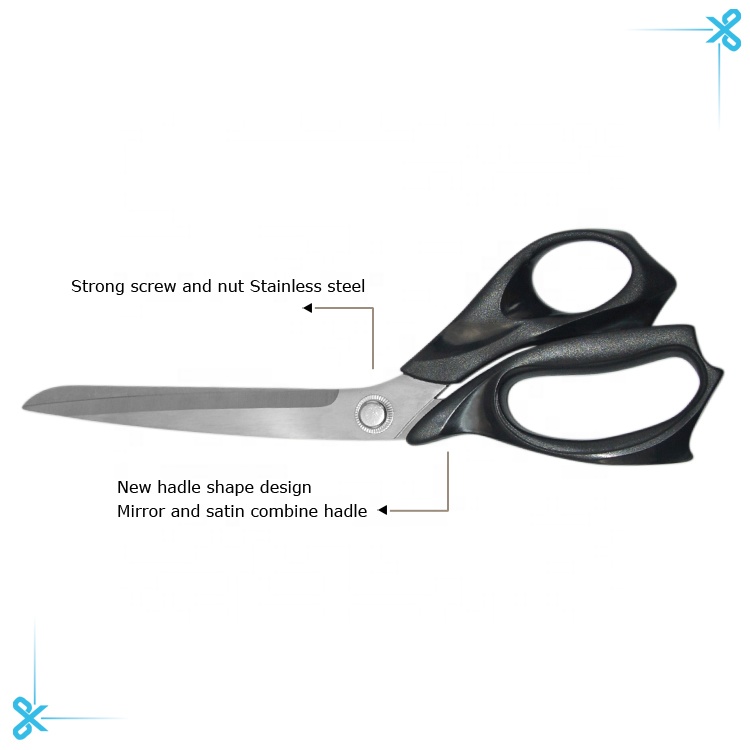
Choosing a tailoring scissors factory is not only about finding a low unit price. For wholesalers, importers, private-label brands, and sewing tool distributors, the better question is whether a supplier can deliver consistent cutting performance, comfortable handling, stable finishing, and clear communication from sample approval to repeat orders. Tailoring scissors are simple in appearance, but small details such as blade alignment, screw tension, edge sharpness, handle comfort, and surface finish can affect user satisfaction.
The original product information highlights several useful features: a strong screw and nut assembly, stainless steel construction, mirror and satin blade finishes, and an ergonomic handle designed for comfortable use. This guide explains how to evaluate those details in a practical B2B sourcing process without relying on vague promises or unnecessary marketing language.
Key Takeaways
- Confirm the blade material, hardness target, edge treatment, and finish directly with the factory before ordering.
- Check the screw and nut assembly because tension stability affects cutting smoothness and long-term use.
- Request pre-production samples and compare them with approved reference samples before mass production.
- For OEM or wholesale projects, clarify packaging, branding, inspection standards, lead time, and after-sales handling in writing.
What Makes Tailoring Scissors Different from General Scissors?
Tailoring scissors are designed for controlled cutting on fabric and other workshop materials. Compared with light office scissors, they generally need a stronger blade, a more stable pivot, and a handle shape that remains comfortable during repeated cutting. The source article states that these scissors are suitable for detailed work on fabric, paper, and beyond, which makes them relevant for tailoring shops, sewing studios, craft suppliers, and textile-related distribution channels.
For B2B buyers, the important point is to match the tool to the actual end user. A professional tailor may care about long cutting strokes and smooth blade action. A craft retailer may need approachable packaging and a design that appeals to hobby users. A uniform or garment workshop may focus on durability, easy maintenance, and consistent performance across many pairs.
Core Product Details to Verify with the Factory
The original description mentions stainless steel, a strong screw and nut assembly, mirror and satin finishes, and an ergonomic handle. These are useful starting points, but buyers should ask for the exact commercial and technical details instead of assuming them. A reliable tailoring scissors factory should be able to explain how the product is made, what can be customized, and what inspection criteria are used.
- Blade material: Ask the supplier to confirm the stainless steel specification used for the scissors and whether alternative materials are available.
- Edge sharpness: Request cutting samples or a video showing the scissors cutting the intended materials, such as cotton fabric, light denim, felt, or paper.
- Pivot construction: Confirm the screw and nut design, whether tension can be adjusted, and how the factory checks opening and closing smoothness.
- Surface finish: Mirror and satin finishes can create a clean visual appearance, but buyers should also check for scratches, burrs, stains, or uneven polishing.
- Handle comfort: Ask for samples to test grip size, finger opening, weight balance, and comfort during repeated cuts.
Comparison Checklist for Supplier Evaluation
Use the table below when comparing a sewing scissors supplier, textile scissors manufacturer, or OEM factory. It helps keep the discussion specific and reduces the risk of approving a product based only on photos.
| Evaluation Point | What to Check | Questions to Ask the Supplier |
|---|---|---|
| Blade material | Material type, thickness, edge consistency | What stainless steel specification is used, and can it be documented on the order sheet? |
| Cutting performance | Smooth cut, no fabric snagging, clean paper cut | Which materials are used for in-house cutting checks before shipment? |
| Screw and nut assembly | Stable tension, no wobble, smooth opening | Is the pivot adjustable, and how is looseness checked during inspection? |
| Finish quality | Mirror and satin appearance, no visible burrs | What cosmetic defects are accepted or rejected in bulk inspection? |
| Handle design | Grip comfort, size suitability, hand fatigue | Are handle colors, materials, or shapes available for OEM customization? |
| Packaging | Retail pack, bulk pack, barcode, labeling | Can packaging artwork, carton marks, and labeling be confirmed before production? |
OEM, Wholesale, and Private-Label Considerations
If you are sourcing from a tailoring scissors factory for resale, treat product development as a controlled process. Start with a sample request and provide a clear target market: professional tailoring, home sewing, craft retail, school use, or promotional distribution. This helps the supplier recommend a suitable size, handle design, surface finish, and packaging format.
Do not assume that all customization is available by default. Ask whether logo marking, handle color changes, packaging design, barcode labels, instruction cards, or carton customization can be supported. Also ask about any additional tooling needs, artwork requirements, sample fees, production lead times, and minimum order quantities. These details vary by supplier and should be confirmed before quotation comparison.
For wholesale programs, request a written specification sheet. It should list the product name, dimensions, material description, finish, handle color, packaging method, inspection expectations, and approved sample reference. A clear specification sheet protects both buyer and supplier because it creates a shared standard for production.
Quality Control Points Before Shipment
Tailoring scissors should feel controlled, not loose or rough. Before shipment, buyers can arrange internal inspection, third-party inspection, or sample checks depending on order size and risk level. The most practical checks include visual appearance, blade alignment, pivot strength, cutting test, handle condition, and packaging accuracy.
- Open and close several samples to feel whether motion is smooth and consistent.
- Cut the intended material and check whether the blades push fabric instead of cutting it.
- Inspect blade tips for alignment, chips, deformation, or uneven grinding.
- Check screw tightness and whether the pivot loosens after repeated movement.
- Review cartons, labels, barcodes, and product inserts against approved artwork.
If the supplier claims a specific certification, test result, or compliance status, request supporting documents and confirm whether they apply to the exact product, packaging, and destination market. Do not rely on general statements when importing cutting tools for regulated retail channels.
Use and Care Guidance for End Customers
Even well-made tailoring scissors perform better when used correctly. If you sell scissors through retail or online channels, include simple care instructions to reduce complaints. Customers should avoid cutting hard wire, thick plastic, or materials outside the intended use unless the product has been designed for that purpose. Wiping blades after use and storing scissors in a dry place can help maintain the surface condition. If the pivot is adjustable, users should tighten or loosen it carefully rather than forcing the blades.
For professional sewing environments, it is sensible to separate fabric scissors from paper scissors. Paper and adhesive materials can dull the edge faster, while fabric users usually expect a clean and uninterrupted cutting line. Clear user guidance improves product experience and supports repeat purchases.
FAQ
What should I ask a tailoring scissors factory first?
Start with material, size options, blade finish, handle design, packaging, sample availability, MOQ, lead time, and inspection standard. Ask for these details in writing.
Are mirror and satin finishes only decorative?
They affect appearance and surface feel, but buyers should still inspect polishing quality, burrs, scratches, and consistency across bulk production.
Can tailoring scissors be sold to both professionals and hobby users?
Yes, but the product positioning may differ. Professionals often focus on cutting performance and comfort, while hobby users may also value packaging, size, and ease of handling.
How can I reduce risk before placing a wholesale order?
Approve physical samples, create a specification sheet, confirm packaging artwork, define inspection criteria, and ask how the supplier handles defects or replacement claims.
What information is needed for OEM scissors?
Prepare logo files, color requirements, packaging layout, target market, expected order quantity, labeling needs, and any destination-market requirements the supplier should review.
