




Textile Shear Factory: Precision & Customization
Choosing a textile shear factory is not only about finding a product that looks attractive in a catalog. For importers, sewing-tool distributors, garment workshops, and private-label buyers, the real question is whether the supplier can deliver cutting tools that are consistent, practical, and suitable for the intended market. Textile shears are used in repetitive fabric cutting, so small details such as blade alignment, tension, handle comfort, finish durability, and packaging can affect user satisfaction.
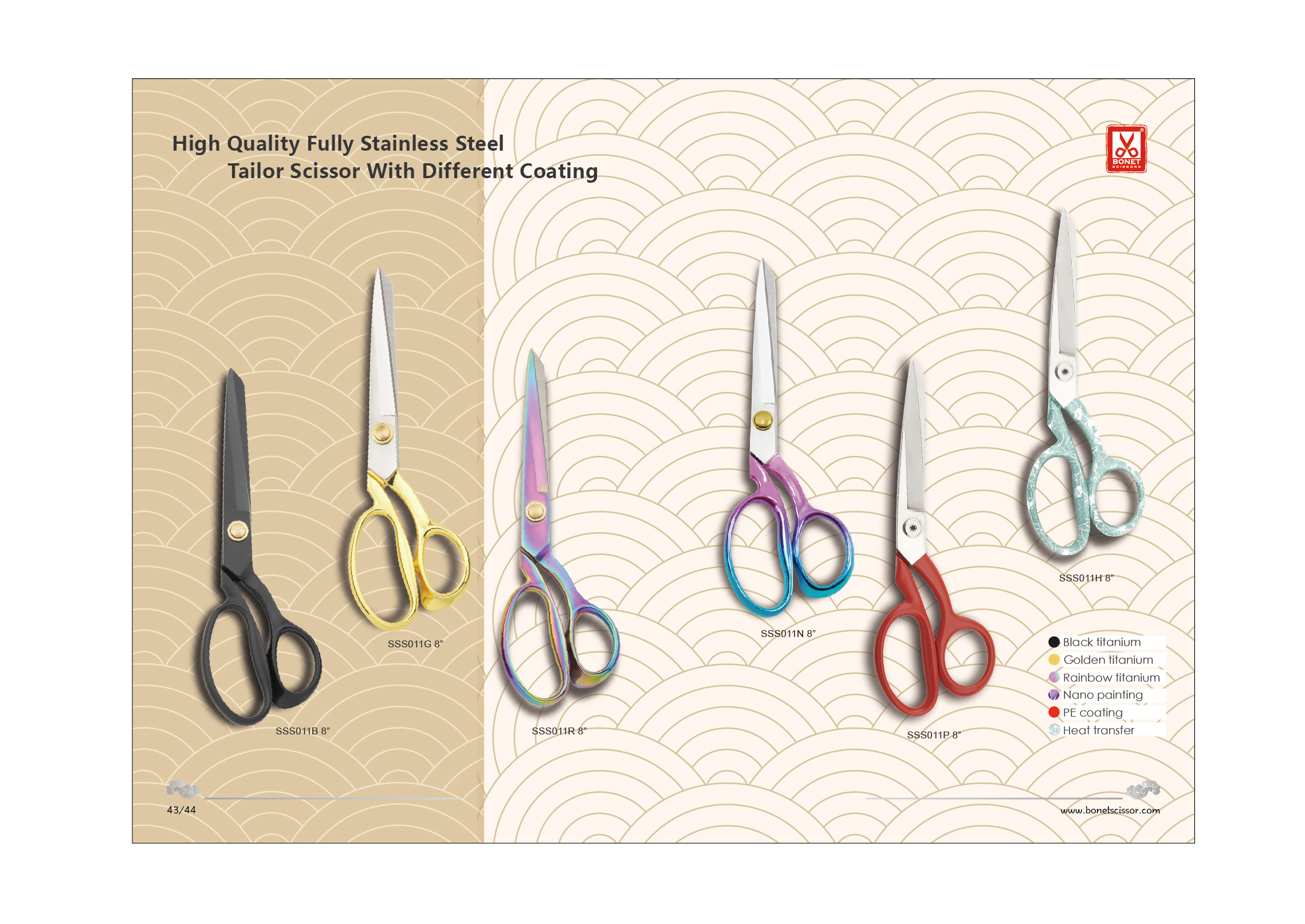
The original product information highlights textile shears made from fully stainless steel, with customization options such as black titanium, golden titanium, rainbow titanium, heat transfer patterns, handle coatings, and sizes from 6-inch to 8-inch. Those details are useful starting points, but B2B buyers should still confirm specifications, samples, tolerances, and commercial terms directly with the factory before making sourcing decisions.
Key Takeaways
- A good textile shear factory should be evaluated on cutting performance, consistency, customization ability, and communication quality.
- Do not rely only on appearance; request samples and test the shears on the fabrics your customers commonly cut.
- Customization may include surface finishes, handle coatings, sizes, logos, and packaging, but each option should be confirmed with the supplier.
- Buyers should ask clear questions about materials, inspection standards, lead time, MOQ, packing, and replacement handling.
What Buyers Should Expect from a Textile Shear Factory
A textile shear factory typically serves professional and consumer sewing markets, including tailor shops, dressmakers, fabric stores, craft retailers, and wholesalers. The core requirement is simple: the shears must cut fabric cleanly and comfortably. In practice, that depends on manufacturing control across blade grinding, pivot assembly, edge sharpness, and final inspection.
For B2B sourcing, buyers should look beyond a single sample photo. Ask whether the supplier can provide current product images, sample units, packaging examples, and available size options. If your project requires private labeling, ask whether the factory can support logo placement and what methods are available. If you need a specific color or coating, request a physical sample because screen colors may not match the finished product.
Precision Matters: Blade Alignment, Edge, and Tension
Precision is the most important performance factor for textile shears. Fabric should not slip, fold, or snag between the blades. When evaluating samples, open and close the shears slowly to feel whether movement is smooth from the pivot to the tip. A blade that cuts well near the pivot but fails at the tip may create frustration for tailors and sewing hobbyists.
The source information describes the shears as fully stainless steel. Buyers should still ask the supplier to confirm the stainless steel type, hardness range if available, and recommended use cases. Not every textile project is the same: delicate fabric, cotton, denim, felt, and layered materials may require different expectations for blade geometry and long-term edge retention. A reliable supplier should be willing to discuss how the product performs under realistic use rather than only describing it as sharp.
Customization Options to Discuss Before Ordering
Customization can help a distributor create a more recognizable product line, but it should be managed carefully. The original article mentions black titanium, golden titanium, rainbow titanium, heat transfer patterns, different handle coatings, and sizes from 6-inch to 8-inch. These options can support different retail positions, from basic sewing kits to giftable craft tools.
Before approving a custom order, ask the factory which finishes are standard, which are made to order, and whether finish samples are available. Buyers should also clarify whether coating is mainly decorative, grip-related, or intended for added surface protection. If packaging customization is required, request dielines, carton details, barcode placement options, and a pre-production packaging proof.
Supplier Comparison Checklist
Use a structured checklist when comparing textile shear suppliers. This helps avoid choosing based only on the lowest quotation or the most polished product photo.
| Evaluation Area | What to Check | Questions to Ask the Supplier |
|---|---|---|
| Material | Confirm the stated stainless steel construction and any available technical details. | What stainless steel specification is used, and can it be confirmed in writing? |
| Cutting Performance | Test smoothness, tip cutting, fabric control, and tension consistency. | What inspection steps are used before packing? |
| Customization | Review available finishes, handle coatings, logo options, and size range. | Which options are standard, and which require custom setup? |
| Samples | Order samples before bulk purchasing, especially for private-label projects. | Can samples match the final material, finish, and packaging? |
| Packaging | Check protection during shipping and retail presentation. | What inner pack and outer carton options are available? |
| Commercial Terms | Clarify MOQ, lead time, payment terms, and after-sales handling. | What details should be confirmed before production starts? |
How to Test Textile Shear Samples
Sample testing should reflect real customer use. If your buyers are garment factories, test repeated cutting on production fabrics. If your market is home sewing, test common fabrics such as cotton, felt, and light denim. Avoid judging only the first cut; repeated opening and closing can reveal whether the pivot remains comfortable and whether the handle shape causes fatigue.
- Inspect the surface finish for scratches, uneven coating, or visible burrs.
- Open and close the shears several times to check smooth movement.
- Cut single-layer and multi-layer fabric, including at the blade tip.
- Compare several samples from the same batch for consistency.
- Check packaging protection by simulating normal handling and transport.
Keep notes and photos during testing. If an issue appears, share specific evidence with the factory. Clear feedback is more useful than a general statement such as “quality is not good.”
Private Label and Wholesale Buying Considerations
For wholesale and OEM projects, the purchase decision should include both product quality and supply reliability. Ask the factory for a quotation that separates the base product, custom finish, logo process, packaging, and any sample or tooling charges if applicable. Do not assume that every finish or package style has the same lead time or MOQ.
It is also wise to define approval stages. Many buyers request a reference sample, then a pre-production sample, and then production photos before shipment. The exact process depends on order size and business relationship, but written confirmation reduces misunderstandings. If your market requires specific labeling, safety, or compliance documentation, ask the supplier what they can provide and verify it through your own compliance process.
Practical FAQ
What makes textile shears different from general scissors?
Textile shears are designed for cutting fabric more cleanly and comfortably than ordinary household scissors. Buyers should test whether the blade alignment and tension support smooth fabric cutting.
Can textile shears be customized for a private-label brand?
Customization may include finishes, handle coatings, logos, sizes, and packaging. The original product information mentions black, golden, and rainbow titanium finishes, heat transfer patterns, handle coatings, and 6-inch to 8-inch sizes, but buyers should confirm current options with the supplier.
What should I ask before placing a wholesale order?
Ask about material details, sample availability, MOQ, lead time, packaging, inspection process, customization limits, payment terms, and how quality issues are handled after delivery.
How many samples should a buyer test?
Testing more than one sample is recommended because consistency matters in wholesale sourcing. If possible, compare several units and test them on the fabrics your customers commonly use.
Is the lowest price the best choice for textile shears?
Not always. A lower price may be acceptable for some markets, but buyers should compare cutting performance, finish consistency, packaging protection, and supplier communication before deciding.
Conclusion: Source with a Clear Evaluation Process
A textile shear factory can offer precision cutting tools and attractive customization, but successful sourcing depends on careful evaluation. Start with clear product requirements, request samples, test them on real fabric, and ask direct questions about production and packaging. By combining performance testing with supplier comparison, buyers can select textile shears that fit their market instead of relying only on appearance or price.
