





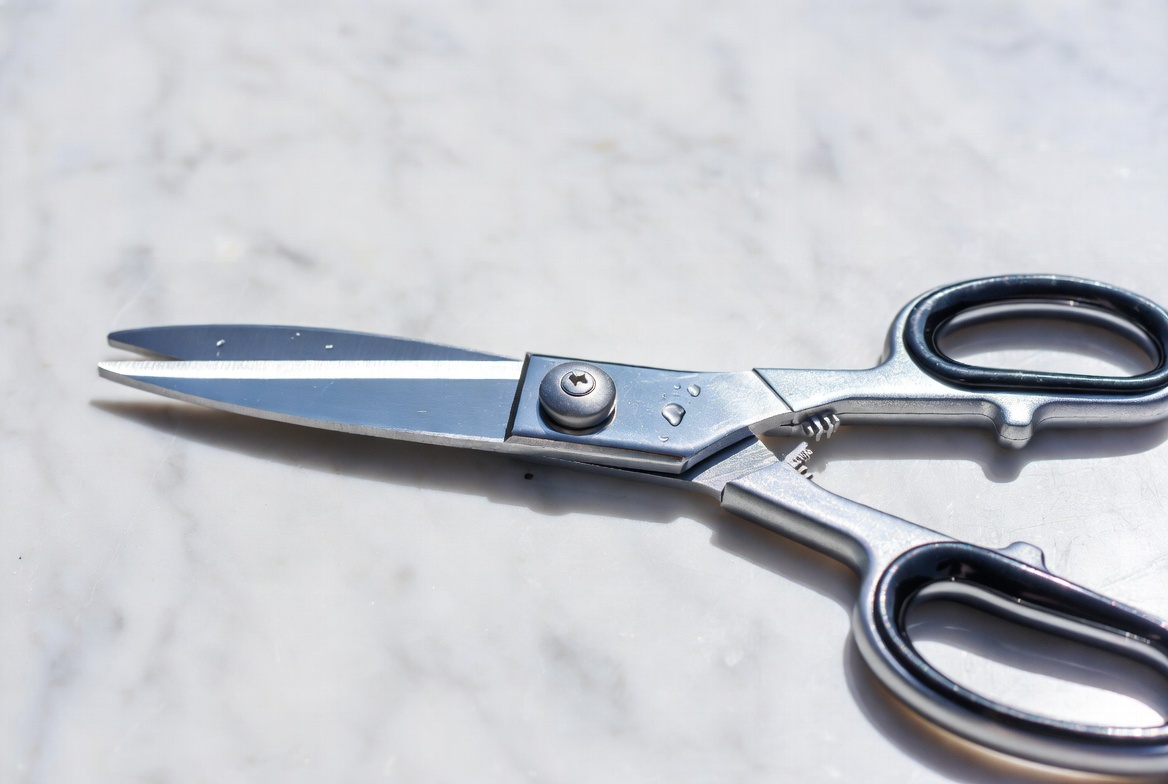
The Importance of Take-Apart Kitchen Shears for Food Safety
Kitchen scissors are useful for tasks that a knife does not always handle neatly: snipping herbs, trimming poultry, cutting cooked noodles, opening food packaging, or portioning leafy greens. Because they touch many different foods, they also need to be easy to clean. That is where take-apart kitchen shears deserve attention.
A take-apart design allows the two sides of the shears to separate at the pivot point. This matters because the pivot is one of the easiest places for moisture, grease, and tiny food particles to collect. If those residues are not removed, they can transfer from one ingredient to another during normal cooking. For households that use one pair of shears for both raw and ready-to-eat foods, better cleaning access is not just convenient; it is a practical food-safety habit.
What Are Take-Apart Kitchen Shears?
Take-apart kitchen shears, also called detachable kitchen scissors, are designed so the blades and handles can be separated for washing. The exact release mechanism can vary by model. Some separate when opened to a certain angle, while others use a screw or locking structure. The main idea is the same: the user can access both inner blade surfaces and the pivot area more thoroughly than with fixed-pivot scissors.
This does not mean every take-apart pair is automatically the right choice. Buyers should still check blade sharpness, handle comfort, safe assembly, corrosion resistance, and the manufacturer’s care instructions. However, the detachable design gives users a clear advantage when cleaning after cutting raw meat, fish, herbs, oily foods, or sticky ingredients.
Why the Pivot Area Matters for Food Safety
Food safety often comes down to small habits repeated consistently. When scissors cut raw chicken and then are only rinsed quickly, juices can remain around the joint. The same problem can happen after cutting herbs, chili, cheese, or cooked foods with sauce. These residues may not be visible once the tool looks dry, but they can still be present in tight spaces.
Cross-contamination is the key concern. If a tool touches raw poultry, seafood, or meat and is then used on salad greens or garnish without proper cleaning, harmful microorganisms may be transferred to foods that will not be cooked again. Take-apart kitchen shears help by making the hidden contact points easier to scrub, rinse, and dry.
Take-Apart vs. Fixed-Pivot Kitchen Scissors
The best option depends on how you cook, how often you use shears, and how carefully you clean them. The table below compares typical user considerations without assuming that every product has the same materials or features.
| Selection Point | Fixed-Pivot Kitchen Scissors | Take-Apart Kitchen Shears |
|---|---|---|
| Cleaning access | Limited access around the screw or rivet area | Better access to inner blade faces and pivot surfaces |
| Use after raw meat or seafood | Requires extra attention and careful scrubbing | Easier to inspect, wash, and dry thoroughly |
| Storage after washing | May retain moisture in tight spaces if not dried well | Separated parts can usually dry more openly |
| Convenience | Simple one-piece handling | Requires correct reassembly before use |
| Best for | Light kitchen tasks and packaging | Frequent food prep where hygiene is a priority |
How to Choose Kitchen Shears for Everyday Food Prep
When shopping for kitchen shears, avoid judging only by appearance. A good pair should feel controlled in the hand, cut cleanly, and be straightforward to clean. If product information is incomplete, ask the seller for care guidance before purchase.
- Check the take-apart mechanism: It should separate intentionally, not loosen unexpectedly during cutting.
- Look for comfortable handles: Handles should suit your hand size and provide stable grip when wet.
- Inspect the blade edges: The blades should meet evenly and cut without twisting food.
- Ask about care instructions: Confirm whether hand washing is recommended and whether dishwasher cleaning is allowed for that model.
- Consider dedicated use: Some kitchens keep one pair for raw proteins and another for herbs, cooked foods, or packaging.
- Choose safe storage: A drawer organizer, sheath, or knife block can help protect the edges and reduce accidental contact.

Cleaning Steps After Cutting Raw or Oily Foods
Cleaning should happen soon after use, before food dries around the pivot or along the blade edge. Always follow the product’s care instructions, especially if the shears include coatings, special handle materials, or a specific locking mechanism.
- Open the shears and separate the two halves according to the product design.
- Rinse away visible food particles under running water.
- Wash each part with warm water and dish soap, paying attention to the pivot area, inner blade faces, and handle edges.
- Use a small brush if residue remains in narrow areas.
- Rinse thoroughly so no soap remains on food-contact surfaces.
- Dry completely with a clean towel or air-dry in a position that allows moisture to escape.
- Reassemble only when dry, then store safely away from loose utensils that may damage the edges.
Common Mistakes That Reduce Hygiene
One common mistake is treating kitchen shears like a general household tool. Scissors used for food should not also be used for cardboard, tape, garden materials, or non-food packaging that may leave adhesive or debris on the blades. Another mistake is cutting raw poultry and then wiping the blades with a towel instead of washing them. Wiping can spread residue rather than remove it.
It is also important not to rely on appearance alone. A clean-looking pivot may still hold moisture. If the shears have been used on raw animal products, a complete wash and dry is the safer routine. If the blades become loose, chipped, rusted, or difficult to clean, stop using them for food prep until the issue is resolved.
When Should You Replace Kitchen Shears?
There is no universal replacement schedule because wear depends on use, cleaning, storage, and build quality. Instead of following a fixed date, inspect performance. Replace or repair shears when they crush rather than cut, loosen at the pivot, show damage that traps food, develop corrosion that cannot be cleaned, or no longer assemble securely.
For busy kitchens, it may be sensible to keep more than one pair: one for raw protein preparation and another for herbs, vegetables, and cooked foods. This does not replace cleaning, but it can reduce the chance of accidental cross-use during meal prep.
Key Takeaways
- Take-apart kitchen shears improve cleaning access around the pivot, where residue often collects.
- Better cleaning helps reduce the risk of cross-contamination between raw and ready-to-eat foods.
- Choose shears based on safe separation, comfortable grip, cutting performance, and clear care instructions.
- Wash, rinse, and dry the separated parts after use, especially after cutting raw meat, seafood, or oily foods.
- Replace shears when damage, looseness, corrosion, or poor cutting makes safe cleaning difficult.
FAQ
Are take-apart kitchen shears safer than regular kitchen scissors?
They can support safer food prep because they are easier to clean thoroughly, especially around the pivot. Safe use still depends on washing, drying, and storing them properly after each task.
Can I put take-apart kitchen shears in the dishwasher?
Check the specific product instructions. Some kitchen shears may allow dishwasher cleaning, while others may recommend hand washing to protect the blades, handles, or pivot mechanism.
Should I use the same shears for raw chicken and herbs?
You can if the shears are fully washed and dried between tasks, but many home cooks prefer separate tools for raw proteins and ready-to-eat foods to reduce cross-contamination risk.
How do I know if the pivot is clean?
Separate the shears and inspect both connecting surfaces. There should be no visible residue, grease, odor, or trapped moisture before reassembly and storage.
What should I ask before buying kitchen shears online?
Ask how the take-apart mechanism works, what cleaning method is recommended, whether replacement or adjustment guidance is available, and what materials are used for the blade and handle if not clearly stated.
