




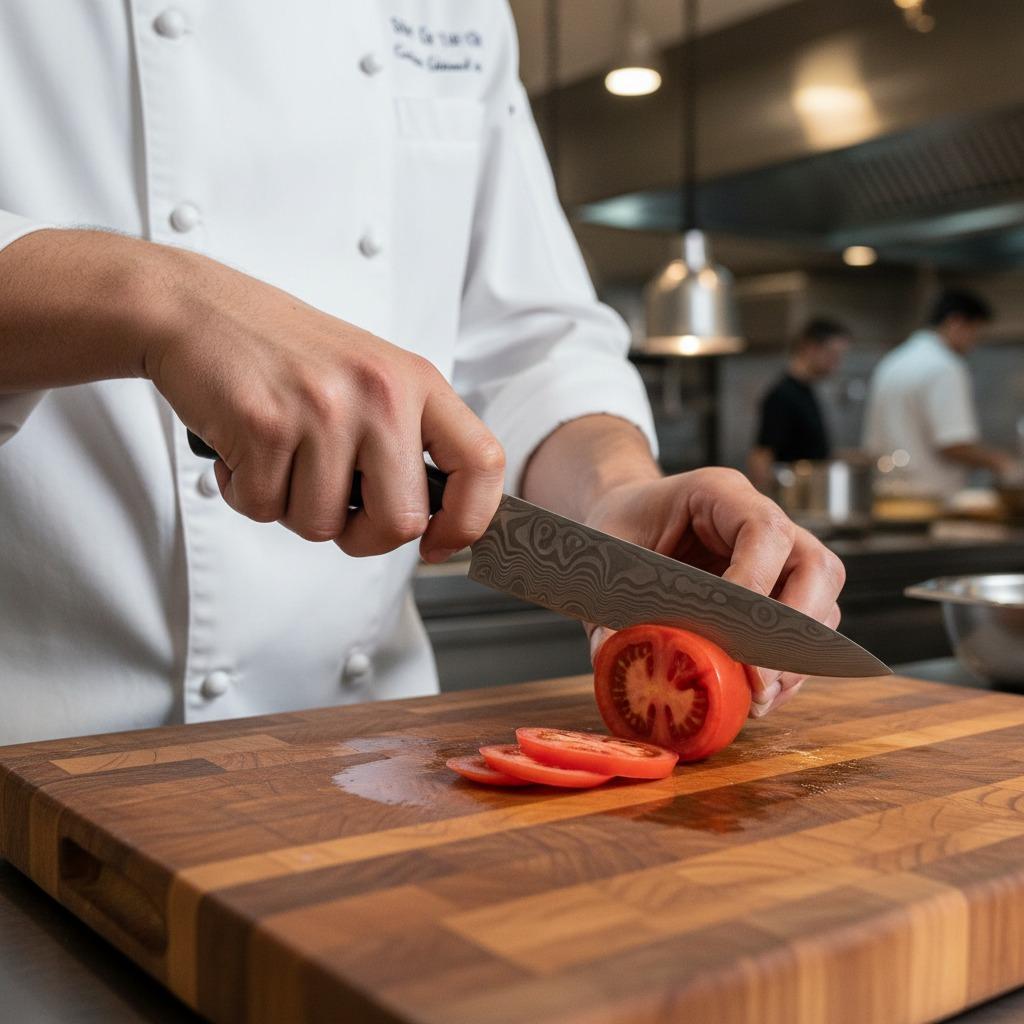
The Mystery of Damascus Steel: Patterns vs. Performance
Damascus steel has a reputation that blends history, craft, and visual drama. Its flowing lines can look like water, wood grain, or smoke trapped in metal. For kitchen knife buyers, however, the practical question is simple: does the pattern make the knife cut better?
The short answer is no, not by itself. A Damascus pattern can be beautiful, but cutting performance comes from the blade steel, heat treatment, edge geometry, grind, sharpening quality, and how the knife is used and maintained. Understanding the difference helps you choose a kitchen knife for real cooking rather than for appearance alone.
Key Takeaways
- Modern Damascus usually refers to pattern-welded steel, not the ancient wootz steel of historical legend.
- The visible pattern is mainly aesthetic; it does not automatically improve sharpness or edge retention.
- Performance depends most on steel selection, heat treatment, blade geometry, and sharpening.
- Damascus kitchen knives can be excellent tools when made and cared for properly, but buyers should ask specific product questions before purchasing.
What Damascus Steel Originally Meant
Historical Damascus steel is often linked to wootz ingots produced in regions including India and Persia from around 300 BC to 1700 AD. Blades made from this crucible steel became famous for sharpness, flexibility, and distinctive internal patterns. Those patterns were not surface decoration. They resulted from the steel’s composition and microstructure.
The original production method was lost by the 18th century, and modern makers do not exactly reproduce that ancient material. This matters because many kitchen knives sold today as Damascus are not ancient-style wootz. They are modern pattern-welded blades, which can still be attractive and functional but should be judged by today’s manufacturing details.
How Modern Damascus Patterns Are Made
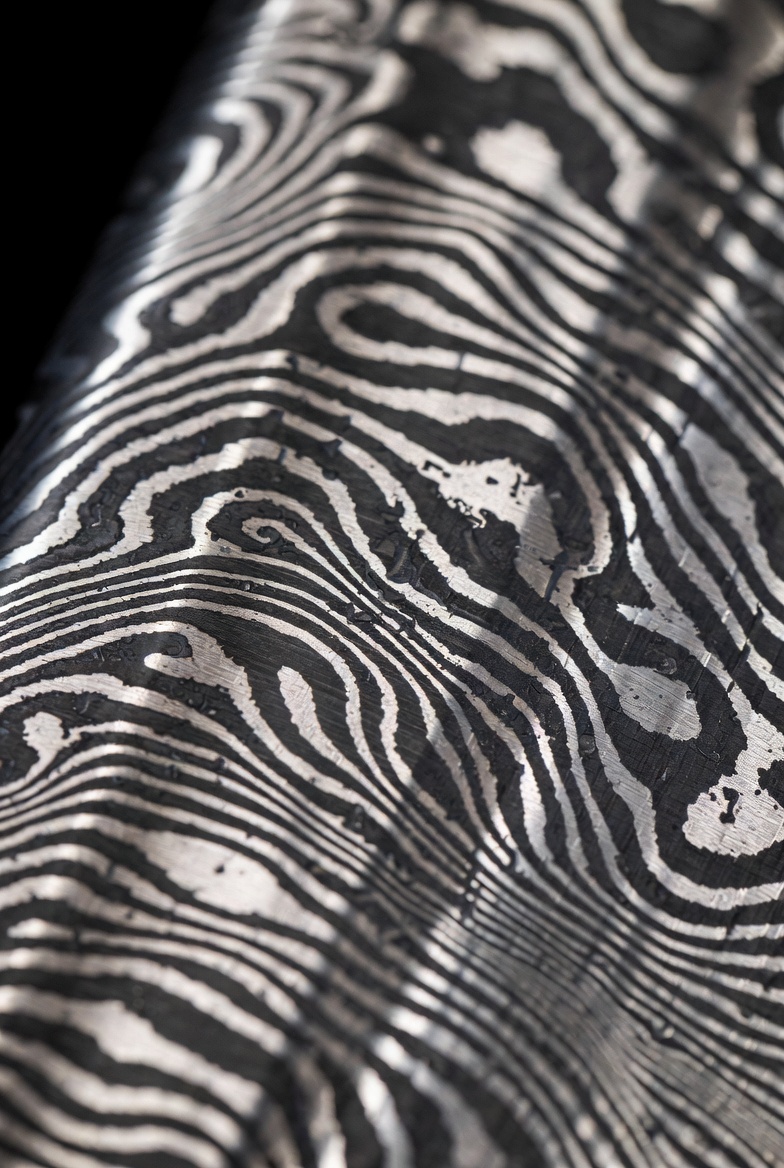
Most modern Damascus kitchen knives are made by pattern welding. In this process, different steels are stacked, forge-welded, manipulated, ground, polished, and etched so the layers show contrasting tones. The maker may twist, fold, or cut the billet to create patterns such as waves, ladders, raindrops, or feather-like lines.
The etching step reveals the pattern because the different steels react differently to the etchant. That visible contrast is one reason Damascus knives are popular as display pieces and gifts. Yet the pattern itself is not a cutting edge. A poorly heat-treated Damascus blade can underperform, while a plain monosteel blade with good treatment and geometry can cut extremely well.
Patterns vs. Performance: What Actually Matters
When evaluating a Damascus kitchen knife, separate appearance from function. A dramatic pattern may tell you that layered material was used, but it does not tell you whether the knife will hold an edge, resist chipping, or sharpen easily. Those qualities depend on information that should be confirmed by the seller or manufacturer.
| Buying Factor | What the Pattern Shows | What Affects Performance |
|---|---|---|
| Sharpness | Little by itself | Factory edge, sharpening angle, edge refinement |
| Edge retention | Not reliably indicated | Steel type, hardness, heat treatment, cutting surface |
| Toughness | Pattern alone is not proof | Heat treatment, blade thickness, intended use |
| Corrosion behavior | Cannot be judged visually | Steel composition, cleaning habits, storage conditions |
| Ease of maintenance | Etched finish may need gentle care | Wash method, drying, oiling needs, sharpening tools |
How to Choose a Damascus Kitchen Knife
For home cooks and professional users, the best Damascus knife is one that fits the tasks you actually perform. A chef’s knife or santoku may be suitable for general preparation, while a smaller utility or paring knife works better for detail work. Avoid choosing only by the boldest pattern.
Before buying, ask practical questions:
- What steel or steel combination is used in the blade?
- Is the cutting core identified, if the knife has a layered construction?
- What hardness range is claimed, and how is consistency controlled?
- What sharpening angle or maintenance method is recommended?
- Is the handle material suitable for frequent washing and kitchen humidity?
- What tasks should the knife not be used for, such as bones, frozen food, or hard shells?
If a listing focuses only on “beautiful Damascus pattern” without explaining use, care, or blade construction, treat that as incomplete information rather than proof of quality.
Care Tips for Damascus Kitchen Knives
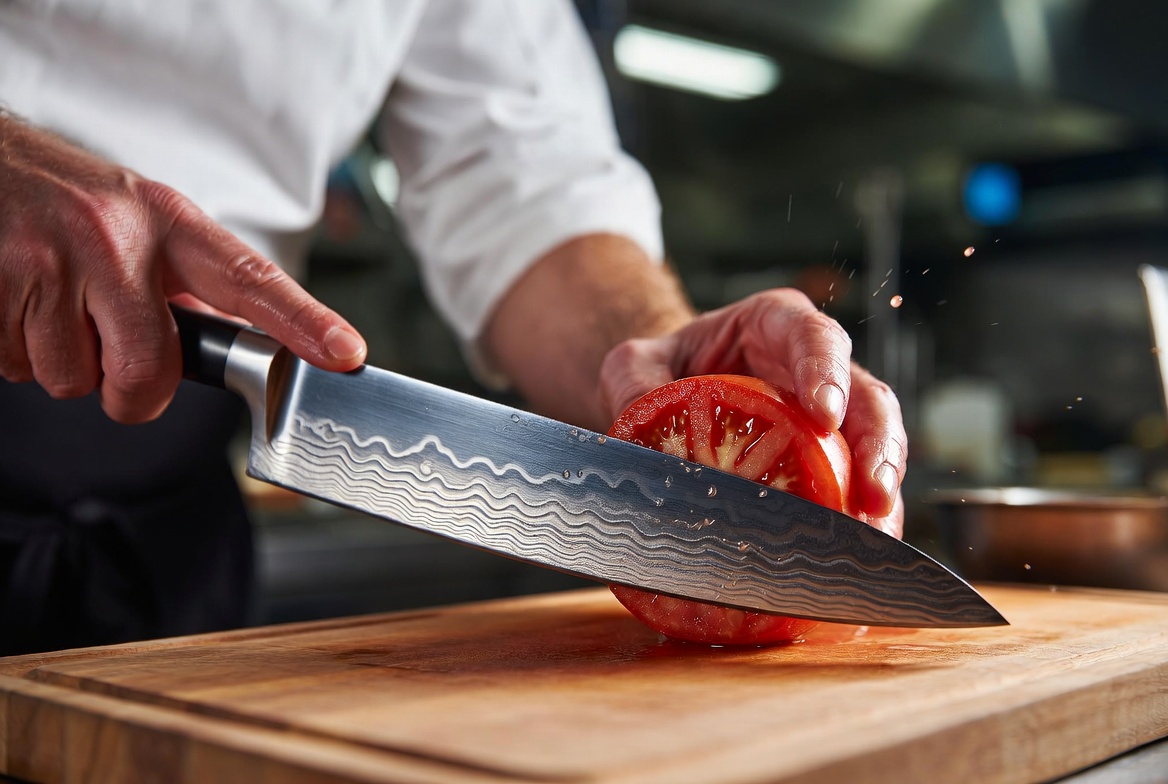
Good care protects both the edge and the etched finish. Unless the maker specifically says otherwise, wash a Damascus kitchen knife by hand with mild detergent, rinse it, and dry it promptly. Do not leave it soaking in a sink, and avoid dishwashers because heat, detergent, and impact can damage the blade edge and handle.
- Use a wood, bamboo, or suitable synthetic cutting board rather than glass or stone.
- Wipe acidic foods such as citrus, tomatoes, or vinegar-based ingredients from the blade after use.
- Store the knife in a sheath, knife block, drawer insert, or magnetic strip that prevents edge contact.
- Hone or sharpen according to the maker’s guidance instead of using aggressive pull-through tools without checking compatibility.
- If the steel is not fully stainless, ask whether occasional food-safe oiling is recommended.
When Damascus Is Worth Choosing
Damascus is worth considering when you want a kitchen knife that combines daily utility with a distinctive appearance. It can be especially appealing for cooks who enjoy the craft story behind their tools. However, it is not automatically the best option for every kitchen. If you prioritize the simplest maintenance, a plain stainless monosteel knife may be easier to manage.
The most balanced approach is to treat Damascus as a finish and construction style that must still pass ordinary knife-buying standards. It should feel comfortable in the hand, balance well, cut cleanly, and come with clear care instructions. Beauty is a valid reason to like a knife, but it should not replace functional evaluation.
FAQ
Does a Damascus pattern make a knife sharper?
No. Sharpness comes from edge grinding and sharpening. The pattern is mainly visual and does not guarantee a sharper edge.
Is Damascus steel better than stainless steel?
Not automatically. Some Damascus knives perform very well, but a good stainless monosteel knife can also be excellent. Compare steel information, heat treatment, geometry, and care needs.
Can I put a Damascus kitchen knife in the dishwasher?
Hand washing is the safer choice. Dishwashers can expose knives to harsh detergent, heat, moisture, and contact with other utensils.
Why do Damascus knives vary so much in price?
Prices can vary because of materials, labor, forging complexity, finishing, handle construction, and brand positioning. Ask what details justify the cost before buying.
What is the main mistake buyers make?
The main mistake is judging only by the pattern. A good Damascus kitchen knife should also provide clear information about construction, intended use, sharpening, and maintenance.
The Real Answer: Pattern Is Not Performance
The mystery of Damascus steel becomes clearer once you separate romance from practical knife design. The pattern is part of the appeal, but the real performance happens at the edge. Choose a Damascus knife because you appreciate its look and craft, but judge it by the same standards you would apply to any serious kitchen tool: steel, heat treatment, geometry, comfort, and care.
