




The Science of Fulcrums: Why Leverage Matters in Cutting Power
Scissors look simple, but their cutting performance depends on a clear mechanical principle: leverage around a fulcrum. The fulcrum is the pivot point where the two blades cross. When you squeeze the handles, force travels through the pivot and into the cutting edges. This is why two pairs of household scissors can feel very different even when they look similar at first glance.
Understanding how the fulcrum works helps you choose the right scissors for paper, packaging, kitchen tasks, craft work or light fabric. It also explains why maintenance matters. A loose, stiff or dirty pivot can waste your effort before it reaches the blade edge.
Key Takeaways
- Scissors work as a Class 1 lever, with the fulcrum between the handles and the cutting load.
- Longer handles and shorter distance from pivot to cutting point can increase mechanical advantage.
- Blade sharpness, blade angle and pivot friction affect cutting as much as overall size.
- For everyday use, choose household scissors based on material, hand comfort, control and maintenance needs.
What Is a Fulcrum in Scissors?
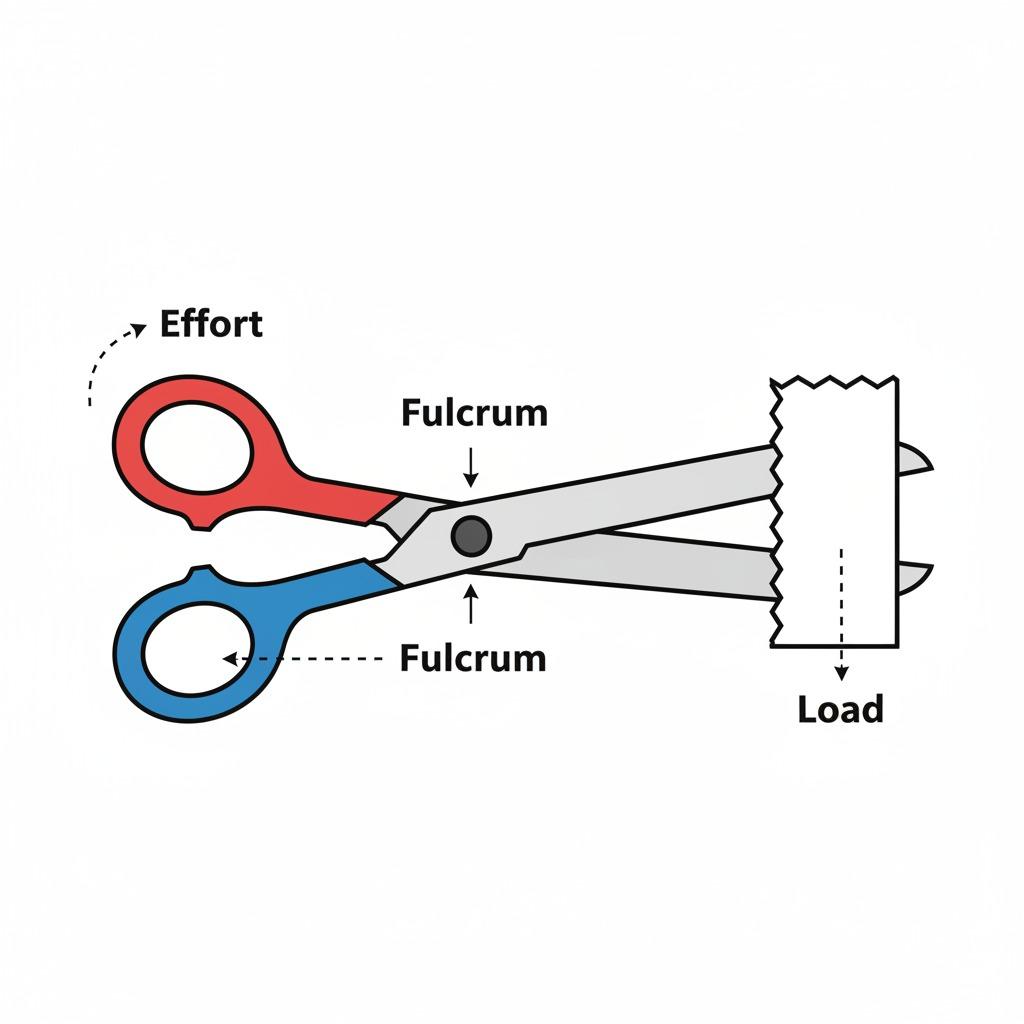
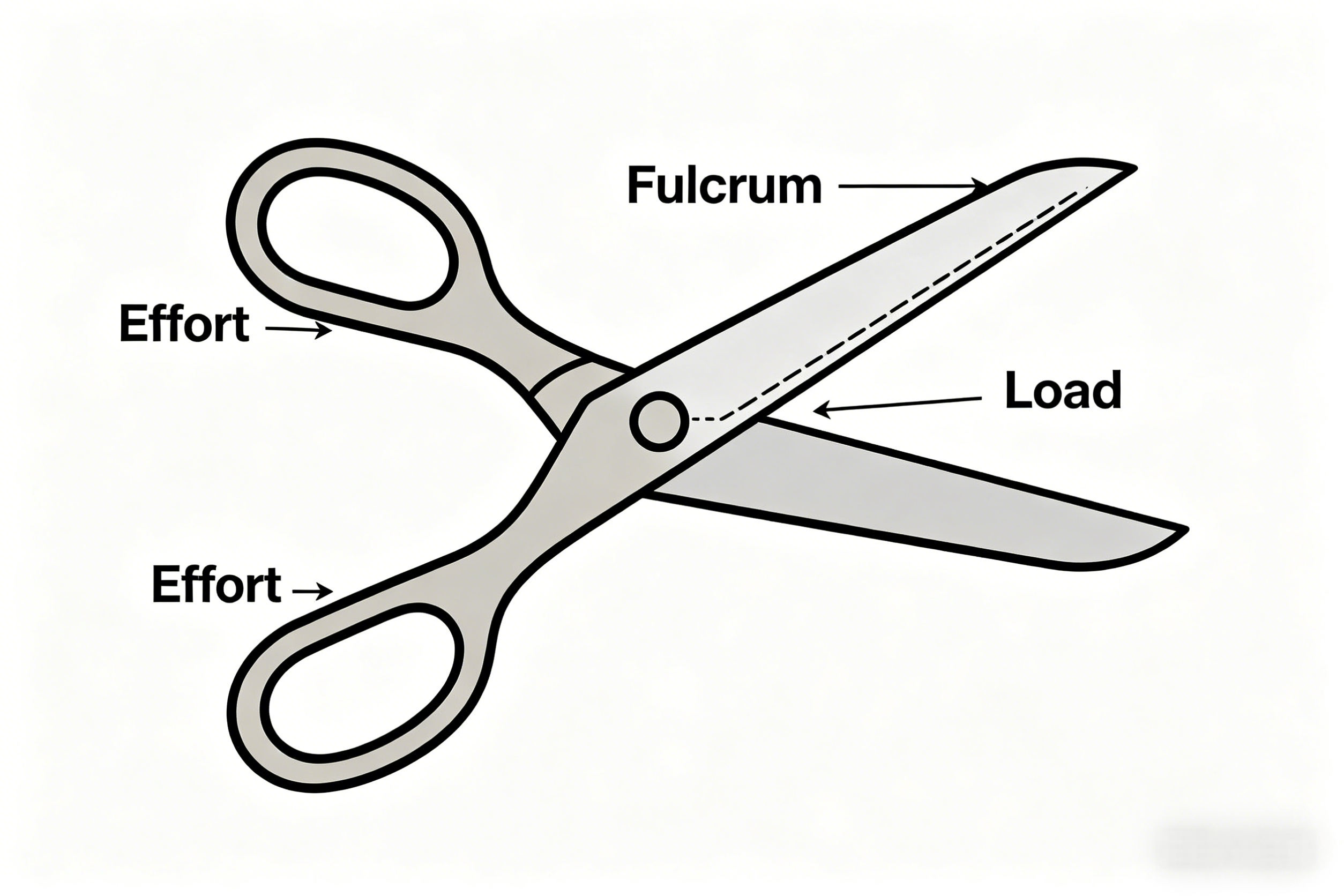
A fulcrum is the fixed point around which a lever rotates. In scissors, the fulcrum is the screw, rivet or pivot joint connecting the two blade halves. The handles are where you apply effort. The material being cut is the load. Because the fulcrum sits between the effort and the load, scissors are a classic Class 1 lever.
The basic idea is easy to picture: the farther your hand is from the pivot, the more leverage you can create. At the same time, the closer the cutting point is to the pivot, the more force is concentrated at that spot. This is one reason thick materials are often easier to start cutting near the base of the blades rather than at the tips.
How Leverage Creates Cutting Power
Mechanical advantage describes how a lever multiplies your input force. For scissors, a simplified way to think about it is:
Mechanical advantage = length of effort arm ÷ length of load arm
The effort arm is the distance from the fulcrum to where your fingers apply force on the handles. The load arm is the distance from the fulcrum to the point on the blade that is cutting. If the effort arm is long and the load arm is short, the scissors can apply more cutting force with the same squeeze from your hand.
This does not mean the biggest scissors are always best. More leverage can reduce the speed and precision of the cut. For fine craft work, short blades and compact handles may provide better control. For thicker packaging, cardboard or tough household materials, a stronger leverage layout can be more useful.
Comparison Table: Fulcrum and Scissor Design
| Scissor Type | Fulcrum and Lever Effect | Typical Strength | Best Use | Selection Tip |
|---|---|---|---|---|
| General household scissors | Balanced pivot position for mixed tasks | Moderate cutting power and control | Paper, labels, light packaging, general home use | Look for comfortable handles and smooth blade movement |
| Kitchen scissors or shears | Often designed for stronger gripping and repeated cuts | Good for practical kitchen tasks, depending on design | Food packaging, herbs, kitchen prep tasks | Ask whether the design is easy to clean and dry after use |
| Craft or precision scissors | Shorter cutting area for control near the tips | Lower force but higher accuracy | Detailed trimming, paper craft, thread and light materials | Prioritize tip control and a clean closing action |
| Heavy-duty utility shears | Greater leverage for tougher materials | Higher cutting power | Cardboard, plastic packaging, thicker household materials | Check handle comfort before repeated use |
| Small embroidery scissors | Compact lever with fine blade tips | Limited power, excellent detail | Thread, yarn ends and fine trimming | Use only on suitable light materials to protect the edge |
Why Blade Angle and Pivot Condition Matter
Leverage is only part of scissor performance. The blades must also meet at the correct angle. As the handles close, the blades press past each other and create a shearing action. If the blades are dull, misaligned or too loose at the pivot, the material may fold, snag or slip instead of cutting cleanly.
Pivot friction also matters. A pivot that is too tight makes scissors tiring to use because your hand energy is spent overcoming resistance. A pivot that is too loose may cause the blades to separate, reducing cutting efficiency. For everyday household scissors, the ideal feel is smooth movement with enough tension for the blades to meet consistently from base to tip.
How to Choose Household Scissors for Real Tasks
Before buying or replacing household scissors, think about the materials you cut most often. A pair used mainly for envelopes and paper does not need the same leverage as a pair used for packaging. A pair used near food should be easy to clean and dry. A pair used for crafts should offer accuracy at the tips.
- Match the tool to the material. Use general scissors for light tasks and stronger shears for tougher materials.
- Test comfort if possible. Handles should fit your hand without forcing awkward finger pressure.
- Check the pivot movement. Open and close the scissors slowly. Movement should feel smooth, not gritty or loose.
- Look at blade contact. The blades should meet evenly rather than leaving gaps.
- Consider control. Long blades can cut faster, while shorter blades may be easier to guide.
If you are sourcing scissors for retail, promotional programs or bulk household product lines, avoid judging by appearance alone. Ask suppliers practical questions: What materials are used for the blade and handle? How is the pivot assembled? Can samples be tested on the target materials? What packaging options are available? Are there any relevant test reports or compliance documents for the intended market? These questions help compare options without relying on unsupported claims.
Use and Care Tips for Better Cutting
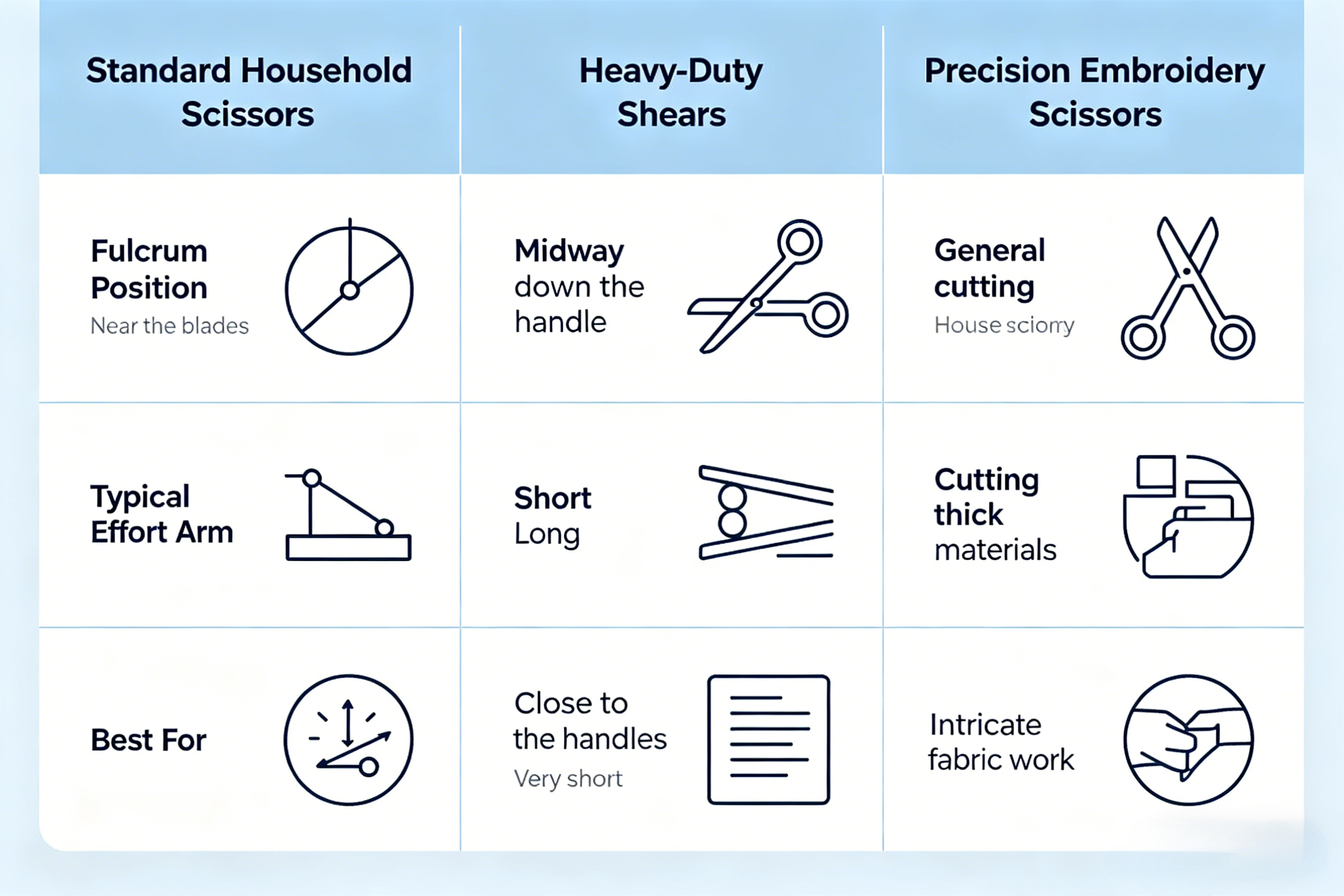
Good use habits can make ordinary scissors work better and last longer. Cut tough materials near the base of the blades when possible, because that area is closer to the fulcrum and benefits from greater leverage. Use the tips for detailed work, not for forcing through thick material.
- Keep the pivot clean and dry after use, especially after cutting sticky packaging or kitchen materials.
- Wipe residue from the blades before it builds up and increases friction.
- Do not twist the blades while cutting; twisting can affect alignment.
- Store scissors closed to protect the edges and reduce accidental damage.
- Use the correct tool for wire, hard plastic or other demanding materials rather than overloading household scissors.
Practical FAQ
Why do scissors cut better near the pivot?
The cutting point near the pivot has a shorter load arm, so more of your hand force is transferred into the material. This makes the base of the blades better for thicker or more resistant items.
Do longer scissors always have more cutting power?
Not always. Longer handles can increase leverage, but blade geometry, sharpness, pivot tension and handle comfort also affect performance. Long blades may also be less precise for detailed cuts.
Why do my scissors fold paper instead of cutting it?
Common causes include dull edges, loose pivot tension, blade misalignment or using the wrong section of the blade. Try cutting closer to the pivot; if the problem remains, the scissors may need adjustment or replacement.
How often should I oil the pivot?
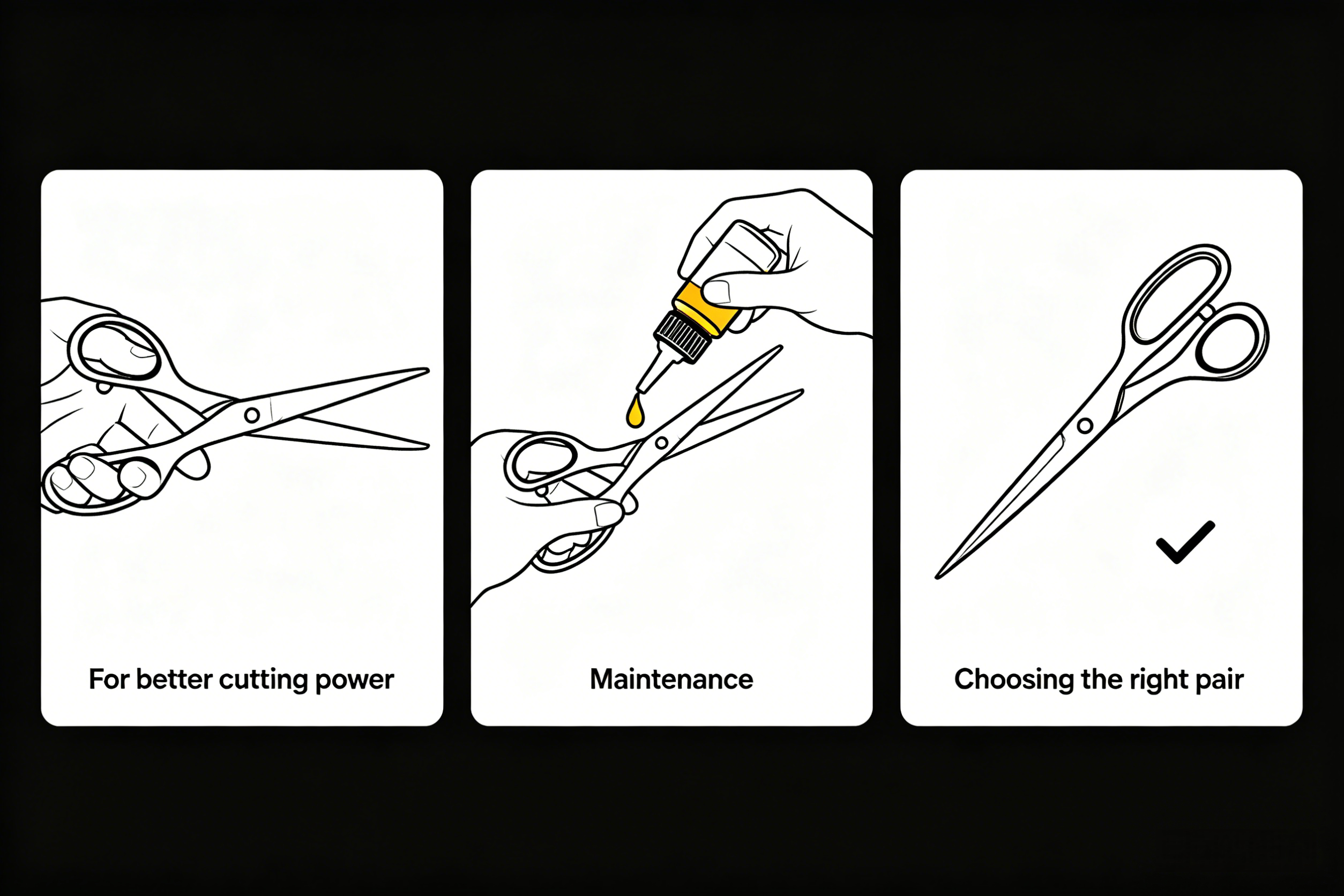
There is no universal schedule. If the pivot feels stiff, squeaky or rough, clean the area and apply a very small amount of suitable oil, then wipe away excess so it does not attract debris.
What should bulk buyers ask a household scissors supplier?
Ask for samples, intended-use guidance, blade and handle material information, packaging details, quality inspection criteria and any documents required for the target sales market. Confirm details in writing before placing an order.
Final Thoughts
The fulcrum is the small point that gives scissors their mechanical advantage. Once you understand the relationship between pivot position, handle length, blade contact and friction, it becomes easier to choose the right pair and use it correctly. For everyday households and product buyers alike, better scissor selection starts with the physics of leverage.
