




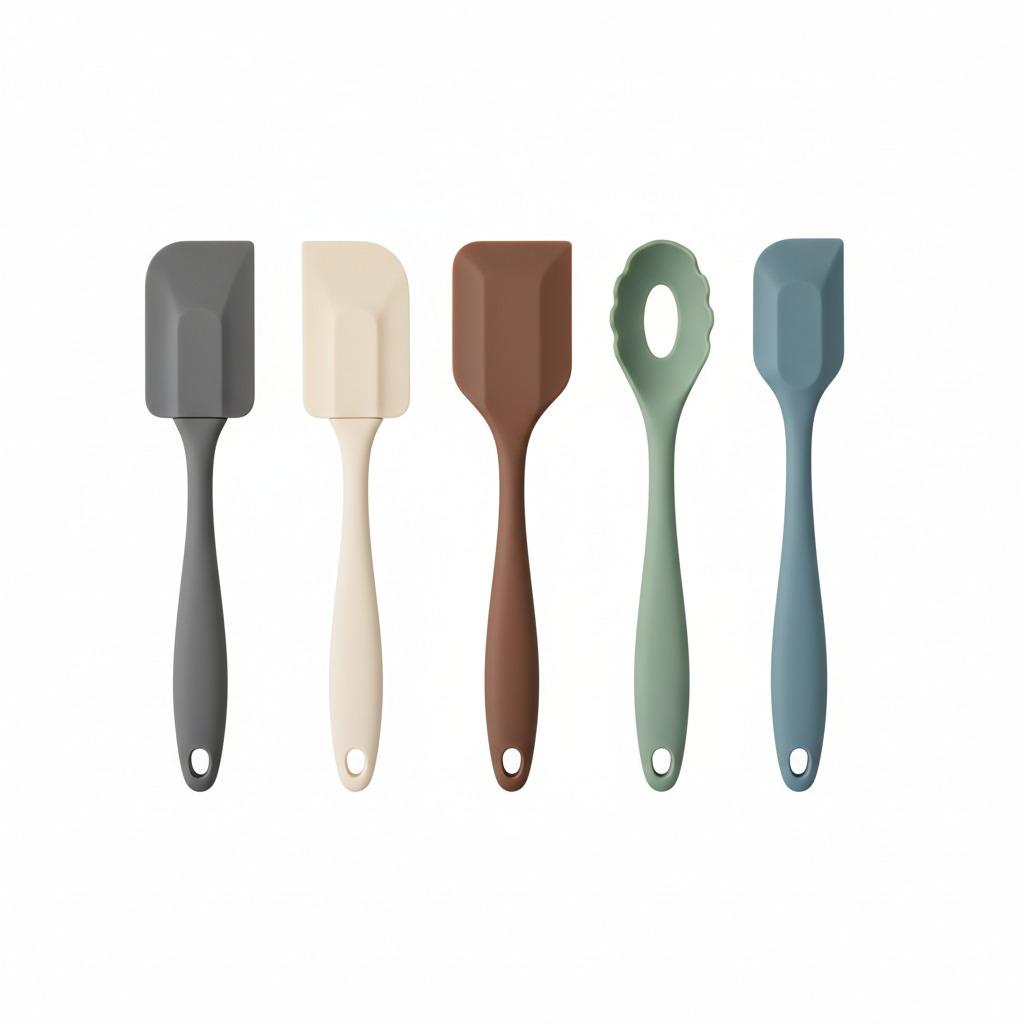
The Truth About "Pinch Tests" and Silicone Purity
Kitchen silicone tools are common in home kitchens because they are flexible, non-stick friendly, easy to clean, and often marketed as heat resistant. The original discussion around these tools noted typical heat-resistance ranges of about 220–260°C (428–500°F), although the exact limit always depends on the product and supplier documentation.
One question appears again and again: can you tell whether silicone is “pure” by pinching or twisting it? The short answer is no. The pinch test may reveal how a material reacts under stress, but it cannot confirm food safety, formulation, migration performance, or long-term durability. This guide explains what the test does show, what it does not show, and how consumers or sourcing teams can make a better evaluation.

Key Takeaways
- The pinch test is a quick visual check, not a scientific purity test.
- Whitening during pinching can happen because stretched silicone scatters light differently.
- Some silicone formulations include fumed silica to improve strength and tear resistance.
- Food-contact safety should be judged through supplier documentation and applicable testing, not by appearance alone.
- Strong odor, poor finishing, uneven thickness, and missing documentation are more useful warning signs than whitening by itself.
What Is the Silicone Pinch Test?
The pinch test, sometimes called a twist or stretch test, is simple. You press, fold, stretch, or twist a flexible part of a silicone utensil, such as a spatula edge, spoon head, or baking mat corner. If the material turns white or develops pale streaks, some online advice claims the product contains fillers and is therefore low quality or unsafe.
This idea is appealing because it seems easy: no laboratory, no paperwork, no special tools. However, the conclusion is too broad. A visible color change under stress does not automatically identify the chemical composition of the product. It also does not prove whether the utensil will release substances into food during cooking.
Why Silicone Can Turn White When Pinched
Silicone rubber is a polymer material. When it is stretched or sharply bent, its internal structure is placed under mechanical stress. That stress can change how light passes through or reflects from the surface, creating a temporary whitening effect. Similar effects can be seen when stretching some rubbers or plastics.
The original article also noted that silicone compounds may use fumed silica. This is not automatically a “cheap filler” in the negative sense. In many silicone formulations, silica is used to improve strength, tear resistance, and processing behavior. The important question is not whether any reinforcing material exists, but whether the final product is suitable for food contact and performs safely under intended use conditions.
What the Pinch Test Can and Cannot Tell You
| Check | What It May Suggest | What It Cannot Prove |
|---|---|---|
| Pinching or twisting | How the material responds to short-term stress | Purity, food safety, or compliance |
| Temporary whitening | Light scattering or stress in the material | That harmful fillers are present |
| Strong chemical odor | Possible processing residue or poor material control | The exact source of the odor without testing |
| Even thickness and smooth finish | Better molding control and user comfort | That the product meets any legal requirement |
| Supplier documents | Evidence to review before purchase | Authenticity unless verified with the issuer or lab |
How to Choose Kitchen Silicone Tools More Carefully
For consumer-facing purchases, use the pinch test only as a small part of a broader inspection. A utensil that whitens slightly is not automatically unsafe, and one that does not whiten is not automatically high quality. Instead, look at the full product presentation and how the tool will be used.
- Check stated temperature guidance. Do not assume all silicone utensils tolerate the same heat. Follow the supplier’s stated limit and avoid leaving tools in a hot pan for extended periods.
- Inspect the surface. Look for smooth molding, no cracking, no sticky feel, no flaking, and no sharp excess material at the edges.
- Smell the product after washing. A strong persistent odor is a reason to ask questions or choose another item.
- Consider the handle construction. Some silicone heads are paired with wood, stainless steel, or internal supports. Check whether the joint feels secure and easy to clean.
- Match the tool to the task. Thin flexible spatulas are useful for scraping bowls, while thicker turners or spoons may be better for heavier cooking jobs.
Guidance for Buyers, Importers, and Retail Sourcing Teams
If you are sourcing silicone utensils for wholesale, private label, or OEM supply, the pinch test should not be used as an acceptance standard. It is too subjective and depends on color, thickness, formulation, and how much force the inspector uses. A better sourcing process defines the intended market, required food-contact documentation, and product performance expectations before sampling.
Ask potential suppliers clear questions: Which food-contact standard is the product designed to meet? Can they provide recent third-party test reports for the actual material or finished item? What temperature range is claimed, and how was it determined? Are colorants, coatings, adhesives, or handle materials included in the same compliance review? Can the supplier provide a material declaration and production traceability for each batch?
Avoid asking only for broad statements such as “food grade silicone.” That phrase is common in marketing, but buyers need evidence tied to the specific product, color, and market requirement. If documentation is missing, outdated, incomplete, or unrelated to the item being quoted, request clarification before placing an order.
Use and Care Tips for Longer Service Life
Even well-made silicone tools can be damaged by misuse. Wash new utensils before first use with warm water and mild detergent. Avoid direct contact with open flames, grill burners, or heating elements unless the supplier specifically states that use is acceptable. Do not cut on silicone surfaces with sharp knives, as cuts can trap food residue and shorten service life.
For stubborn stains or odors, soak the tool in warm soapy water and clean it thoroughly before drying. If a utensil becomes cracked, sticky, deeply cut, or permanently deformed, replace it. Silicone is durable, but it is not indestructible.
Practical FAQ
Does whitening mean my silicone utensil is unsafe?
No. Whitening during a pinch or twist can result from mechanical stress and light scattering. It is not proof of unsafe material or harmful fillers.
Can the pinch test prove silicone is 100% pure?
No. It cannot identify formulation, migration behavior, or compliance status. Laboratory testing and supplier documentation are needed for stronger evidence.
Are fillers always bad in silicone?
No. Some reinforcing materials, such as fumed silica, may be used to improve strength and tear resistance. The key issue is whether the finished product is suitable for food contact.
What should I ask a supplier before buying in bulk?
Ask for the intended food-contact standard, third-party test reports, material declarations, temperature-use guidance, colorant information, and whether reports apply to the exact finished product.
When should I stop using a silicone tool?
Replace it if it cracks, tears, becomes sticky, gives off a persistent odor, or has deep cuts that are difficult to clean.
Final Verdict
The silicone pinch test is popular because it is quick, but it is not a reliable measure of purity or safety. Use it only as an informal observation, not a purchasing rule. For home cooks, the better approach is to inspect the utensil, follow the stated temperature guidance, and buy from sources that provide clear product information. For B2B buyers, the better approach is documentation review, sample evaluation, and market-specific compliance questions. In both cases, evidence matters more than a white streak from a quick pinch.
