




2 in 1 Kitchen Knife Scissors: Practical Guide for Use and Sourcing
Kitchen tools that combine cutting, gripping and small accessory functions can be useful when they are designed with a clear purpose. A 2 in 1 kitchen knife scissors product sits between a kitchen knife and kitchen shears: it is intended for slicing, trimming and handling everyday food preparation tasks while reducing the need to switch tools. For home users, the main question is whether it makes common prep work easier. For wholesalers, retailers and OEM buyers, the question is broader: is the tool safe, durable, easy to explain to customers and consistent enough for repeat orders?
What Is a 2 in 1 Kitchen Knife Scissors Tool?
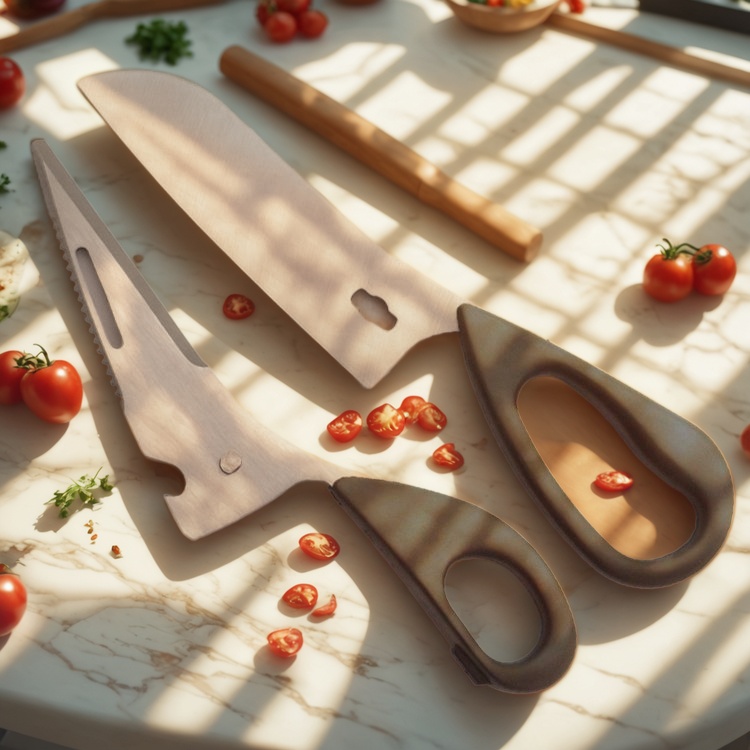
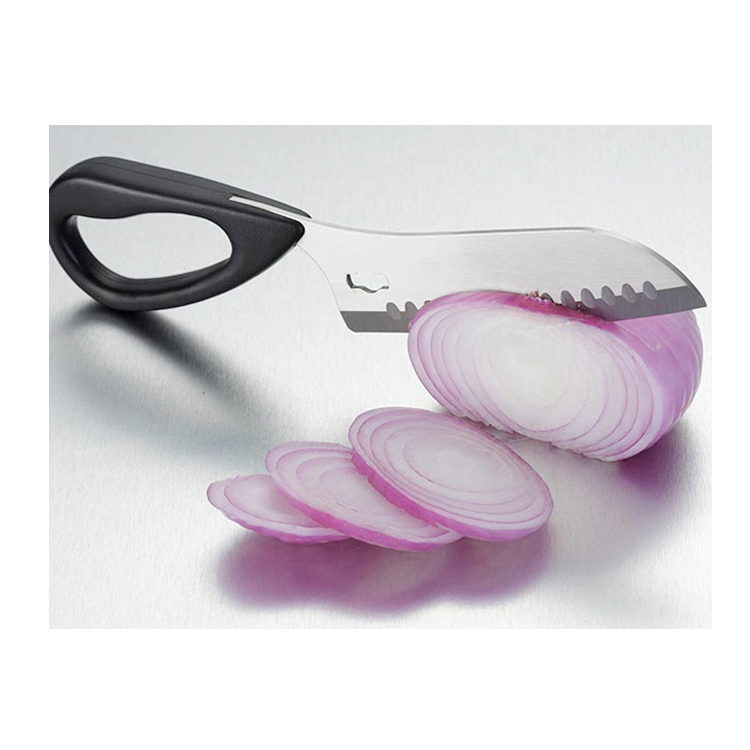
A 2 in 1 kitchen knife scissors tool combines the cutting action of scissors with knife-like utility. The original product description highlights a stainless steel construction, a sharp cutting edge, a serrated section for grip on challenging ingredients, matte black handles and integrated functions such as a bottle opener and nut cracker. These features make it suitable for many routine kitchen tasks, including cutting herbs, trimming meat, portioning vegetables and opening simple packaging.
The benefit is not that it replaces every knife in the kitchen. A chef’s knife, paring knife and bread knife still have their own roles. The value of a multifunction kitchen shear is convenience: it can be picked up quickly, used for controlled cuts and then cleaned without managing several separate gadgets.
Where This Tool Fits in Daily Kitchen Work
For consumer-facing product selection, it is important to match the tool to realistic uses. Kitchen knife scissors are most useful for tasks that involve short, controlled cuts rather than long slicing strokes. They can help with herbs, cooked food portions, poultry trimming, leafy vegetables and light household kitchen tasks.
- Good fit: snipping herbs, cutting scallions, trimming fat, portioning cooked meat, cutting soft vegetables and opening food bags.
- Possible fit: cracking small nuts or opening capped bottles when the built-in features are designed for that purpose.
- Not ideal: heavy bone cutting, frozen food, hard shells or any task that exceeds the tool’s intended strength.
Retailers should avoid presenting a 2 in 1 tool as a universal replacement for all knives. Clear product education reduces returns and improves customer satisfaction.
Feature Checklist for Buyers
Whether you are comparing samples for wholesale or deciding what to stock in an online store, use a structured checklist. The visible features are only part of the assessment; handling, safety and cleaning matter just as much.
| Feature to Check | Why It Matters | Questions to Ask a Supplier |
|---|---|---|
| Stainless steel blade | Supports durability and routine kitchen use | What stainless steel type is used, and can it be documented? |
| Serrated section | Helps grip slippery or tough ingredients | Where is the serration placed, and what tasks is it designed for? |
| Handle design | Affects comfort, control and fatigue | Can handle material, finish and color be customized for OEM orders? |
| Integrated opener or nut cracker | Adds utility but must not weaken the main tool | How are these functions tested during product inspection? |
| Cleaning method | Food residue can collect around joints or textured areas | Is the product dishwasher safe, or is hand washing recommended? |
| Packaging and instructions | Important for retail display and safe use | Can the supplier provide private label packaging and user guidance? |
B2B Sourcing Guidance for Wholesale and OEM Orders
For importers, distributors and brand owners, sourcing kitchen scissors is not only about unit price. A buyer should confirm material details, production consistency, packaging options and inspection procedures before placing a bulk order. If a supplier is described as a kitchen scissors manufacturer in China or offers OEM kitchen scissors, ask for specifics rather than relying on broad claims.
- Request physical samples. Evaluate sharpness, alignment, handle comfort, balance and the feel of the hinge or pivot.
- Clarify material details. Do not assume a steel grade unless the supplier states it and can support the claim.
- Define the intended market. Retail packaging, online marketplace bundles and promotional gifts may require different instructions and branding.
- Ask about customization limits. Confirm available handle colors, logo placement, packaging formats and any tooling requirements.
- Set inspection criteria. Agree on checks for blade finish, handle defects, function of opener or nut cracker, and carton labeling.
- Discuss compliance responsibilities. Ask what documents are available, but verify requirements for your destination market independently.
Commercial details such as minimum order quantity, lead time, price tiers, certificates and test reports should be confirmed directly with the supplier. They should not be assumed from a product description.
How to Assess Quality Before Committing
A good sample should feel stable in the hand. The two sides should meet cleanly, and the blade should cut without twisting or forcing. The serrated area should help grip food rather than tear it excessively. Handles should feel secure when wet, but buyers should test this carefully because finish and shape affect grip.
For B2B evaluation, test several samples from the same batch if possible. One impressive sample is useful, but consistency is what protects your brand. Check for burrs, uneven edges, loose movement, misaligned tips, color variation and packaging damage. If the tool includes a bottle opener and nut cracker, test those functions in ordinary use conditions and look for deformation or discomfort.
Use and Care Tips for End Customers
Kitchen knife scissors last longer when used within their intended limits. End customers should avoid twisting the blades, cutting very hard materials or using the tool as a general household cutter for wire, plastic ties or craft materials. Food-contact tools should be kept for food preparation to reduce contamination risks.
- Wash promptly after cutting acidic, oily or sticky foods.
- Dry thoroughly before storage to protect the metal and handle areas.
- Store in a drawer organizer, sheath or safe area away from children.
- Do not use the cutting edge on ceramic plates, glass boards or stone counters.
- Follow the supplier’s cleaning guidance if dishwasher use is not clearly stated.
Simple care instructions are especially important for private label products. A short insert or printed packaging panel can help customers understand what the tool can and cannot do.
Key Takeaways
- A 2 in 1 kitchen knife scissors tool is best for controlled cutting tasks, not as a replacement for every kitchen knife.
- Useful features from the original product include stainless steel construction, a serrated section, black handles, a bottle opener and a nut cracker.
- Wholesale and OEM buyers should verify material details, inspection standards, customization options and available documentation.
- Clear usage and care guidance improves customer experience and reduces unrealistic expectations.
FAQ
Is a 2 in 1 kitchen knife scissors tool suitable for professional kitchens?
It can be useful for quick prep tasks, but professional kitchens should test samples for durability, cleaning convenience and comfort under repeated use before adopting it widely.
Can it cut meat and vegetables?
Yes, this type of tool is commonly used for meats, vegetables and herbs. It should not be used for frozen foods, hard bones or tasks beyond the supplier’s stated use range.
What should OEM buyers confirm before ordering?
Confirm material details, handle options, logo and packaging possibilities, sample approval steps, inspection criteria, lead time, MOQ and any documents needed for the target market.
Is the built-in bottle opener and nut cracker enough to replace separate tools?
They are convenient for occasional use, but buyers should test these functions. Heavy or frequent use may still require dedicated openers or nut crackers.
How should retailers describe this product online?
Use accurate language: explain the cutting function, serrated grip area, handle design and integrated accessories. Avoid exaggerated claims, and include care and safety instructions.
