




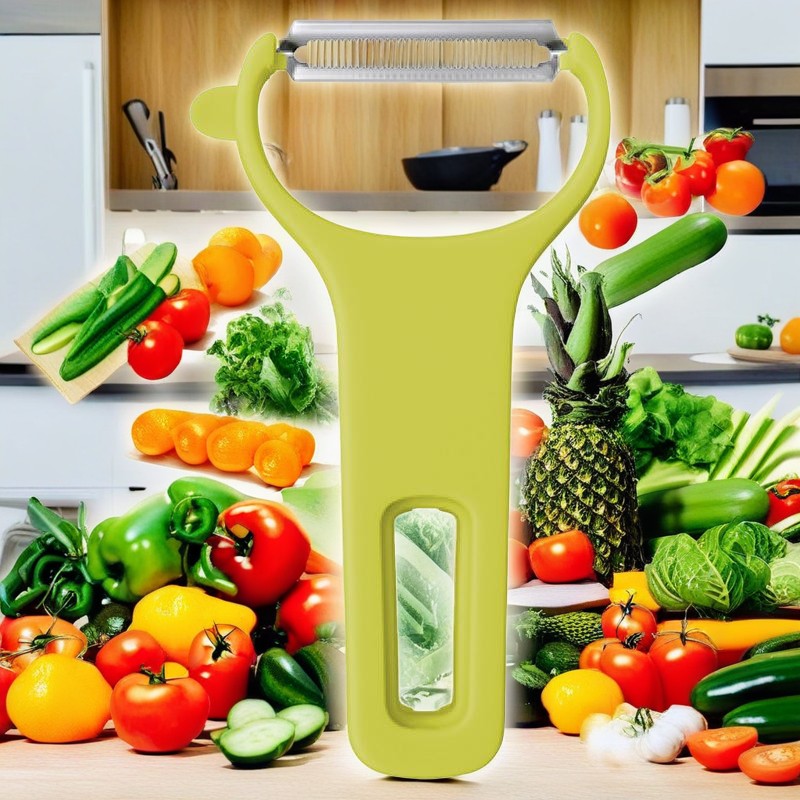
3-Blade Peeler Guide for Fruit and Vegetable Prep
A 3-blade peeler is designed for cooks who want one compact tool to handle several peeling and cutting tasks. Instead of keeping separate peelers for potatoes, tomatoes and vegetable strips, this style groups three blade options in one organized format. The original product description highlights a straight blade, a serrated blade and a julienne blade, along with a compact green-and-yellow design, an ergonomic handle and a stackable layout that keeps the blades together.
This guide explains what those blade types are for, how to use them more safely and efficiently, and what to check before choosing a multi-blade peeler for home kitchens, small food-service prep areas or promotional kitchenware sourcing.
Key Takeaways
- A straight blade is best suited to firm produce such as potatoes, carrots and other hard vegetables.
- A serrated blade helps grip soft or delicate skins, including tomatoes and kiwi, with less crushing.
- A julienne blade creates thin strips for salads, stir-fries, toppings and garnishes.
- Compact, stackable storage can reduce drawer clutter, but blade security and cleaning access still matter.
- Before buying in quantity, ask the supplier about blade material, handle material, packaging, care instructions and replacement policy.
What Is a 3-Blade Peeler?
A 3-blade peeler is a multi-function hand tool with interchangeable or grouped blades for different produce-preparation tasks. The version described in the source article includes three specialized blade styles: straight, serrated and julienne. That combination covers many common kitchen jobs, from removing potato skins to preparing carrot strips for a salad.
The advantage is not that it replaces every knife skill. It is that it makes repeatable prep more convenient. For many kitchens, a peeler is used for short, frequent tasks: peeling an apple, trimming a carrot, making a quick garnish or preparing vegetables before cooking. A multi-blade format can save time if the blades are easy to select, safe to store and comfortable to hold.
How the Three Blades Compare
Each blade has a different purpose. Choosing the correct blade can reduce waste, improve texture and make the work feel more controlled.
| Blade type | Best uses | Practical notes |
|---|---|---|
| Straight blade | Potatoes, carrots and other firm vegetables | Use steady pressure and long strokes. Avoid pressing harder than needed because it can remove too much flesh. |
| Serrated blade | Tomatoes, kiwi and soft-skinned fruit | The teeth help start the cut on slippery or delicate skins. Work slowly to avoid tearing soft flesh. |
| Julienne blade | Thin vegetable strips for salads, stir-fries or garnish | Use on firm produce and keep fingers clear of the blade path. Shorter strokes can help control strip length. |
When a Multi-Blade Peeler Is Useful
A 3-blade peeler is most helpful when the same kitchen handles varied produce. A single straight peeler may be enough if you only peel potatoes. However, mixed fruit and vegetable prep often benefits from a wider tool set. The serrated blade is useful for skins that a smooth blade may slide over, while the julienne blade adds a preparation style that normally requires a separate tool or more knife work.
For home cooks, this can simplify weekday meal prep. For small cafés, catering teams or cooking-class kits, it can reduce the number of loose hand tools needed at a station. For wholesale or OEM buyers, the appeal is a product concept that is easy to explain to end users: three common prep functions in one compact item.
Design Features to Evaluate
The source describes the peeler as compact, lightweight, stackable and equipped with an ergonomic handle. Those are useful features, but buyers should still evaluate them in practical terms rather than relying on labels alone.
- Grip comfort: The handle should feel secure when hands are wet. If possible, test it with different hand sizes.
- Blade organization: A stackable or grouped design should prevent blades from moving loosely in a drawer.
- Blade access: Switching between blade types should be intuitive, with no need to touch sharp edges.
- Cleaning: Food can collect around blade mounts. Check whether the design is easy to rinse and dry.
- Storage footprint: A compact peeler is useful only if it stores safely and does not expose blades.
Use and Care Tips for Better Results
Good technique matters. Start by washing produce to remove soil and grit that can dull a blade or scratch skins. Place round items on a stable surface before peeling, or hold them with your fingertips tucked away from the blade path. For firm vegetables, use smooth strokes away from your body when possible. For soft fruit, let the serrated blade grip the skin and avoid pushing deeply.
After using a julienne blade, inspect the produce surface and the blade teeth carefully. Thin strips can catch between teeth, so rinse soon after use. Dry the peeler before storage to help keep the blades in good working condition. If the supplier provides dishwasher guidance, follow it; if not, hand washing is the safer default for preserving sharp edges and handle finish.
Buyer Checklist for Sourcing or Bulk Purchase
If you are evaluating a 3-blade peeler for retail, promotional kitchenware, hospitality use or OEM sourcing, ask specific questions before placing an order. The original article mentions stainless steel blades and food-safe materials, but buyers should request written confirmation of the exact materials and applicable test information from the supplier.
- What are the blade and handle materials, and are material declarations available?
- Are the blades fixed, interchangeable or stored in a stackable housing?
- What packaging options are available for retail, gift sets or bulk cartons?
- What care instructions should be printed for end users?
- Can samples be provided for grip, sharpness, cleaning and durability checks?
- What are the available colors, and can colors be customized?
- What quality checks are performed before shipment?
- What are the lead time, order quantity and after-sales policies?
Common Mistakes to Avoid
One common mistake is using the same blade for every ingredient. A straight blade may struggle on a tomato skin, while a serrated blade may feel less efficient on a firm potato. Another mistake is treating the julienne blade like a toy garnish maker. It has sharp teeth and should be handled with the same care as any cutting tool.
Storage is another overlooked issue. Multi-blade tools can become inconvenient if blades are exposed or if parts separate in a drawer. Check that the design keeps all three blades organized and easy to identify. Finally, do not judge a peeler only by color or compactness. The real value is in controlled peeling, safe handling and simple cleaning.
FAQ
What is the straight blade best for?
The straight blade is best for firm produce such as potatoes and carrots. It is designed for clean, controlled peeling on harder surfaces.
Why use a serrated peeler blade?
A serrated blade helps grip delicate or slippery skins, such as tomatoes and kiwi. It can reduce slipping compared with a smooth blade.
What does the julienne blade do?
The julienne blade cuts produce into thin strips. It is useful for salads, stir-fries, slaws and simple garnishes.
Is a 3-blade peeler suitable for professional kitchens?
It can be useful for light to moderate prep tasks, especially where space is limited. Professional buyers should test samples for comfort, cleaning access, blade performance and storage safety.
What should I ask a supplier before ordering?
Ask about blade material, handle material, care instructions, packaging, sample availability, quality checks, lead time and any documentation needed for your market.
