




The Ultimate Guide to Choosing the Right Plastic Cutting Board
A plastic cutting board is one of the most used tools in a home kitchen. It handles quick fruit prep, weeknight vegetables, raw meat trimming, sandwich assembly, and many small tasks between meals. Because it touches food so often, the right board should be easy to clean, stable on the counter, comfortable to use, and suitable for the foods you prepare most.
This guide explains how to compare plastic cutting boards without relying on vague claims. You will learn what to check before buying, how color coding can reduce cross-contact, when to replace an older board, and how plastic compares with wood and glass for everyday kitchen use.
Why Choose a Plastic Cutting Board?
Plastic cutting boards are popular because they are practical. They are usually lighter than thick wooden boards, easier to move to the sink, and simple to wash after messy prep. Many plastic boards are designed for dishwasher cleaning, although you should always check the care instructions from the seller before using high heat.
Another advantage is separation. Plastic boards are commonly sold in different colors, which makes it easier to keep raw meat, seafood, vegetables, and ready-to-eat foods on separate surfaces. This habit is more important than the board material itself: a clean workflow reduces the chance that juices from raw food contact bread, fruit, or cooked ingredients.
Key Takeaways
- Choose a board size that fits both your counter space and your sink.
- Use separate boards or color-coded boards for raw and ready-to-eat foods.
- Look for a stable cutting surface that does not slide during chopping.
- Clean promptly after use and dry the board upright when possible.
- Replace plastic boards when deep grooves, warping, odors, or heavy staining remain after cleaning.
Plastic Cutting Board Buying Checklist
Before choosing a board, consider how you actually cook. A small board may be fine for fruit, but frustrating for cabbage, roasts, or meal prep. A very large board may feel sturdy, but it still needs to fit in your sink or dishwasher.
| What to Check | Why It Matters | Practical Tip |
|---|---|---|
| Size | Affects prep space and cleaning convenience | Choose a board large enough for your knife strokes but small enough to wash easily |
| Thickness | Influences stability and resistance to flexing | A thicker board often feels steadier, but may be heavier to store |
| Surface texture | Impacts grip and knife control | A lightly textured surface can help prevent food from sliding |
| Non-slip features | Reduces movement during chopping | Look for grip edges, feet, or use a damp towel underneath |
| Juice groove | Helps contain liquids from meat or fruit | Useful for carving and juicy produce, less important for dry prep |
| Care instructions | Prevents warping and damage | Confirm whether the board is dishwasher-safe and heat-tolerant |
Color Coding for Safer Food Preparation
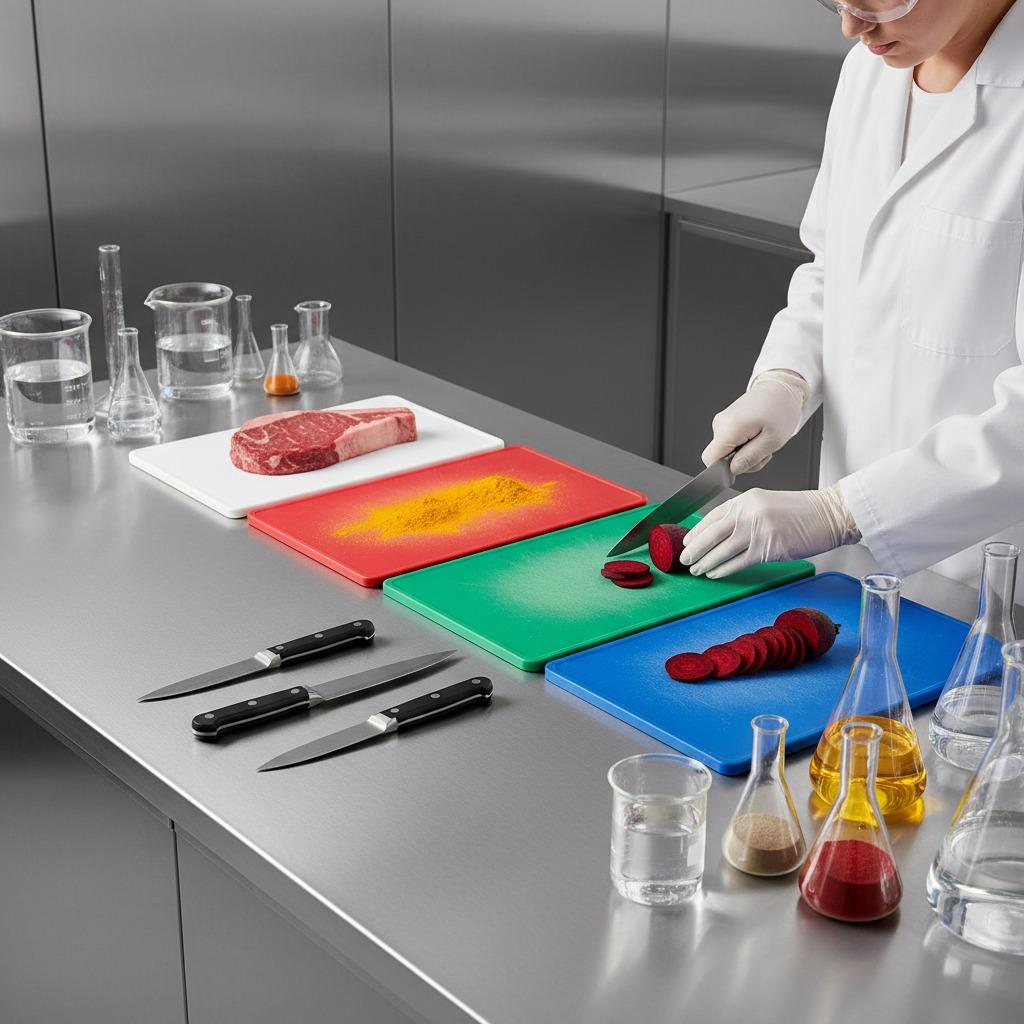
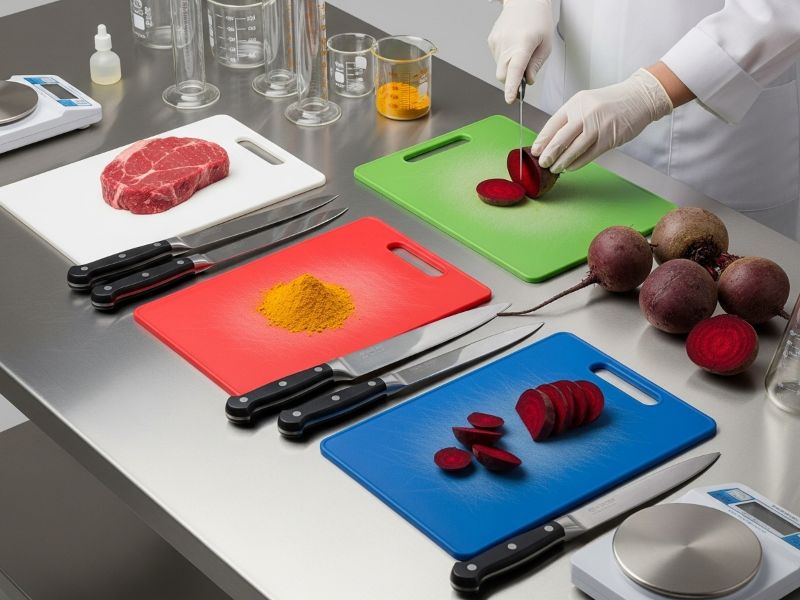
Color coding is a simple system that helps prevent cross-contamination. The exact color system can vary by kitchen, but the important rule is consistency. Once you assign a board to raw poultry or seafood, keep using it for that category and do not switch it to bread or salad prep without thorough cleaning.
A common household approach is:
- Red: raw meat such as beef, pork, or lamb
- Blue: fish and seafood
- Green: fruits and vegetables
- White: bread, dairy, and ready-to-eat foods
- Yellow: cooked meat or poultry
If you do not want a full set, use at least two boards: one only for raw animal proteins and one for foods that will be eaten raw or already cooked.
Size, Shape, and Everyday Usability
The best plastic cutting board is not always the largest one. For daily use, balance workspace with handling. A board that is too small crowds food and increases mess. A board that is too large may be awkward to rinse, store, or lift when covered with chopped ingredients.
Rectangular boards are the most versatile because they provide room for a chef's knife to move forward and back. Boards with handles or hanging holes can be easier to lift from a drawer or hang on a rack. If you often prepare tomatoes, citrus, cooked meats, or watermelon, a perimeter groove can help catch liquid before it reaches the counter.
Stability is essential. If a board slides, place a damp kitchen towel or non-slip mat underneath. Do not continue chopping on an unstable surface, especially when using a sharp knife.
How to Clean and Maintain a Plastic Cutting Board
Good cleaning habits help keep any cutting board in better condition. Rinse or wash the board soon after use so food residue does not dry into knife marks. Use hot water, dish soap, and a brush or sponge. Pay extra attention after raw meat, poultry, or seafood preparation.
- Scrape off food scraps before washing.
- Wash both sides with hot, soapy water to reduce warping from uneven moisture.
- Rinse thoroughly so no soap remains on the surface.
- Dry with a clean towel or air-dry upright.
- Check the manufacturer's care label before placing the board in a dishwasher.
For odor control, a baking soda paste can help with mild smells. For sanitation, follow safe household disinfecting directions from reliable food safety guidance and rinse as appropriate afterward. Avoid using a board that remains sticky, deeply stained, or smelly after cleaning.
Plastic vs. Wood vs. Glass Cutting Boards
Each cutting board material has trade-offs. Plastic is convenient, wood is valued for cutting feel, and glass is easy to wipe but hard on knives. The right choice may be more than one board, each used for a specific task.
| Material | Strengths | Limitations | Best Use |
|---|---|---|---|
| Plastic | Lightweight, easy to wash, available in colors | Can develop knife grooves and may warp with heat | Daily prep, raw proteins, color-coded kitchens |
| Wood | Comfortable cutting feel and durable when cared for | Needs hand washing and periodic maintenance | Bread, vegetables, serving, general prep |
| Glass | Non-porous and easy to wipe | Slippery surface and can dull knives quickly | Light serving tasks rather than heavy chopping |
When Should You Replace a Plastic Cutting Board?
Plastic boards do not last forever. Fine surface marks are normal, but deep cuts can trap residue and become difficult to clean. Replace the board when grooves remain dark after washing, when the board is warped and no longer sits flat, when strong odors persist, or when the surface feels rough and shredded.
Replacement timing depends on use. A board used several times a day for raw protein will wear faster than one used occasionally for fruit. Inspect your boards regularly instead of relying on a fixed calendar.
FAQ: Plastic Cutting Board Questions
Are plastic cutting boards safe for raw meat?
Yes, they can be used for raw meat when cleaned properly after each use. For safer workflow, keep one board dedicated to raw meat and another for ready-to-eat foods.
Can I put a plastic cutting board in the dishwasher?
Some plastic boards are dishwasher-safe, but not all. Check the product's care instructions. High heat can warp certain boards.
Do plastic cutting boards dull knives?
Plastic is generally more knife-friendly than glass or stone. However, any board surface and cutting style can affect blade sharpness over time.
How do I stop my board from sliding?
Use a board with non-slip edges or place a damp towel underneath. A stable board is safer and gives better knife control.
How many cutting boards does a home kitchen need?
At minimum, two are useful: one for raw animal proteins and one for produce, bread, and cooked foods. Color-coded sets make separation easier for busy households.
Final Thoughts
Choosing the right plastic cutting board comes down to hygiene habits, size, stability, and care. Look for a board that fits your prep style, clean it promptly, and replace it when wear makes cleaning difficult. With a sensible system, a plastic cutting board can make everyday cooking safer and more organized.
