








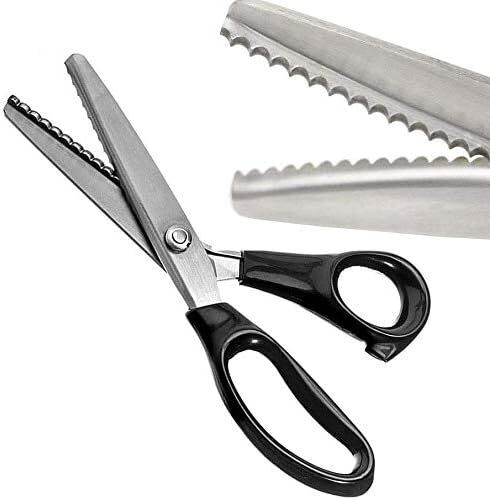
The Ultimate Guide to Decorative Edge Scissors
Decorative edge scissors, also called paper edgers or patterned scissors, cut a shaped border instead of a straight line. They are commonly used for scrapbooking, card making, gift tags, classroom crafts, journal pages, photo mats, and some light fabric projects. Instead of adding a separate trim or border, the blade pattern creates a finished edge in one pass.
The key to getting good results is choosing the right pattern for the material and using the scissors with steady, controlled cuts. A simple wave may look clean on a greeting card, while a deckle edge can make a label or invitation look hand-torn. Zigzag pinking shears have a longer history in sewing, where the angled cut helps reduce fraying on some woven fabrics.

Key Takeaways
- Decorative edge scissors work best when matched to the right material, such as paper, card stock, photos, or light fabric.
- Common patterns include zigzag, scallop, wave, ripple, and deckle edges.
- Test on scrap material first because each pattern repeats differently.
- Keep one pair for paper and a separate suitable pair for fabric to avoid dulling blades quickly.
- For children or classroom use, check handle size, blade exposure, and adult supervision needs.
What Decorative Edge Scissors Are Used For
Decorative scissors are useful when a plain straight cut looks unfinished. Crafters use them to frame photos, trim scrapbook layers, shape handmade cards, decorate envelopes, make bookmarks, and create classroom display borders. They are also helpful for quick prototypes because they require no die-cutting machine, punch, or blade mat.
For fabric work, the best-known decorative scissors are pinking shears. These create a zigzag edge and have been used since the 19th century as a practical way to reduce fraying. Craft scissors with lighter blades may not be suitable for fabric, so check the supplier’s intended use before cutting textiles, felt, foam, or thick card.
Popular Decorative Edge Patterns
Different blade shapes create different visual effects. A starter set may include several patterns, but not every pattern is equally useful for every project. Before buying a large set, consider the projects you make most often.
- Zigzag or pinking: A sharp, angular edge often used for sewing, labels, borders, and children’s crafts.
- Scallop: A rounded repeating edge suited to invitations, gift tags, and soft decorative borders.
- Wave or ripple: A flowing cut that works well for ocean themes, clouds, nature projects, and layered paper designs.
- Deckle: An irregular edge that imitates torn paper and is useful for vintage-style cards, certificates, and journal pages.
- Stamp or postage edge: A squared repeating pattern often used for faux stamps, coupons, and scrapbook accents.
Comparison: Which Pattern Should You Choose?
| Pattern type | Best for | Watch out for |
|---|---|---|
| Zigzag / pinking | Fabric edges, paper borders, labels | May look too busy on small photos or detailed artwork |
| Scallop | Cards, invitations, tags, soft borders | Needs careful alignment so curves repeat evenly |
| Wave / ripple | Kids crafts, themed pages, layered paper | Long waves can drift if the hand angle changes |
| Deckle | Vintage paper effects, journals, certificates | Irregular edges can look accidental if overused |
| Postage / stamp | Mini labels, faux stamps, coupon-style designs | Small details may clog or tear thin paper |
How to Choose Decorative Edge Scissors
Start with the material you plan to cut most often. Lightweight paper, photo paper, card stock, felt, craft foam, and fabric place very different demands on the blades and pivot. If the product listing does not clearly state the recommended material, ask the supplier before purchasing.
For regular paper crafts, look for a comfortable handle, a pattern name or sample image, and a size that matches your hand. Shorter scissors can be easier to control for small cards and labels, while longer blades may be faster for borders. If you are buying for a classroom, consider whether the scissors are designed for children and whether they suit left-handed users.
For fabric, do not assume every decorative pair is a pinking shear. Ask whether the scissors are intended for textile use, what fabric thickness they can reasonably handle, and how the blade should be maintained. Using paper-only craft scissors on heavy material can cause poor cuts or dull edges.
How to Use Them for Cleaner Results
- Make a test cut on scrap paper or fabric before cutting the final piece.
- Hold the scissors upright and keep the material flat, without pulling it forward.
- Cut slowly with full, even closures instead of chopping at random intervals.
- When continuing a long border, overlap the last visible pattern and align the next cut before closing the blades.
- Use a pencil guideline or ruler mark for straight borders, especially on scrapbook mats and invitations.
- Rotate the material rather than twisting your wrist when cutting around corners.
If a pattern tears the paper, try a slightly heavier sheet, cut more slowly, or choose a simpler blade design. Very thin paper can buckle, while very thick card may resist the blade and create uneven edges.
Care and Storage Tips
Decorative scissors need basic care to keep the shaped blades cutting cleanly. Wipe the blades after use, especially if you cut adhesive-backed paper, labels, tape, or inked materials. Sticky buildup can prevent the blade pattern from closing fully and may leave ragged marks.
Store scissors dry and avoid dropping them, because a bent tip or loose pivot can affect the repeating pattern. If the pivot feels stiff, follow the maker’s care instructions; some scissors may allow a tiny amount of suitable oil at the joint, while others are not designed for user adjustment. Keep craft scissors away from heavy packaging, wire, and other materials that can damage the cutting edge.
Project Ideas That Use Patterned Edges Well
Decorative scissors are most effective when the pattern supports the design rather than competing with it. Try using one patterned edge as an accent instead of trimming every side of a page. A scalloped bottom edge on a gift tag, a deckle border on a journal insert, or a zigzag strip behind a photo can be enough.
- Create layered scrapbook mats with one straight edge and one patterned edge.
- Trim handmade card panels before mounting them on a contrasting background.
- Cut simple classroom labels or bulletin board borders.
- Make bookmarks with a deckle or wave edge on one side.
- Use pinking shears for appropriate fabric accents, appliques, or sample swatches.
FAQ
Can decorative edge scissors cut fabric?
Some can, especially pinking shears, but many craft scissors are designed mainly for paper. Check the product guidance before using them on fabric, felt, or thick material.
Why does my patterned edge look uneven?
Uneven results usually come from stopping between pattern repeats, changing the angle, or pulling the material. Overlap the last cut slightly and keep the scissors upright.
Should I buy a set or a single pair?
A set is useful for experimenting with cards, scrapbooks, and classroom projects. A single higher-quality pair may be better if you only need one edge, such as zigzag or scallop.
Can children use decorative scissors?
Children can use age-appropriate craft scissors with supervision. Check the handle size, blade design, and the manufacturer’s recommended use before classroom or home use.
How do I sharpen decorative edge scissors?
Because the blades have shaped profiles, sharpening is not as simple as with straight scissors. Follow the maker’s instructions or consult a professional sharpening service if the scissors are valuable.
