




The Ultimate Guide to Fabric Scissors Factory Excellence
Sourcing fabric scissors from a factory is not only about finding a sharp cutting tool. For wholesalers, retailers, craft brands, sewing kit suppliers, and OEM buyers, the real task is to understand how a supplier controls consistency, communicates product details, supports customization, and handles quality expectations before an order is placed. A good fabric scissors factory should be able to explain how its products are made, what options are available, and what information buyers need to confirm before production.
The original Bonet Houseware article introduced fabric scissors manufacturing, a camouflage blade series, ergonomic design, and three available sizes. This expanded guide keeps those useful details while focusing on practical sourcing decisions. Use it as a checklist when comparing fabric scissors suppliers or preparing questions for an OEM inquiry.
Key Takeaways
- A fabric scissors factory should be evaluated on product consistency, sample quality, communication, packaging options, and after-sales handling.
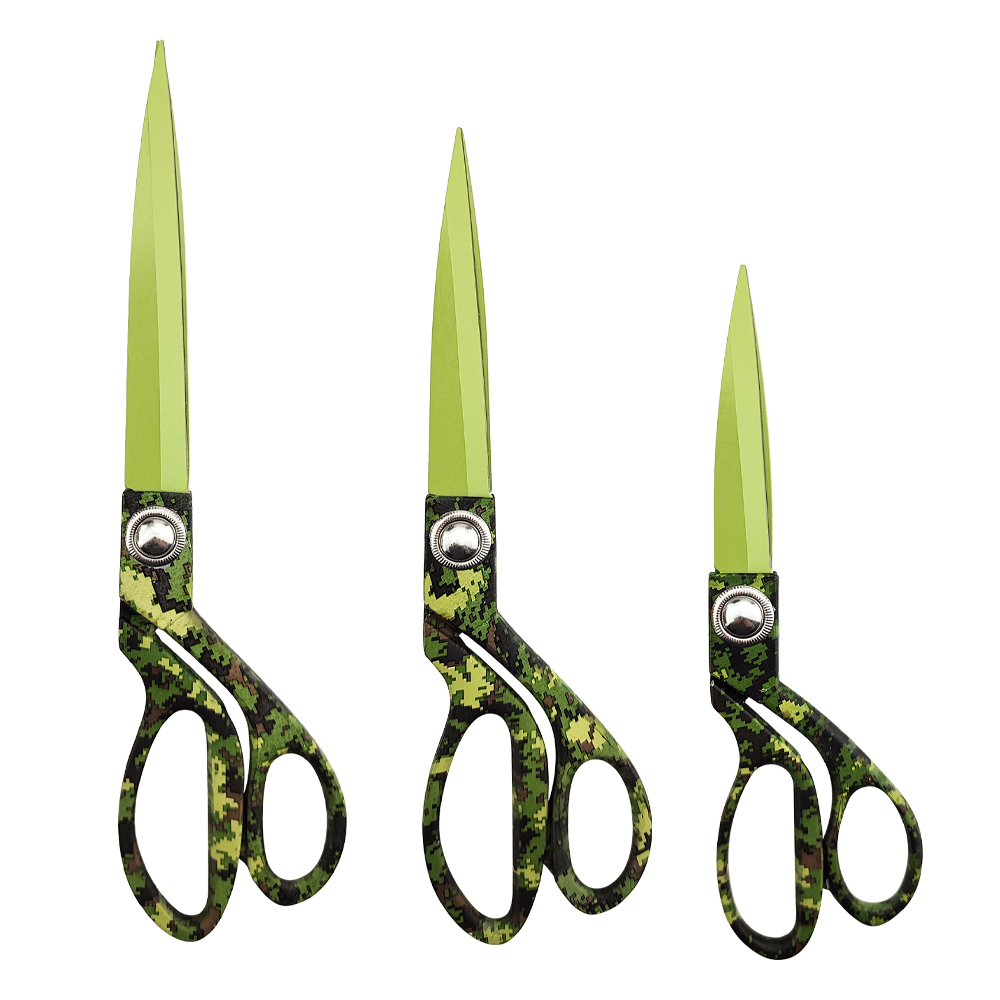
- The camouflage blade series described in the original article features vibrant green blades, a digital camouflage handle pattern, ergonomic handling, and three sizes.
- Buyers should confirm material details, blade finish, size range, packaging, labeling, lead time, MOQ, and inspection standards directly with the supplier.
- Do not rely only on photos. Request samples and test them on the fabrics your customers actually cut.
What a Fabric Scissors Factory Should Help Buyers Understand
A factory is more than a production site. For B2B buyers, it should also be a source of clear product information. When discussing fabric scissors, ask how the supplier defines the product category. Are the scissors intended for tailoring, home sewing, craft use, school kits, or general household cutting? A pair of scissors that performs well on light cotton may not be ideal for thicker materials, layered textiles, or repeated workshop use.
The original article notes that the fabric scissors are designed for clean, precise cutting and are suitable for both professional and casual users. That is a useful starting point, but buyers should still request detailed confirmation. Ask the supplier which fabrics were considered during product development, whether the edge geometry differs by size, and whether the handle design is suitable for long cutting sessions.
Manufacturing Quality: Questions to Ask Before Ordering
The source article mentions high-carbon stainless steel blades, sharpness, durability, and precision. These are important attributes, but professional buyers should avoid assuming that every production batch will perform the same without documented quality controls. Instead, convert general claims into specific supplier questions.
- What blade material is used for the exact model being quoted?
- How is blade sharpness checked during production?
- What tolerance is applied to blade alignment and screw tension?
- Can the supplier provide pre-production samples for approval?
- How are defects such as loose screws, uneven edges, scratches, or poor handle finishing classified?
- What inspection process is used before carton packing?
These questions do not require the factory to disclose confidential production methods, but they help buyers judge whether the supplier understands repeatable manufacturing. If you are buying for retail, consistent cutting feel matters as much as the first impression of the design.
Camouflage Blade Series: Design and Use Case
The original article highlights a Camouflage Blade Series with vibrant green blades and handles featuring a digital camouflage pattern. This type of visual design can help a product stand out in craft, sewing, and household tool assortments. However, a distinctive appearance should still be evaluated alongside usability.
The series is described as having an ergonomic design for comfort and control. For buyers, the key is to verify how that design feels in the hand. Request samples in all three sizes if available. Test grip comfort, opening and closing movement, finger loop dimensions, and weight balance. If your market includes left-handed users, ask whether the model is suitable or whether a separate left-handed option exists. Do not assume ambidextrous use unless the supplier confirms it.
Because the series is available in three sizes, it can potentially cover different cutting tasks, from more delicate fabrics to thicker materials. Buyers should match each size to a clear selling purpose rather than presenting all sizes as identical tools.
Comparison Checklist for Sourcing Fabric Scissors
| Evaluation Area | What to Check | Why It Matters |
|---|---|---|
| Blade performance | Sample cutting on cotton, denim, felt, or target fabrics | Confirms real use rather than relying on photos |
| Material confirmation | Ask for the exact blade material for the quoted model | Avoids confusion between catalog claims and order details |
| Handle comfort | Grip shape, finger space, surface finish, and balance | Important for tailors, crafters, and repeat users |
| Size range | Confirm the three available sizes and their intended tasks | Helps build a clearer retail or wholesale assortment |
| Design consistency | Check camouflage pattern, blade color, and finish quality | Protects product appearance in retail packaging |
| OEM options | Ask about logo, color, packaging, labeling, and artwork requirements | Supports private label planning without assumptions |
| Quality inspection | Request inspection criteria and sample approval process | Reduces disputes after mass production |
OEM and Wholesale Buying Guidance
If you are sourcing fabric scissors for wholesale or private label, prepare a complete inquiry. A vague request such as “send best price for scissors” usually results in an incomplete quotation. Instead, include target size, expected use, packaging style, order destination, logo requirements, and whether you need a sample before confirming the order.
Buyers should also ask practical commercial questions without assuming the answers. What is the MOQ for the selected model? What packaging options are available? Can the supplier support barcode labels or customer artwork? What is the estimated production lead time after sample approval? How are shipping cartons packed? Are spare parts or replacement support available for quality issues? These details affect the real cost of sourcing, even when the unit price looks attractive.
For promotional or seasonal orders, timeline control is especially important. Confirm when artwork must be finalized, how long sample making takes, and when final inspection can occur. If you work with a third-party inspection company, tell the supplier early so the inspection schedule can be planned before shipment.
How to Test Samples Before a Larger Order
Sample testing does not need to be complicated, but it should be consistent. Use the same fabrics and cutting tasks for each supplier you compare. Cut straight lines, curves, and layered fabric. Open and close the scissors repeatedly to check tension stability. Inspect whether the tips meet cleanly and whether the handles feel comfortable after several minutes of use.
Also review appearance under good lighting. For the camouflage blade series, check whether the green blade finish and digital camouflage pattern match your market expectations. Look for scratches, uneven coloring, rough handle edges, or weak printing. If the scissors will be sold in retail packaging, test how they appear inside the package and whether the product is secured during transport.
Practical FAQ
What should I ask a fabric scissors factory first?
Start with the intended use, available sizes, blade material for the exact model, packaging options, sample availability, MOQ, lead time, and quality inspection process.
Are camouflage blade scissors only for craft users?
No. The camouflage design can appeal to craft, sewing, tailoring, and general household markets. Buyers should test the scissors on their target fabrics before positioning them for a specific customer group.
Can I assume OEM logo printing is available?
No. Ask the supplier directly about logo methods, artwork format, minimum quantities, sample approval, and any packaging or labeling requirements.
How do I compare three sizes of fabric scissors?
Assign each size a purpose. Smaller sizes may suit detail work, while larger sizes may suit longer cuts or thicker materials. Confirm the actual recommended use with the supplier.
What is the best way to reduce sourcing risk?
Request samples, document approved specifications, confirm packaging and inspection standards in writing, and avoid placing a bulk order based only on images or general descriptions.
