




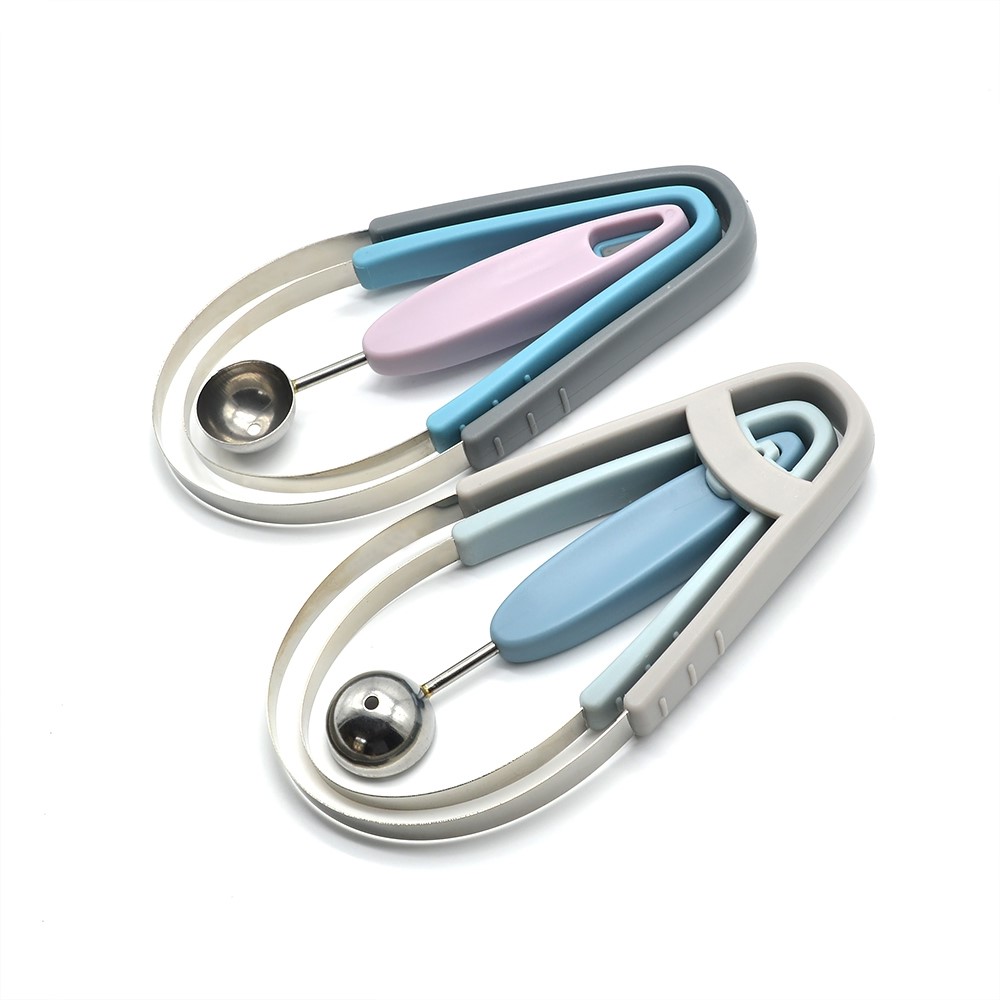
The Ultimate Guide to Fruit Scoop Manufacturing
Fruit scoops are simple kitchen tools, but sourcing them well requires more than choosing a shape from a catalog. For retailers, distributors, promotional buyers, and private-label kitchenware brands, fruit scoop manufacturing involves decisions about material, tooling, ergonomics, nesting design, packaging, inspection, and supplier communication. A good scoop should help users handle fruit efficiently, clean easily, and store without clutter. A poor one can feel uncomfortable, crack too soon, trap food residue, or arrive with inconsistent finishing.
This guide explains how to evaluate a fruit scoop factory or wholesale supplier without relying on vague claims. It focuses on practical sourcing questions, quality checkpoints, and design considerations, especially for nesting fruit scoop models that stack compactly for storage.
Key Takeaways
- Start sourcing with the intended use: home kitchen, food service, retail set, or promotional item.
- Nesting fruit scoops need consistent dimensions so pieces stack neatly without sticking.
- Ask suppliers to clarify materials, tooling, inspection methods, packaging options, and customization limits.
- Do not rely only on product photos; request samples and check comfort, edges, cleaning, and durability.
- Confirm commercial details such as MOQ, lead time, payment terms, and compliance documentation directly with the supplier.
What Fruit Scoop Manufacturing Involves
Fruit scoop manufacturing usually begins with product design: the bowl shape, handle length, rim profile, surface texture, and storage format. The scoop must be shaped for common fruit-preparation tasks such as scooping melon, serving cut fruit, or portioning soft fruit. Manufacturers may use molding and assembly processes, depending on the material and final construction. For nesting sets, dimensional control becomes especially important because small variations can affect how the scoops stack.
Ergonomics should not be treated as a decorative feature. A handle that is too thin may feel weak, while a bowl that is too shallow may not hold fruit effectively. If the scoop includes a serrated or gripping edge, buyers should check whether it helps with soft fruits without creating a difficult-to-clean surface. Smooth surfaces can support easier cleaning, but the actual result depends on the design, finishing, and material.
Nesting Fruit Scoop Design: Why It Matters
Nesting fruit scoops are designed to fit neatly together, saving storage space in kitchens, retail packaging, or shipping cartons. This is useful for consumers with limited drawer space and for wholesale buyers who want compact shelf presentation. However, nesting is not just a visual feature. The set must stack without wobbling, jamming, or scratching itself during transport.
When reviewing a nesting fruit scoop factory, ask how the supplier controls size consistency between pieces. If multiple scoop sizes are included, the spacing between each item should allow easy removal. If the design is too tight, users may struggle to separate the scoops after washing. If it is too loose, the set may rattle in packaging and appear poorly made.
Materials, Safety, and Documentation Questions
The original product concept emphasizes durable, user-friendly fruit scoops and mentions food-grade materials. For B2B sourcing, buyers should not assume every supplier uses the same material or has the same documentation. Instead, ask for the exact material name, the intended food-contact use, available test reports, and any market-specific documentation needed for your sales region.
Useful questions include: What material is used for the scoop and handle? Is the product one-piece or assembled from multiple parts? Can the supplier provide current food-contact documentation if required? Are colorants or coatings used? How does the material perform after repeated washing? These questions help buyers avoid unclear claims and make a more informed comparison between suppliers.
Comparison Checklist for Evaluating Suppliers
| Evaluation Area | What to Check | Questions to Ask |
|---|---|---|
| Product design | Bowl depth, handle comfort, edge shape, nesting fit | Can you provide drawings, samples, or dimensional tolerances? |
| Material | Food-contact suitability, durability, color consistency | What material is used, and what documentation is available? |
| Manufacturing process | Molding quality, assembly consistency, finishing | How are defects such as burrs, warping, or rough edges controlled? |
| Nesting performance | Stacking stability, easy separation, compact packing | Will samples be checked after washing and transport simulation? |
| Packaging | Retail display, set protection, carton strength | What packaging options are available for wholesale or private label? |
| Commercial terms | MOQ, lead time, customization, payment terms | What are the current order requirements and production schedule? |
Sample Review: What Buyers Should Test
Before placing a wholesale order, request samples that represent the intended production version. Test them as a user would. Scoop firm and soft fruit, wash the item, dry it, stack it, and separate it several times. Check whether the handle remains comfortable when wet. Inspect the rim for roughness, especially if the scoop has a serrated or textured edge. Look for mold marks, sharp flashing, uneven color, wobbling, or unpleasant odor.
For nesting sets, place the scoops in their intended packaging and shake the package lightly. Excess movement can cause scratches or make the product look loose on the shelf. If the product is sold online, consider whether the packaging can protect it during parcel delivery. A low unit cost does not help if returns increase because the product arrives scuffed or broken.
OEM and Private-Label Sourcing Considerations
If you need OEM or private-label fruit scoops, clarify what can be customized before discussing price. Common customization areas may include color, logo placement, packaging artwork, set configuration, and possibly shape changes if tooling is available or new tooling is developed. Do not assume a supplier can change the design without cost or lead-time impact.
Ask whether the supplier has existing molds that match your target product, whether logo application is possible, and what file formats are required for packaging. Also ask how pre-production samples are approved and how changes are documented. For a branded product, consistency between the approved sample and mass production is critical.
Quality Control Points During Production
Quality control for fruit scoops should cover appearance, dimensions, function, and packaging. Appearance checks may include color consistency, surface finish, and absence of burrs. Dimensional checks are especially important for nesting models because fit depends on repeatable production. Functional checks should confirm that the scoop feels stable in the hand, handles fruit as intended, and does not have edges that are unsafe or difficult to clean.
Buyers should ask the supplier what inspections are performed during production and before shipment. If you use a third-party inspection company, provide a clear checklist in advance. Include acceptable defect limits, packaging requirements, barcode or label checks if applicable, and sample references. Clear criteria reduce disputes and help the factory understand what matters for your market.
FAQ: Fruit Scoop Manufacturing and Sourcing
What is the main advantage of a nesting fruit scoop set?
A nesting set saves storage space and can create a compact retail presentation. The key is ensuring the scoops stack securely while remaining easy to separate.
Should I choose the lowest-priced fruit scoop supplier?
Not automatically. Compare samples, materials, packaging, defect control, communication, and total landed cost. A cheaper product may cost more if quality issues lead to returns.
What information should I provide when requesting a quote?
Share target quantity, material expectations, color, logo needs, packaging style, destination market, inspection requirements, and any sample or drawing references.
Can a supplier provide food-contact documentation?
Some suppliers may be able to provide relevant documentation, but buyers should ask what is available, whether it is current, and whether it matches the destination market’s requirements.
How do I confirm a fruit scoop is easy to clean?
Review the sample after actual use. Check for food trapped in edges, joints, textured areas, or serrations. Smooth, accessible surfaces are generally easier to wash, but testing is the best confirmation.
Final Sourcing Advice
Fruit scoop manufacturing is a small product category with details that matter. For buyers, the best results come from defining the use case, reviewing real samples, asking specific supplier questions, and documenting quality expectations before production. Whether you are sourcing a single scoop or a nesting set, focus on usability, storage performance, consistent manufacturing, and transparent supplier communication.
