




The Ultimate Guide to Tailor Scissors Tools
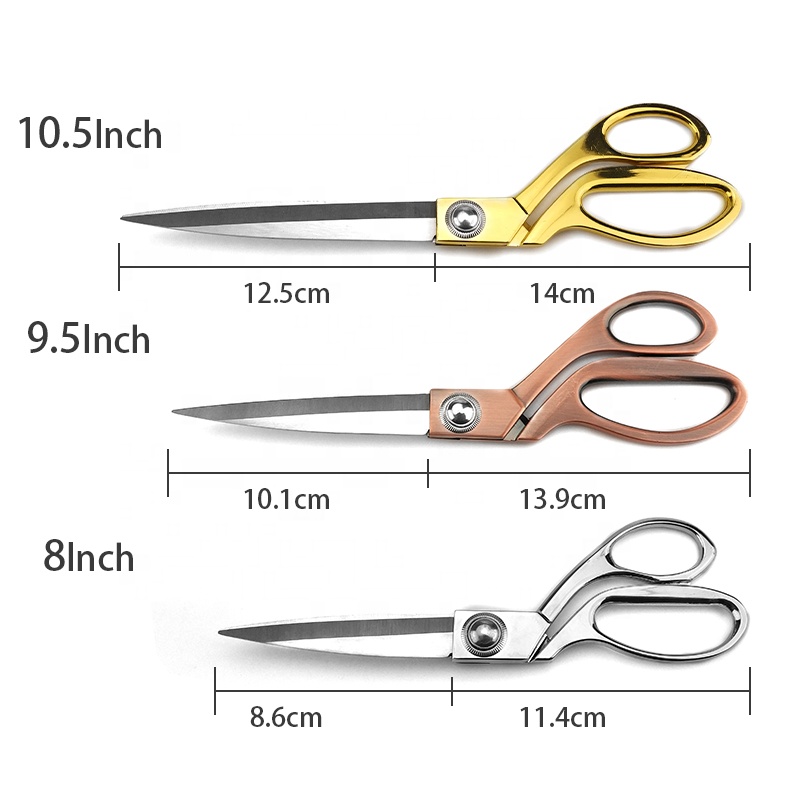
Tailor scissors tools are basic equipment in sewing rooms, alteration shops, sample rooms, fashion studios, and home craft spaces. A good pair does more than cut fabric. It helps the user keep pattern lines accurate, reduce fabric shifting, and work for longer periods with better control. Poor scissors, by contrast, can chew edges, drag through cloth, or force the hand into an uncomfortable position.
The original article highlights three visible options: a 10.5-inch gold-handled pair for longer cuts, a 9.5-inch rose-gold variant, and an 8-inch silver model for more detailed work. It also states that the scissors use stainless-steel blades and places importance on sharpness, durability, and ergonomic handling. This guide expands those points into practical selection, use, care, and sourcing advice so buyers can compare tailor scissors tools more confidently.
Key Takeaways
- Choose tailor scissors based on fabric type, cutting task, hand comfort, and blade length.
- Longer scissors can help with straight fabric cuts, while shorter scissors are easier to control for detail work.
- Ergonomic handles matter for users who cut fabric for long sessions or repetitive production tasks.
- Stainless-steel blades are stated in the source, but buyers should still ask suppliers about hardness, edge retention, and sharpening guidance.
- For wholesale or OEM sourcing, confirm specifications, packaging, samples, inspection standards, and after-sales support before placing an order.
What Tailor Scissors Tools Are Used For
Tailor scissors are designed for cutting textiles more accurately than general-purpose household scissors. Common uses include cutting garment panels, trimming seam allowances, preparing pattern samples, working with linings, and shaping craft materials. In professional settings, they are often reserved for fabric only. Cutting paper, plastic ties, cardboard, or wire can dull the edge and reduce cutting performance.
Different users may need different tools. A tailor working with long trouser panels may prefer a longer blade for smooth continuous cuts. A sample maker may need a balanced mid-size pair for frequent layout changes. A home sewer may want one dependable pair that can handle most medium-weight fabrics. The best choice is not always the largest or most decorative option; it is the tool that matches the actual cutting routine.
How to Choose the Right Blade Length
Blade length affects reach, control, and cutting rhythm. The source article mentions three sizes: 10.5 inches, 9.5 inches, and 8 inches. These sizes can serve different roles in a sewing toolkit.
| Option | Best Use | Buyer Check |
|---|---|---|
| 10.5-inch tailor scissors | Long straight cuts on fabric panels and larger pattern pieces | Check hand strength, balance, and whether the blade opens smoothly across its full length |
| 9.5-inch tailor scissors | General sewing room use where reach and control both matter | Ask whether the weight suits repetitive cutting and whether samples can be tested on common fabrics |
| 8-inch tailor scissors | Detail work, curves, trimming, and users who prefer a smaller tool | Confirm tip alignment and cutting performance near the blade point |
If a business is buying for a team, it can be useful to test more than one size. Operators with smaller hands or lighter workloads may prefer the 8-inch or 9.5-inch model, while users cutting large quantities of fabric may value the reach of the 10.5-inch version.
Blade Quality and Cutting Performance
The source article states that the scissors feature stainless-steel blades. Stainless steel is commonly valued for corrosion resistance and easy cleaning, but the term alone does not tell a buyer everything. For sourcing or bulk purchasing, ask the supplier what blade information is available, including steel type if disclosed, blade thickness, hardness range, edge grinding method, and recommended sharpening process.
When testing samples, do not rely only on how sharp the scissors feel on first use. Try several practical cuts: a long cut through woven cotton, a curved cut around a paper pattern, a short snip near the tip, and repeated cutting through a medium-weight fabric. Watch for fabric pushing forward, uneven bite, blade gaps, loose pivots, or hand strain. Clean cuts with minimal fraying are a good sign, but durability should be evaluated over time.
Handle Comfort and Ergonomics
Ergonomic tailor scissors are important because cutting is repetitive. A handle that looks attractive may still create pressure points if the finger openings are too tight, the grip angle is awkward, or the weight is poorly balanced. The original article emphasizes comfort, control, balance, and reduced strain, which are relevant for both professional and home users.
Before choosing a model, consider who will use it and for how long. A production user may cut for hours, while a hobby user may cut for shorter sessions. In both cases, the scissors should open and close smoothly without forcing the thumb. The pivot should feel stable, and the handle should allow accurate control without excessive wrist movement.
Use and Care Tips for Longer Service Life
- Reserve tailor scissors for fabric and thread-related work whenever possible.
- Wipe blades after use, especially after cutting lint-heavy or treated fabrics.
- Store scissors closed in a sleeve, box, or dedicated drawer to protect the edge.
- Do not drop them, because impact can affect blade alignment or tip accuracy.
- Ask the supplier whether the pivot can be adjusted and what sharpening method is recommended.
Care habits matter. Even a well-made pair can perform poorly if it is used on unsuitable materials or stored loosely with other metal tools. In shared sewing rooms, label fabric scissors clearly so they are not used for paper cutting.
B2B Sourcing Questions for Tailor Scissors
For wholesalers, retailers, sewing kit brands, and OEM buyers, product selection should include more than appearance. The article presents three color and size options, but commercial buyers should confirm the details that affect sell-through, returns, and user satisfaction.
- What blade material, hardness, finish, and inspection information can the supplier provide?
- Can the supplier send pre-production samples for cutting tests on target fabrics?
- What handle materials, colors, logo methods, and packaging options are available?
- What are the MOQ, lead time, carton details, and replacement policy for defective items?
- Are there any market-specific compliance or labeling requirements the buyer must verify?
These questions do not assume any undisclosed Bonet capacity, certification, or pricing. They help a buyer build a clear specification sheet before ordering, which reduces misunderstandings between supplier and customer.
Practical FAQ
What size tailor scissors should I choose first?
For general sewing, a mid-size option such as 9.5 inches is often a practical starting point. If you mainly cut large fabric panels, consider a longer pair. If you do detailed trimming, an 8-inch pair may feel easier to control.
Are stainless-steel blades enough to judge quality?
No. Stainless-steel blades are useful, and the source article states this feature, but buyers should also check sharpness, edge retention, pivot stability, blade alignment, and real fabric test results.
Can tailor scissors cut paper patterns?
They can, but it is better to keep a separate paper scissors. Paper can dull fabric shears faster, especially when scissors are used often.
What should wholesale buyers test before ordering?
Test sample scissors on the fabrics your customers actually use. Check long cuts, curves, tip cutting, comfort after repeated use, packaging durability, and consistency between samples.
How do I maintain accurate cutting over time?
Use the scissors only on suitable materials, wipe the blades clean, store them safely, and sharpen them according to the supplier's guidance when performance declines.
