




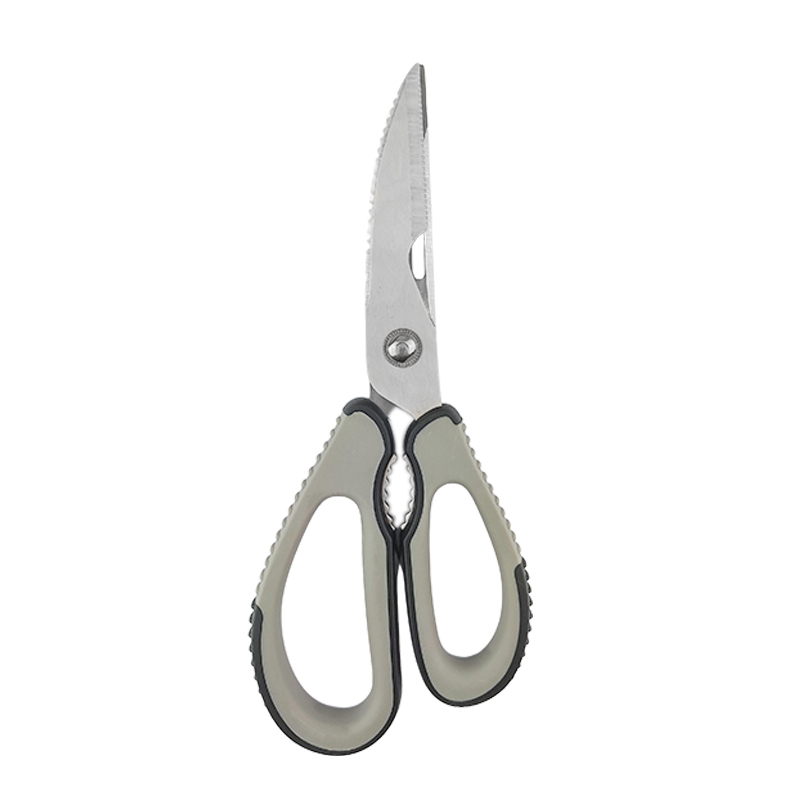
The Ultimate OEM Multi-Functional Kitchen Scissors

Multi-functional kitchen scissors are a compact tool category with broad demand across retail, hospitality, promotional gifting, and private-label kitchenware programs. For buyers sourcing OEM kitchen scissors, the goal is not simply to find a sharp pair of shears. The better question is whether the product design, materials, finishing, packaging, and supplier communication match the intended market and selling channel.
The original product description highlights several useful functions: stainless steel blades, a serrated cutting edge, ergonomic non-slip handles, suitability for left- and right-handed users, plus integrated nutcracker and bottle opener functions. Those features make the product relevant for everyday food preparation, but B2B buyers should still verify specifications directly with the supplier before placing a wholesale or OEM order.
Key Takeaways
- Multi-functional kitchen scissors can reduce tool clutter by combining cutting, gripping, cracking, and opening functions.
- For OEM sourcing, confirm material details, blade construction, handle material, packaging, and branding options in writing.
- Do not rely only on product photos; request samples and test cutting comfort, balance, cleaning, and repeated use.
- Wholesale buyers should compare suppliers on consistency, communication, inspection process, and after-sales support, not price alone.
What Makes Kitchen Scissors Multi-Functional?
Standard kitchen scissors are mainly designed for cutting packaging, herbs, vegetables, fish, or poultry. Multi-functional kitchen scissors add practical secondary features. In this product description, the stated extras include a serrated edge for gripping slippery items, a nutcracker function, and a built-in bottle opener. These additions can be valuable when the tool is marketed to home cooks, camping users, barbecue users, meal-prep customers, or food-service teams that need quick access to versatile hand tools.
However, more functions are not always better. Each added feature should have a clear use case and should not make the scissors uncomfortable, difficult to clean, or awkward to store. A good OEM evaluation balances feature count with durability, hygiene, user safety, and ease of manufacturing consistency.
Blade Performance and Material Questions
The source article states that the blades are made from stainless steel and describes them as sharp and durable. For professional sourcing, buyers should go one step further and ask the supplier to identify the stainless steel grade, blade thickness, heat treatment, hardness target, surface finish, and sharpening process. These details affect corrosion resistance, edge retention, cutting feel, and long-term customer satisfaction.
Sample testing should include common kitchen tasks such as cutting herbs without crushing them, trimming poultry skin, cutting fish fins, opening food packaging, and slicing through thicker vegetable stems. If the scissors include a serrated edge, check whether it improves grip without tearing food excessively. If the product is detachable or intended for easy cleaning, confirm how the hinge operates and whether the parts reconnect securely after washing.
Ergonomic Handle Design for Daily Use
The original description notes ergonomic, non-slip handles designed for both left- and right-handed users. This is important because discomfort becomes noticeable quickly during repetitive cutting. For OEM projects, handle design should be assessed by users with different hand sizes. A handle that feels secure for one person may feel tight, slippery, or unbalanced for another.
When reviewing samples, check grip texture, finger opening size, edge smoothness, weight distribution, and performance when hands are wet or lightly oily. If the product will be sold to families or food-service operators, buyers may also ask about safety packaging, blade covers, storage options, and care instructions. These details can reduce misuse and improve the customer experience after purchase.
Comparison Checklist for OEM Buyers
| Evaluation Point | What to Check | Questions to Ask the Supplier |
|---|---|---|
| Blade material | Stainless steel type, thickness, finish, edge sharpness | What material grade is used, and can it be confirmed in the specification sheet? |
| Cutting performance | Herbs, poultry, fish, packaging, and tougher stems | Can samples be tested before bulk order approval? |
| Handle comfort | Non-slip grip, left/right-hand usability, pressure points | What handle material and color options are available for OEM projects? |
| Extra functions | Nutcracker, bottle opener, serrated grip area | Are these functions included in the standard model or customizable? |
| Packaging | Retail card, box, instruction insert, barcode area | What packaging formats and artwork requirements should buyers prepare? |
| Quality control | Inspection points, appearance limits, function checks | What inspection process is used before shipment? |
OEM and Wholesale Sourcing Guidance
For OEM kitchen scissors, the sourcing process should start with a clear product brief. Include target market, expected retail price range, preferred handle color, logo placement, packaging style, required languages for instructions, and any market-specific compliance questions that need to be addressed. If certifications or test reports are required for your sales channel, ask the supplier what documentation is available and whether additional testing must be arranged by the buyer.
Wholesale buyers should also clarify commercial details that are often missing from basic product pages. Ask about minimum order quantity, sample cost, tooling or mold fees for custom handles, logo methods, lead time, carton packing, spare parts policy, and shipment terms. These are not assumptions to make from a product description; they should be confirmed directly before purchase order approval.
How to Test Samples Before Ordering
- Inspect the scissors visually for burrs, uneven finishing, loose joints, or handle defects.
- Cut several food types and packaging materials to judge sharpness and control.
- Use the nutcracker and bottle opener functions to see whether they feel practical and safe.
- Wash and dry the scissors according to the supplier's care guidance, then check for residue or stiffness.
- Repeat common tasks over several days to evaluate comfort, edge feel, and hinge stability.
If possible, compare samples from more than one supplier using the same test list. This makes decisions more objective and helps buyers avoid choosing based on appearance alone.
Practical Use and Care Considerations
For end users, multi-functional kitchen scissors are best used as a food-prep helper rather than a replacement for every knife or heavy-duty tool. They are useful for trimming herbs, cutting food packaging, portioning soft foods, and handling quick kitchen tasks. To extend service life, users should clean the blades after contact with acidic, salty, or oily foods and dry the scissors before storage.
Care instructions should be specific to the final product construction. If the scissors are detachable, explain how to separate and reassemble them safely. If they are not detachable, advise users to clean carefully around the pivot area. OEM buyers should request clear care guidance from the supplier and include it in the retail packaging or product insert.
FAQ
What should I ask before sourcing OEM multi-functional kitchen scissors?
Ask for the material specification, sample availability, customization options, packaging choices, MOQ, lead time, inspection process, and any documents required by your sales market.
Are multi-functional kitchen scissors suitable for wholesale programs?
Yes, they can be suitable for wholesale kitchenware ranges because they serve multiple everyday tasks. Buyers should still test samples and confirm packaging, quality control, and commercial terms before ordering.
Can the handle, logo, or packaging be customized?
Customization may be possible, but buyers should confirm available options with the supplier. Ask about logo method, color matching, artwork format, setup cost, and production lead time.
How should buyers verify product quality?
Use sample testing, written specifications, pre-shipment inspection criteria, and clear approval samples. For regulated sales channels, ask what testing or documentation is needed rather than assuming compliance.
What makes these scissors different from standard kitchen shears?
The described product combines stainless steel cutting blades with a serrated edge, ergonomic non-slip handles, a nutcracker function, and a bottle opener, giving buyers a broader feature set to evaluate for OEM or wholesale use.
