




OEM Poultry Scissors: Practical Sourcing Guide for Kitchen Shears
OEM poultry scissors are a focused kitchen tool for buyers who need more than ordinary household scissors. For retailers, kitchenware brands, distributors, and hospitality procurement teams, the goal is not only to find a sharp pair of shears, but to choose a product that fits the intended user, packaging plan, quality expectations, and after-sales risk profile.
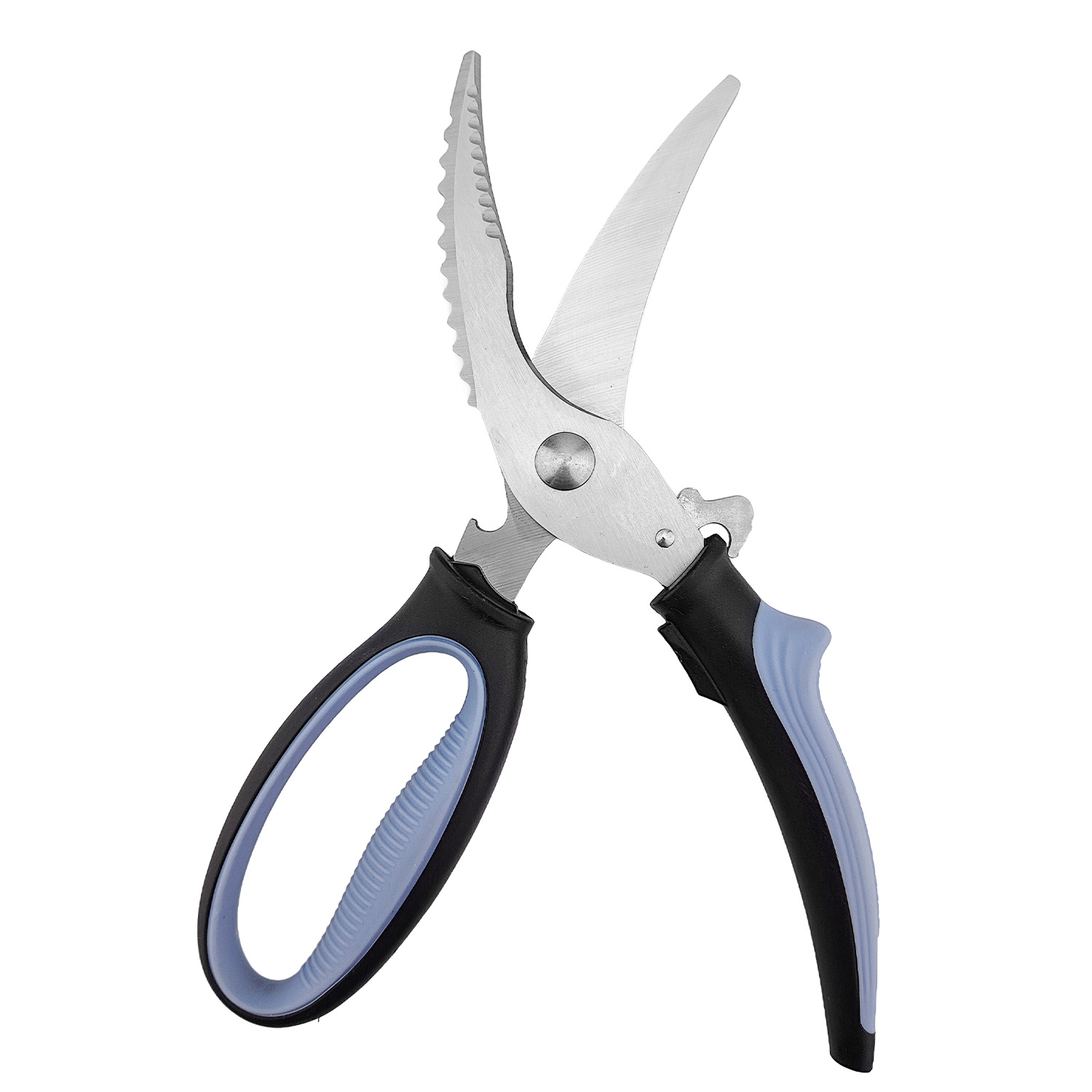
The original product article highlights poultry preparation, multi-functional kitchen use, serrated stainless steel blades, a blue and black non-slip handle, and integrated functions such as a bottle opener and nutcracker. Those are useful starting points, but B2B sourcing requires deeper evaluation. Buyers should verify materials, construction, finishing, packaging, inspection standards, and customization options directly with the supplier before placing an OEM order.

Key Takeaways
- OEM poultry scissors should be evaluated for cutting performance, grip comfort, cleaning convenience, and safety during repeated kitchen use.
- Multi-functional features such as a bottle opener or nutcracker can add value, but only if they do not weaken the main cutting function.
- Buyers should ask suppliers to confirm blade material, handle material, surface treatment, packaging options, MOQ, lead time, and quality inspection process.
- Samples should be tested on realistic kitchen tasks before confirming branding, packaging, or bulk production.
What OEM Poultry Scissors Are Used For
Poultry scissors, also called poultry shears or kitchen shears, are commonly used to trim poultry skin, cut through joints, portion cooked meat, snip herbs, open food packaging, and handle other preparation tasks where a knife may be less convenient. In the original description, the shears are positioned for poultry work and broader kitchen chores, including bottle opening and nut cracking.
For B2B buyers, the intended use matters because it affects product positioning. A supermarket private-label item may prioritize price competitiveness and attractive packaging. A professional kitchenware line may require stronger cutting feel, better hand comfort, and more consistent finishing. A promotional product may need simpler specifications but reliable basic function. Defining the sales channel first helps prevent over-specifying or under-specifying the product.
Product Features to Evaluate Before Sourcing
The article mentions serrated stainless steel blades and a non-slip blue and black handle. Those features are relevant because poultry and wet ingredients can be slippery. However, buyers should avoid relying on broad descriptions alone. Ask the supplier to confirm the exact material grade, blade thickness, hardness target if available, handle material, and whether the handle is overmolded, assembled, or otherwise constructed.
Also review the hinge or pivot area. A poultry scissor that feels sharp at first can still disappoint users if the pivot loosens quickly, traps food residue, or becomes difficult to clean. If the product is intended for regular home use or foodservice use, ask how the joint is assembled and whether the design supports cleaning after contact with raw poultry.
Comparison Checklist for OEM Buyers
| Evaluation Point | What to Check | Questions to Ask the Supplier |
|---|---|---|
| Blade design | Serration, edge alignment, cutting feel, tip shape | What blade material and thickness are used? Can samples be tested before bulk order? |
| Handle comfort | Grip size, non-slip texture, hand fatigue during repeated cuts | What handle material is used? Are color options available for OEM branding? |
| Multi-function parts | Bottle opener, nutcracker, or other integrated features | Are these functions tested during inspection, or are they visual features only? |
| Cleaning and hygiene | Food traps, pivot area, corrosion risk after washing | What cleaning guidance should be printed on packaging or instructions? |
| Packaging | Retail card, box, blister, instruction sheet, barcode space | What packaging formats are available, and what artwork files are required? |
| Quality control | Appearance, sharpness, assembly, opening and closing action | What inspection criteria are used before shipment? |
How to Assess a Kitchen Scissors Supplier
Choosing a kitchen scissors supplier is not only about the unit price. Buyers should confirm whether the supplier can support OEM communication clearly, provide samples, explain material options, and maintain consistent production. If the supplier is based in China or offers Chinese scissors for poultry, request documentation and sample confirmation rather than assuming a universal quality level.
Important commercial details should be requested in writing. These include MOQ, sample cost, sample lead time, production lead time, packaging cost, logo method, carton details, payment terms, inspection process, and shipment options. If compliance is required for a target market, ask what documents or third-party testing can be provided, but do not assume certification unless the supplier supplies valid evidence.
OEM Customization Points to Confirm
OEM poultry scissors may be customized in several ways depending on the supplier’s capability. Common areas to discuss include handle color, logo placement, packaging artwork, instruction language, barcode labeling, and assortment planning. The original product image shows a blue and black handle, so buyers interested in that style should ask whether the same colorway is standard or whether color matching requires a minimum order.
- Request a physical sample in the closest available specification.
- Test the sample on poultry, herbs, food packaging, and any promoted secondary function.
- Confirm logo position and packaging structure with a pre-production sample if possible.
- Agree on inspection criteria for blade alignment, handle finish, opening action, and appearance.
- Keep one approved sample as the reference for bulk production comparison.
Use and Care Guidance for End Users
Clear use and care instructions reduce complaints after the product reaches consumers. Poultry scissors should be washed after contact with raw meat and dried before storage. If the supplier recommends hand washing, that guidance should be printed clearly. If dishwasher use is claimed, buyers should ask the supplier for the basis of that claim before adding it to packaging or online listings.
Consumers should also understand that multi-functional kitchen shears are not a replacement for every cutting tool. They are useful for trimming poultry, cutting food packaging, snipping herbs, and light kitchen tasks. Hard bones, frozen food, or non-food materials may damage the edge or pivot unless the supplier specifically rates the product for those uses.
Practical FAQ
What makes poultry scissors different from ordinary scissors?
Poultry scissors are designed for kitchen food preparation and usually have stronger blades, a more secure grip, and a shape suited to cutting meat, skin, and joints. Buyers should still verify the exact construction with the supplier.
Can OEM poultry scissors be sold as multi-functional kitchen shears?
Yes, if the product genuinely supports the promoted functions. If features such as a bottle opener or nutcracker are included, test them before using those claims in product listings.
What should buyers ask before ordering from a kitchen scissors supplier?
Ask about material specifications, sample availability, MOQ, lead time, packaging options, logo methods, inspection standards, and any compliance documents needed for the destination market.
Should buyers prioritize price or durability?
The right balance depends on the sales channel. Low-cost retail programs may focus on basic function and packaging efficiency, while premium or professional channels should place more weight on cutting feel, grip comfort, and consistency.
Is it safe to claim stainless steel or corrosion resistance?
Only use claims that the supplier can support with clear specifications or documentation. The original article mentions stainless steel blades and corrosion resistance, but buyers should verify the exact material and performance before printing claims.
Final Sourcing Advice
OEM poultry scissors can be a practical addition to a kitchenware line when the product is selected carefully. Start with real use cases, then compare blade design, handle comfort, secondary functions, cleaning needs, and packaging requirements. A trusted supplier should be able to answer technical and commercial questions clearly and provide samples for evaluation. For buyers, the best result comes from treating the product as a functional kitchen tool first and an OEM branding project second.
