




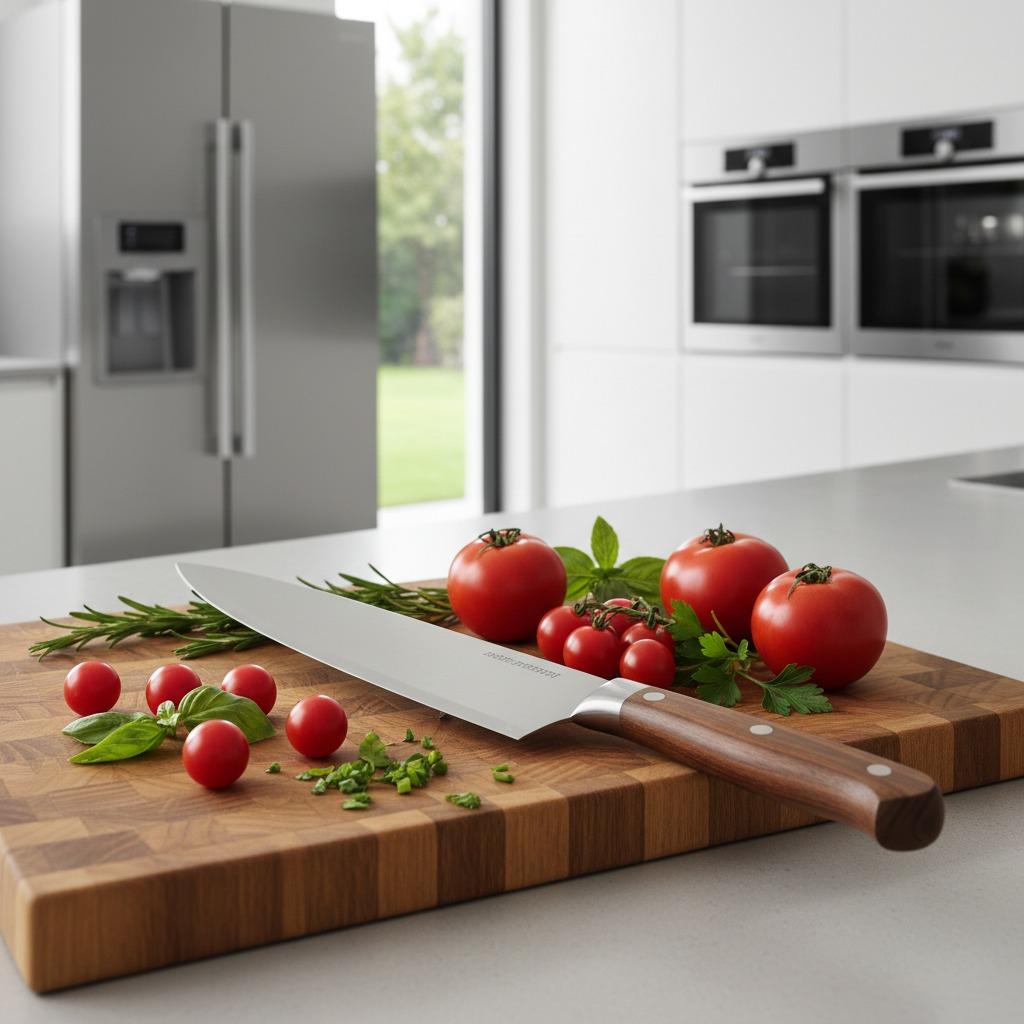
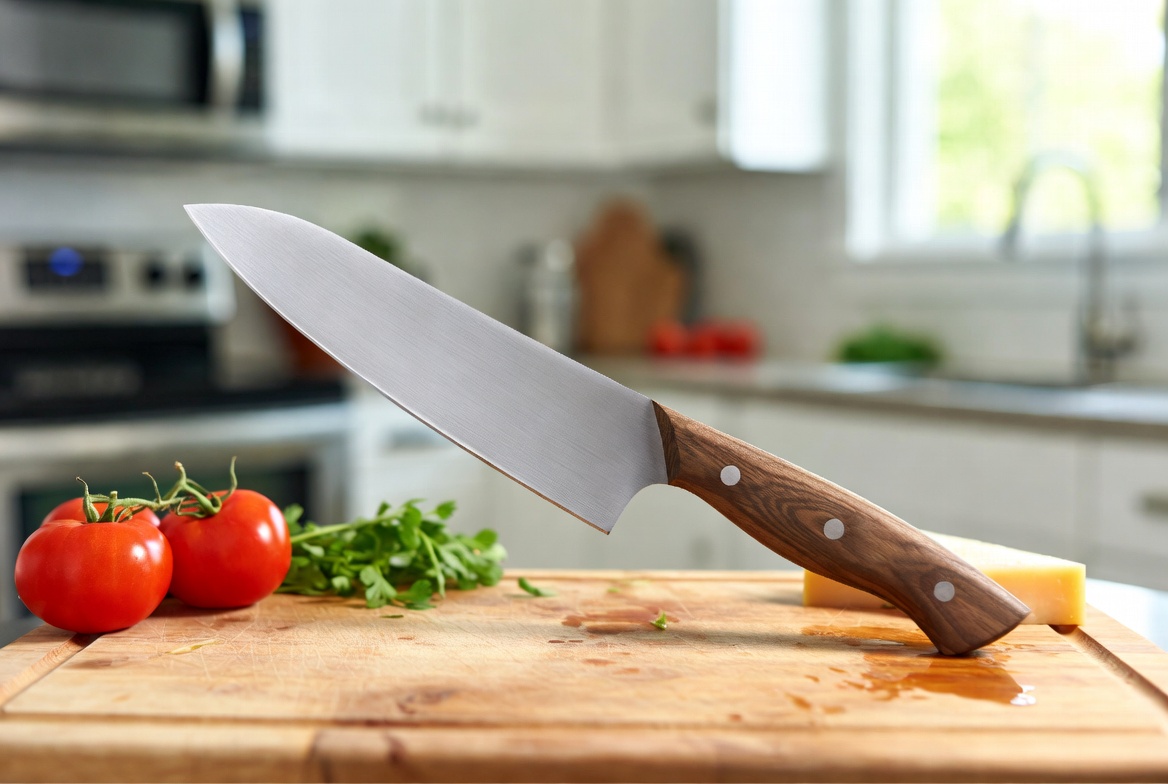
The Utility Knife: The Middle Child of the Kitchen
Most kitchens have a clear hierarchy of knives. The chef’s knife gets attention because it handles large chopping jobs. The paring knife is trusted for small, controlled work. Between them sits the utility knife, a practical mid-sized kitchen knife that often does more daily work than people expect.
A utility knife is useful when a chef’s knife feels too large and a paring knife feels too small. It can slice tomatoes, trim poultry, halve sandwiches, cut cheese, portion fruit, and handle many quick prep tasks without taking up much board space. For home cooks, small restaurants, catering teams, or anyone building a simple knife set, understanding this knife helps avoid buying tools that rarely get used.
What Is a Utility Knife?
A utility knife is a medium-sized kitchen knife, commonly described as having a blade around 5 to 7 inches long. It bridges the gap between a small paring knife and a larger chef’s knife. The blade is usually narrow enough for control but long enough to cut through medium ingredients in fewer strokes.
The exact shape can vary. Some utility knives have a straight edge for clean slicing, while others have a slightly curved edge that allows a light rocking motion. Some are serrated, which can be helpful for bread rolls, tomatoes, and foods with firm skins and soft interiors. Because styles differ, shoppers should compare the actual blade shape, handle comfort, and intended use rather than relying on the name alone.
Why the Utility Knife Is the “Middle Child”
The “middle child” label fits because the utility knife is easy to overlook. Many people buy a knife block and reach automatically for the biggest or smallest blade. Yet everyday cooking often involves ingredients that sit in the middle: cucumbers, citrus, cooked meats, sandwiches, herbs, small squash, sausages, and medium fruits.
In these situations, a large chef’s knife may feel awkward, especially on a small cutting board. A paring knife may require too many strokes or offer too little blade length. The utility knife gives a comfortable compromise: enough reach to slice efficiently, but enough control for careful trimming and portioning.
Best Uses for a Utility Kitchen Knife
The utility knife is not meant to replace every blade in the kitchen. Its value is in quick, flexible prep. It is especially helpful when you are making a light meal, assembling lunch, or cutting a few ingredients without setting up for heavy chopping.
- Slicing tomatoes, cucumbers, zucchini, citrus, and apples
- Cutting sandwiches, wraps, rolls, and soft cheeses
- Trimming small pieces of meat or poultry before cooking
- Portioning cooked chicken, sausages, or small roasts
- Preparing garnishes, herbs, and medium-sized vegetables
- Handling prep on smaller cutting boards where a chef’s knife feels crowded
For very dense vegetables, large melons, bones, or heavy chopping, choose a more suitable knife. For peeling, turning vegetables, or very fine detail work, a paring knife will usually be easier to control.
Utility Knife vs. Paring Knife vs. Chef’s Knife
The easiest way to understand a utility knife is to compare it with the knives most people already know. The table below shows where each one performs best.
| Knife Type | Typical Size | Best For | Main Advantage | Limitation |
|---|---|---|---|---|
| Paring Knife | Small blade, often about 3 to 4 inches | Peeling, coring, detail trimming, small fruit | Precise control in the hand | Too short for many slicing tasks |
| Utility Knife | Mid-sized blade, often about 5 to 7 inches | Everyday slicing, trimming, sandwiches, medium produce | Balanced size for quick daily prep | Not ideal for heavy chopping or very fine detail work |
| Chef’s Knife | Larger blade, often about 8 inches or more | Chopping, dicing, mincing, larger vegetables and meats | Efficient for high-volume prep | Can feel oversized for small jobs |
How to Choose a Good Utility Knife
When choosing a utility kitchen knife, focus on fit and intended use. Product labels can sound similar, but the details determine whether the knife will be comfortable in daily cooking.
- Check the blade length. A shorter utility knife offers more control, while a longer one gives smoother slicing through sandwiches and medium produce.
- Look at the edge style. A plain edge is versatile and easier to sharpen. A serrated edge can be useful for crusty or delicate foods but is harder to maintain at home.
- Hold the handle if possible. The handle should feel secure, not slippery, and should not force your wrist into an uncomfortable angle.
- Consider balance. A knife that feels too blade-heavy or too handle-heavy may cause fatigue during repeated prep.
- Ask about care instructions. Before buying, confirm whether the supplier recommends hand washing, honing, or specific storage methods.
If you are comparing kitchen knife suppliers for retail, hospitality, or wholesale purchasing, request clear answers about available blade styles, handle materials, packaging options, replacement policies, and recommended maintenance. Avoid assuming a knife has a certain steel grade, certification, or construction feature unless the supplier states it clearly in the product information.
Safe Use and Cutting Technique
A utility knife works best when the food is stable and the cutting board is secure. Use a board that does not slide; placing a damp towel underneath can help. Keep fingertips curled back in a basic claw grip when slicing. Let the sharp edge do the work instead of pressing hard.
For round foods such as tomatoes, citrus, or cucumbers, cut a small flat surface first if needed. This prevents rolling and improves control. For sandwiches, use long, even strokes instead of forcing the blade straight down, which can crush soft bread and fillings.
Cleaning, Storage, and Maintenance
Good care protects both the blade and the user. Even an everyday knife should be cleaned and stored thoughtfully.
- Wash by hand with mild detergent and dry promptly after use.
- Avoid leaving the knife soaking in a sink where the edge is hidden and unsafe.
- Store it in a knife block, sheath, drawer insert, or magnetic strip that protects the edge.
- Use a cutting board made for kitchen knives rather than glass, stone, or very hard surfaces.
- Hone or sharpen according to the knife type and the supplier’s guidance.
If the knife begins to slide off tomato skin, crush herbs, or require extra force, it may need sharpening. A dull knife can be more dangerous than a sharp one because it encourages pressure and slipping.
Key Takeaways
- A utility knife is a mid-sized kitchen knife that fits between a paring knife and a chef’s knife.
- It is useful for everyday slicing, trimming, sandwiches, fruit, vegetables, and small cooked meats.
- Choose based on blade length, edge type, handle comfort, balance, and care requirements.
- Use a stable cutting board, safe hand position, and proper storage to extend the knife’s service life.
Practical FAQ
Do I need a utility knife if I already have a chef’s knife?
You can cook without one, but a utility knife is convenient for smaller daily tasks. It saves space on the board and gives more control than a large chef’s knife for medium ingredients.
Is a serrated utility knife better than a plain-edge utility knife?
It depends on your use. Serrated edges work well on tomatoes, rolls, and foods with tough skins. Plain edges are more versatile for trimming and are usually easier to sharpen.
Can a utility knife replace a paring knife?
Not completely. A utility knife is better for slicing medium foods, while a paring knife is better for peeling, coring, and detailed hand work.
What should buyers ask a kitchen knife supplier?
Ask about blade material, handle material, edge style, packaging, care instructions, warranty or replacement terms, and any compliance documents that are relevant to your market. Do not assume these details unless they are provided in writing.
What is the best way to keep a utility knife sharp?
Use an appropriate cutting board, wash and dry it by hand, store it so the edge is protected, and sharpen it when cutting performance declines. Follow the supplier’s maintenance guidance for the specific knife.
