




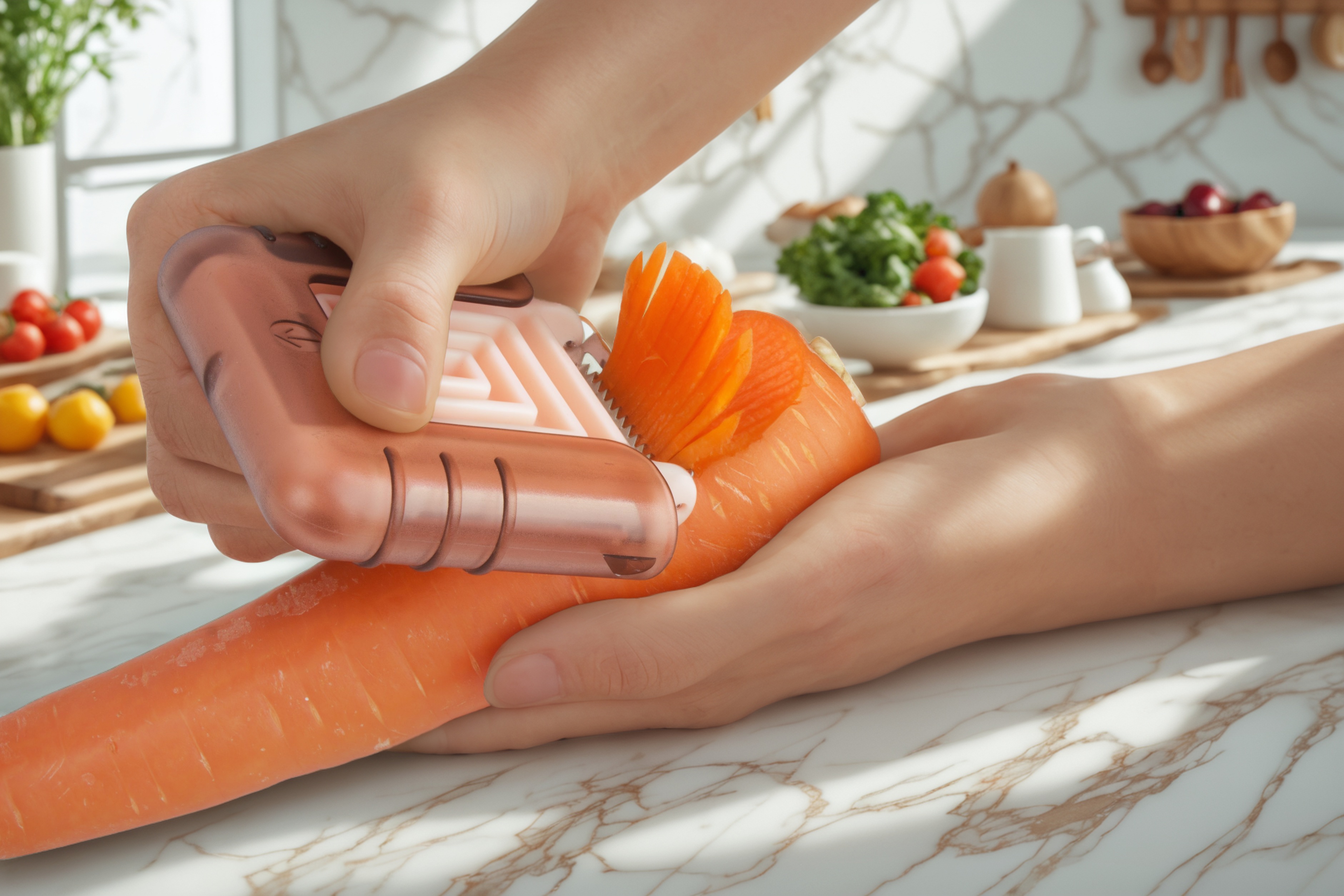
Three-Purpose Peeler Buying Guide for Practical Kitchen Prep
A three-purpose peeler is designed for kitchens that need more function from fewer tools. Instead of keeping separate gadgets for peeling, slicing, and simple garnish work, a compact peeler set can help reduce drawer clutter while keeping common prep tasks within reach. The original Square Peeler Set description highlights a dual-toned shimmering casing, color options such as peach, pink, and blue, stainless steel blades, pivoting heads, and a stacked head design. Those are useful details for evaluating the product, but buyers should still look closely at comfort, blade performance, storage, and supplier documentation before placing an order.
This guide is written for both product buyers and practical kitchen users. If you are sourcing for retail, hospitality, promotional goods, or wholesale kitchenware, the focus should be on repeatable quality and clear supplier communication. If you are choosing for home or daily food prep, the focus should be on safe handling, easy cleaning, and whether the tool actually suits the vegetables and fruit you prepare most often.
Key Takeaways
- A three-purpose peeler should be judged by grip comfort, blade control, cleaning ease, and storage efficiency.
- The Square Peeler Set is described with stainless steel blades, pivoting heads, and a stacked design, but commercial details should be confirmed with the supplier.
- Wholesale buyers should ask about materials, packaging, inspection standards, branding options, and replacement policies before ordering.
- For daily use, avoid excessive force; let the blade angle and pivoting head follow the contour of the ingredient.
What a Three-Purpose Peeler Is Used For
A three-purpose peeler usually combines several prep functions in one compact tool or set. Based on the source article, this type of peeler is intended for peeling, slicing, and creating decorative garnishes. That makes it useful for ingredients that vary in shape and texture, from firm root vegetables to softer produce. The pivoting head mentioned in the original description is especially relevant because curved surfaces can be difficult to peel cleanly with a rigid blade.
In practical terms, the value is not only speed. A well-designed peeler can reduce the number of utensils used during prep, simplify washing up, and make it easier to switch between tasks. However, multifunction tools only work well when each function is genuinely usable. Buyers should avoid judging the product only by the number of claimed uses and should test how the tool performs on common ingredients such as potatoes, carrots, cucumbers, zucchini, apples, and sweet potatoes.
Design Details Worth Evaluating
The original article describes an ergonomic, dual-toned shimmering casing in vibrant colors including peach, pink, and blue. Appearance can matter for retail display, gift sets, and coordinated kitchen collections, but the handle shape is more important in daily use. A peeler should feel stable when held with wet hands, and the casing should not create pressure points during repetitive peeling.
The stainless steel blades and pivoting heads are also important details. Stainless steel is commonly used in kitchen blades because it is suitable for regular food-prep contact, but buyers should still ask the supplier what specific material is used and how the blade is finished. A pivoting head should move smoothly without feeling loose. If it wobbles too much, peeling can become uneven; if it is too stiff, it may not follow rounded produce effectively.
Comparison Checklist for Buyers
| Evaluation Point | Why It Matters | Questions to Ask |
|---|---|---|
| Blade performance | Affects peeling speed, smoothness, and waste reduction. | What blade material is used, and can samples be tested on firm and soft produce? |
| Pivoting head | Helps the blade follow curved fruit and vegetables. | How is head movement checked during quality inspection? |
| Handle comfort | Reduces hand fatigue during repeated prep tasks. | Can the supplier provide product dimensions and sample units for grip testing? |
| Stacked storage design | Supports compact storage and simpler organization. | How are the heads secured during storage and shipping? |
| Retail presentation | Important for shelf display, online listings, and giftable kitchenware. | What packaging options are available, and can artwork be reviewed before production? |
| After-sales support | Reduces risk for wholesale and distributor orders. | What is the process for handling defects, missing parts, or shipment damage? |
Wholesale and OEM Sourcing Guidance
Because the original article refers to China manufactured kitchen tools, B2B buyers should approach this product with a structured sourcing process. Start with samples rather than relying only on photos. Test each function, confirm whether the colors match your market needs, and check how the dual-toned casing looks under normal retail lighting. If the product will be sold online, inspect whether the finish photographs accurately and whether the packaging protects the blades in transit.
Do not assume commercial details that are not stated. Instead, ask direct questions. What is the minimum order quantity? Are custom colors or private-label packaging available? What inspection steps are used before shipment? Are replacement parts or spare heads offered? What documents can the supplier provide regarding food-contact materials for the intended market? These questions help reduce misunderstanding and create a clearer basis for comparison between suppliers.
For OEM or branded orders, request pre-production samples and packaging mockups. Confirm the exact product name, color codes, barcode placement, warning text, and cleaning instructions before approving production. A multifunction peeler is a small item, but small inconsistencies in blade sharpness, head fit, or packaging can affect customer satisfaction at scale.
How to Use It Effectively
For consumer-facing use, the most important rule is to work with control rather than force. Hold the ingredient securely on a stable surface when possible, and draw the peeler in smooth strokes. Let the pivoting head follow the contour instead of pressing down hard. For tough vegetables such as sweet potatoes, use slower strokes and check that the blade is not clogged with peel. For softer produce such as zucchini, lighter pressure helps avoid removing too much flesh.
- Rinse produce before peeling so dirt does not drag across the blade.
- Choose the correct head or function for peeling, slicing, or garnish work.
- Keep fingers away from the cutting path, especially when working with small pieces.
- Clean the blade soon after use to prevent residue from drying around the head.
- Store the peeler in its stacked configuration or a protected drawer space to reduce accidental contact with the blade.
Cleaning, Storage, and Care
A peeler stays useful longer when it is cleaned promptly and stored safely. Rinse away peel fragments and use a small brush if food becomes trapped near the pivot point. If dishwasher suitability is not clearly stated by the supplier, hand washing is the safer assumption. Dry the tool before storage to help preserve the blade edge and keep the handle clean.
The stacked design described in the source is helpful for compact kitchens and retail kits because it keeps the peeler heads organized. For home users, this can reduce the chance of losing small components. For wholesale buyers, it may also make packaging more efficient, but the packaging should still prevent blade movement during shipping.
Practical FAQ
What makes a three-purpose peeler different from a standard peeler?
A standard peeler normally focuses on removing skin from fruit or vegetables. A three-purpose peeler is intended to support additional tasks such as slicing and simple garnish preparation, depending on the head design.
Is the Square Peeler Set suitable for both hard and soft produce?
The original description mentions use on tough sweet potatoes and delicate zucchini. Buyers should still test samples with their own common ingredients because blade feel and pressure control can vary by user.
What should wholesale buyers confirm before ordering?
Confirm blade material, handle material, packaging, available colors, inspection process, lead time, minimum order quantity, branding options, and how defects or damaged shipments are handled.
Can I claim specific certifications or compliance in a product listing?
Only if the supplier provides valid documentation for the market where the product will be sold. Do not add food-contact, safety, or certification claims without evidence.
How should the peeler be stored?
Use the stacked storage design if provided, or keep the tool in a protected drawer area where the blade will not contact fingers or other utensils unnecessarily.
Final Buying Advice
A three-purpose peeler is most valuable when it solves real prep problems: fewer tools, cleaner storage, comfortable handling, and reliable cutting performance. The Square Peeler Set has several appealing described features, including stainless steel blades, pivoting heads, colorful dual-toned casing, and a stacked design. For a household buyer, the next step is to consider whether those functions match everyday cooking habits. For a B2B buyer, the next step is to request samples, document supplier answers, and compare quality before committing to a larger order.
