




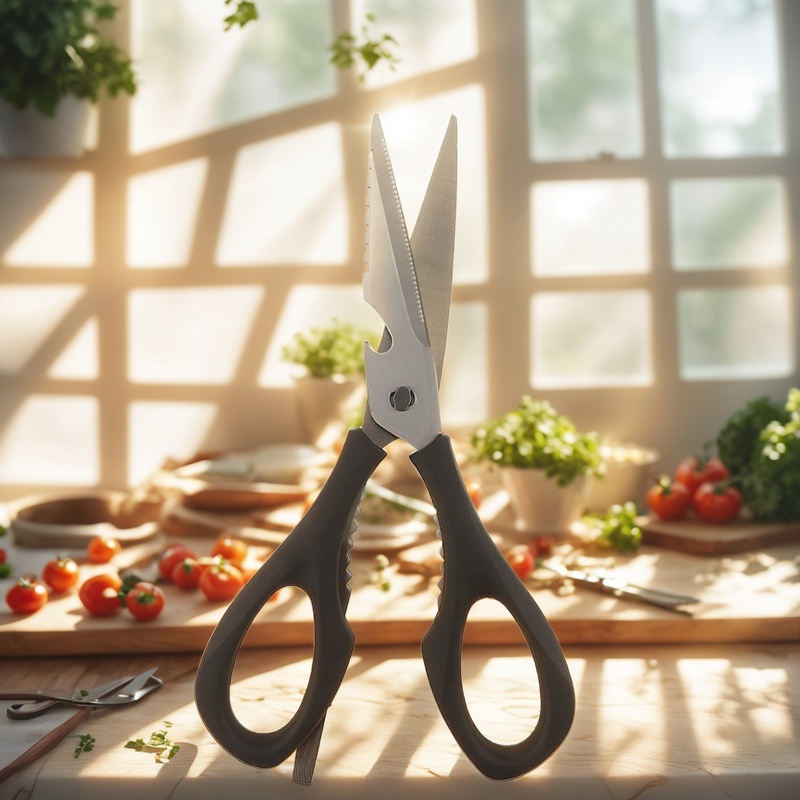
The Versatility and Precision of OEM Kitchen Scissors
OEM kitchen scissors are a practical product category for retailers, distributors, promotional buyers, and kitchenware brands that want a compact tool with broad everyday use. Unlike ordinary office scissors, kitchen scissors are expected to handle food preparation, packaging, and small household tasks while remaining easy to clean. For B2B buyers, the main sourcing question is not simply whether the product looks useful. It is whether the design, construction, packaging, and supplier process match the needs of the target market.
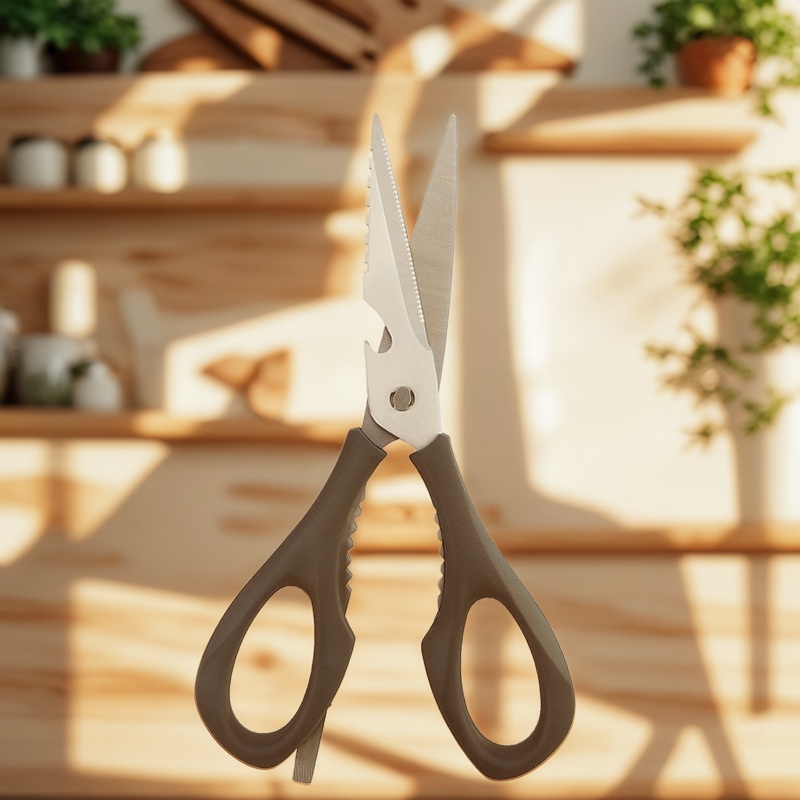
The original product description highlights several useful features: stainless steel blades, matte black handles, a built-in bottle opener, nutcracker grips, and an easy-disassembly design for cleaning. Those features make the item relevant for multi-use kitchen programs, but buyers should still verify materials, finish, durability, labeling, and commercial terms with the supplier before placing an order.
What OEM Kitchen Scissors Are Used For
Kitchen scissors, also called kitchen shears, are designed for cutting tasks that are awkward or inefficient with a knife. Common uses include trimming herbs, cutting food packaging, portioning soft ingredients, snipping kitchen twine, and preparing poultry or seafood where suitable. A multifunctional design may also add household convenience through bottle-opening or nut-cracking functions.
For wholesale buyers, versatility can help the product appeal to several channels. A home goods retailer may position it as a daily kitchen helper. A foodservice distributor may focus on ease of cleaning and grip comfort. A gift or promotional buyer may care more about visual consistency, logo placement, and packaging. The same base product can serve different markets, but only if the OEM specification is clear.
Core Design Features to Review
The source article states that the scissors use stainless steel blades and matte black handles. Stainless steel is commonly selected for kitchen cutting tools because it is associated with corrosion resistance and cleanability, but buyers should ask the supplier to confirm the exact steel grade, blade thickness, hardness target, and surface treatment if those details matter for the market.
Handle design also deserves attention. A matte black handle can look neutral and fit many kitchen styles, but appearance should not replace usability. Buyers should request samples and test the grip with dry hands, wet hands, and light oil residue. If the product will be sold in a market with broad household use, check whether the handle opening is comfortable for different hand sizes.
- Confirm the blade material and whether it is suitable for the intended food-contact use.
- Check blade alignment and cutting performance across paper, herbs, packaging, and soft food items.
- Evaluate handle comfort, edge smoothness, and grip stability.
- Verify how the bottle opener and nutcracker grips are integrated into the design.
- Ask how the detachable or easy-disassembly mechanism works and how it is explained to users.
Comparison Checklist for B2B Buyers
A structured checklist helps buyers compare suppliers without relying only on product photos. The table below focuses on practical questions to ask a kitchen scissors manufacturer or kitchen shears supplier before confirming a wholesale or OEM order.
| Evaluation Area | What to Check | Supplier Questions |
|---|---|---|
| Blade construction | Material, thickness, sharpness, alignment, finish | What stainless steel is used, and can it be documented? |
| Cutting performance | Consistency across food prep and packaging tasks | What sample tests can be provided before mass production? |
| Handle design | Comfort, slip resistance, surface finish, color consistency | Can handle material, color, and logo placement be customized? |
| Added functions | Bottle opener and nutcracker grip usability | Are these functions tested for strength and safe operation? |
| Cleaning | Easy disassembly, crevice control, drying access | What cleaning instructions should appear on packaging? |
| Packaging | Retail display, barcode space, warnings, instructions | What packaging formats are available for OEM orders? |
Cleaning and Maintenance Considerations
The original article notes that these OEM kitchen scissors are designed for easy disassembly, which can support more thorough cleaning. This is especially important because kitchen scissors may touch raw ingredients, oils, herbs, packaging adhesive, and crumbs. If food residue remains around the pivot area, the product can become unpleasant to use even if the blades still cut well.
Buyers should ask the supplier for recommended cleaning instructions rather than assuming dishwasher safety or a specific sanitation method. If the product is detachable, the packaging or insert should explain how to separate and reassemble the blades safely. Clear care instructions reduce consumer confusion and can lower after-sales questions.
OEM Customization Points
OEM sourcing usually involves more than selecting an existing product. Depending on the supplier's capabilities, buyers may discuss handle color, printed or engraved logo placement, retail packaging, instruction leaflets, carton markings, and product bundle options. However, buyers should avoid assuming that every customization is available or that it will not affect cost, lead time, or minimum order quantity.
Before requesting a quote, prepare a concise specification sheet. Include the target market, required packaging type, estimated order quantity, preferred branding method, language requirements for instructions, and any compliance documents needed for import or retail listing. If compliance testing is required in your market, ask the supplier what documentation they can provide and what must be arranged separately through a third-party lab.
Quality Control Before Shipment
Kitchen scissors are small, but quality problems can be easy for end users to notice. Dull blades, loose pivots, sharp handle edges, inconsistent coating, or poor packaging can affect reviews and repeat orders. A practical inspection plan should cover both function and appearance.
- Approve a pre-production sample with the final blade, handle, logo, and packaging details.
- Define acceptable appearance standards for scratches, burrs, stains, color variation, and print defects.
- Test cutting performance on agreed materials instead of using a vague sharpness standard.
- Check the disassembly mechanism and confirm that reassembly is secure.
- Review inner boxes, master cartons, labels, and packing method before shipment.
Key Takeaways
OEM kitchen scissors can be a strong wholesale item when the design is useful, the cleaning method is clear, and the supplier can support consistent production. The features described in the original product information, including stainless steel blades, matte black handles, a bottle opener, nutcracker grips, and easy disassembly, are relevant selling points. Still, B2B buyers should verify material details, testing expectations, packaging requirements, customization options, and order terms directly with the supplier.
Practical FAQ
What should I ask a kitchen scissors manufacturer first?
Start with blade material, handle material, available customization, packaging options, sample policy, estimated lead time, and what documentation can be provided for your target market.
Can OEM kitchen scissors be branded for retail?
Many OEM programs can include branding, but the available methods depend on the supplier. Ask about logo placement, artwork requirements, packaging dielines, color matching, and approval samples.
Is easy disassembly important?
Yes. A detachable or easy-disassembly design can make cleaning around the pivot easier. Buyers should confirm that instructions are clear and that the scissors reassemble securely after cleaning.
How can I compare quotes from different suppliers?
Compare the same specification across suppliers: blade material, handle design, packaging, logo method, inspection standard, carton packing, sample cost, lead time, and payment terms. A low quote may not include the same product or service scope.
Should I request samples before ordering?
Yes. Samples allow you to check cutting feel, grip comfort, finish quality, disassembly, packaging, and overall presentation before committing to a wholesale or OEM order.
