




The Versatility of Multi-Functional Kitchen Scissors
Multi-functional kitchen scissors are simple tools, but the right pair can reduce prep time, improve control, and replace several small cutting tools in a busy kitchen. The original Bonet Houseware article highlights three useful ideas: kitchen scissors for everyday cutting tasks, detachable designs for easier cleaning, and OEM kitchen scissors for professional or branded projects. This rewritten guide keeps those points and expands them into practical selection advice for buyers, retailers, and end users.
Key Takeaways
- Multi-functional kitchen scissors can handle common tasks such as cutting poultry, snipping herbs, opening packaging, trimming fat, and cutting kitchen twine.
- Detachable kitchen scissors are easier to wash thoroughly, which is important when the tool is used on raw meat, seafood, or oily ingredients.
- For OEM or wholesale projects, buyers should confirm blade material, handle design, packaging options, logo method, sample process, and quality inspection standards.
- A practical buying decision should balance cutting performance, cleaning access, hand comfort, safety, and long-term maintenance.
What Makes Kitchen Scissors Truly Multi-Functional?
A basic pair of scissors cuts paper or thin packaging. Multi-functional kitchen scissors are expected to do more. In the kitchen, they may be used for separating poultry pieces, cutting cooked meat, trimming fish fins, snipping herbs directly into a bowl, opening food bags, or cutting string used for roasting. This variety of uses makes blade strength, edge geometry, and handle comfort more important than they first appear.
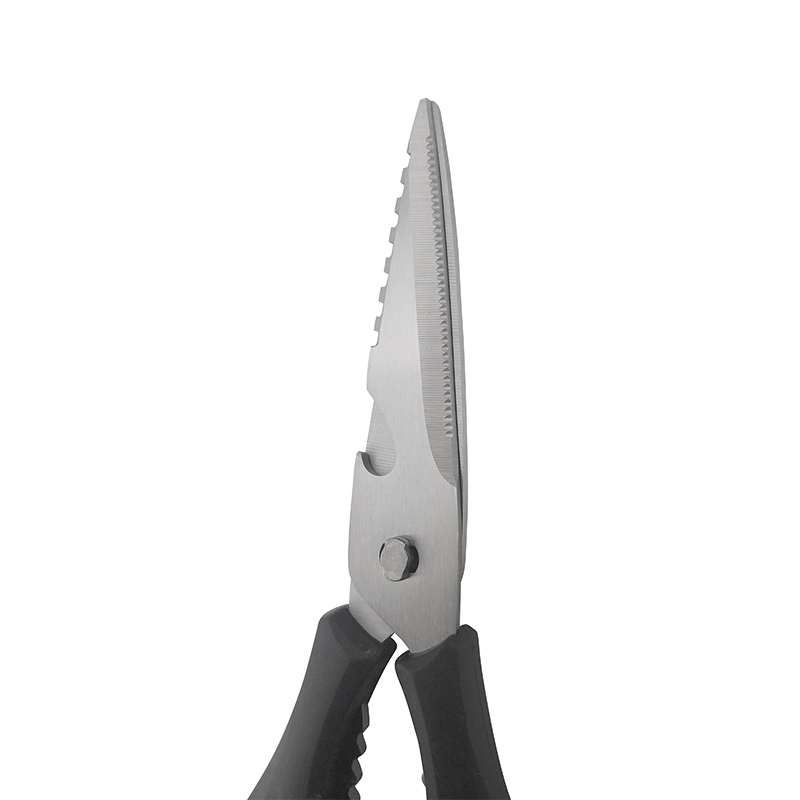
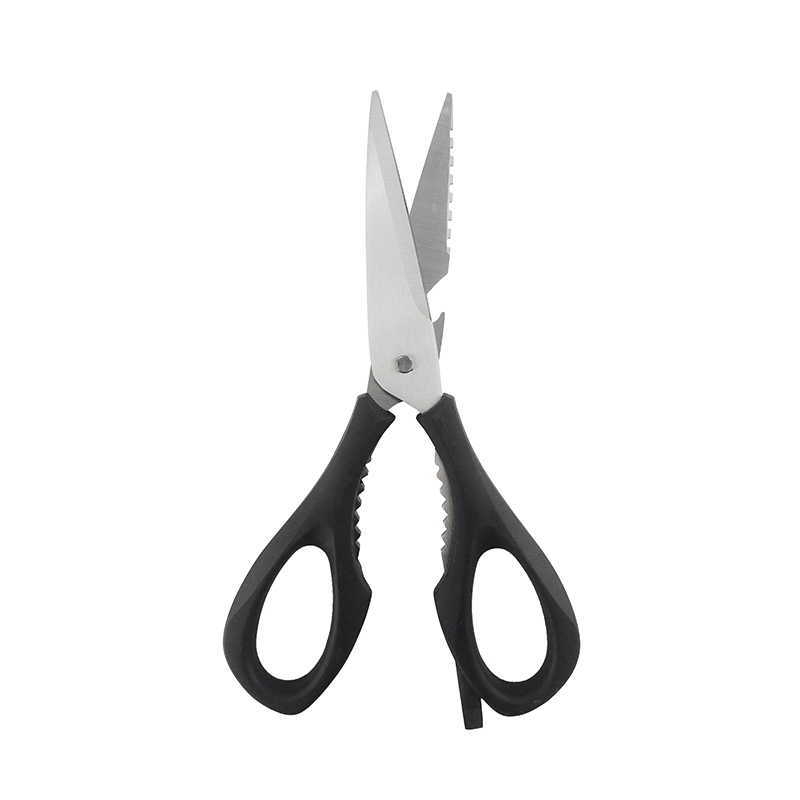
The source article states that these scissors use stainless steel blades with a blend of straight and serrated edges, plus ergonomic black handles. Those are useful features when comparing options. A straight edge helps with clean slicing and precise cuts, while a serrated section can improve grip on slippery foods or tougher surfaces. Buyers should still ask the supplier what stainless steel type is used, how the edge is finished, and whether the design is suitable for the intended food-contact application in their market.
Best Everyday Uses in Home and Commercial Kitchens
For consumers, kitchen scissors are most useful when they stay within easy reach and are cleaned after each task. They can shorten preparation steps because food can often be cut directly over a pan, bowl, or cutting board. For example, herbs can be snipped into smaller pieces without moving to a knife and board, and packaging can be opened without using a sharp chef's knife in an unsafe way.
In restaurants, catering kitchens, and meal-prep operations, scissors may support repetitive jobs such as trimming poultry skin, portioning cooked foods, or cutting garnish. However, commercial users should treat them like any other food-prep tool: assign uses when necessary, avoid cross-contamination, clean promptly, and replace tools when blades loosen, rust, chip, or become difficult to sanitize.
Detachable Handles and Cleaning Convenience
The original article emphasizes detachable handles scissors as a convenience feature. Detachable construction can be valuable because food particles often collect near the pivot area. When the two sides can be separated, the user can wash the inner surfaces more thoroughly and dry them before storage.
That said, detachable scissors should still feel stable during cutting. A buyer should check whether the two halves reconnect securely, whether the pivot has excessive movement, and whether the handle remains comfortable under pressure. If the scissors are intended for retail sale, include clear cleaning and reassembly instructions so customers understand how to use the detachable feature safely.
Comparison Checklist for Selecting Kitchen Scissors
| Selection Point | Why It Matters | Questions to Ask a Supplier |
|---|---|---|
| Blade material | Influences corrosion resistance, edge retention, and food-prep suitability. | What stainless steel is used, and is documentation available if required? |
| Edge design | Straight and serrated edges support different cutting tasks. | Which part of the blade is serrated, and what foods or materials is it designed for? |
| Detachable structure | Improves access for cleaning around the pivot. | How does the tool separate and lock back together? |
| Handle design | Affects grip, comfort, and control during repeated cutting. | What handle material and size options are available? |
| OEM packaging | Important for private label, retail, and gift-set projects. | Can packaging, barcode placement, instructions, and branding be customized? |
| Quality inspection | Reduces risk of loose pivots, rough edges, or inconsistent finish. | What inspection steps are used before shipment? |
OEM Kitchen Scissors for Brands and Wholesale Buyers
OEM kitchen scissors can be attractive for distributors, importers, supermarket buyers, and cookware brands that want a product matched to a specific market position. Customization may involve handle color, logo placement, packaging format, instruction sheets, or assortment planning. The source article mentions OEM kitchen scissors in professional settings, but commercial buyers should avoid assuming details that are not confirmed.
Before placing an OEM or wholesale order, prepare a clear specification sheet. Include target use, preferred blade style, handle color, packaging type, labeling requirements, carton requirements, and any market-specific compliance questions. Ask whether samples are available, how pre-production approval works, what defects are checked, and how changes are controlled before mass production. If the scissors will contact food, buyers should confirm which documentation is needed for the destination market rather than relying on general claims.
How to Evaluate Samples Before Ordering
A sample review should go beyond appearance. Open and close the scissors repeatedly, check whether the movement is smooth, and inspect the pivot for wobble. Test the blades on realistic materials such as herbs, thin packaging, kitchen twine, poultry skin, or other items relevant to your customers. After washing, dry the scissors and inspect areas near the joint for trapped moisture or residue.
- Check whether both blades meet evenly from base to tip.
- Confirm the handle is comfortable for different hand sizes.
- Test the detachable function several times if included.
- Look for burrs, sharp unfinished areas, or rough handle seams.
- Review packaging instructions for cleaning, storage, and safe use.
Use and Care Tips for Longer Service Life
Even durable kitchen scissors perform better when cared for properly. Wash them soon after cutting salty, acidic, oily, or protein-rich foods. If the scissors detach, separate the blades according to the instructions, clean both sides, and dry completely before reassembly. Store them in a dry drawer, knife block, or protective sleeve to prevent edge damage and accidental cuts.
Do not use kitchen scissors for hard materials unless the supplier states that the design supports it. Cutting bone, frozen food, metal wire, or very hard packaging can damage the edge or loosen the pivot. For food safety, consider using separate scissors for raw meat and ready-to-eat foods, especially in professional kitchens.
FAQ
Are multi-functional kitchen scissors better than a knife?
They are not a full replacement for a knife, but they are more convenient for many quick cutting jobs, especially herbs, packaging, twine, and small portions of meat or poultry.
Why choose detachable kitchen scissors?
A detachable design makes it easier to clean the inner blade surfaces and pivot area. This is useful after cutting raw meat, seafood, or sticky ingredients.
What should OEM buyers confirm before ordering?
Confirm blade material, handle material, logo method, packaging, sample approval, inspection process, lead time, carton details, and any documentation needed for your sales market.
Can the same scissors be used for food and packaging?
They can be, but it is better to clean them between tasks. In commercial kitchens, separate tools may be preferred to reduce contamination risk.
How should kitchen scissors be stored?
Store them clean and dry, ideally closed and protected from impact. Avoid leaving them wet in a sink or mixed loosely with heavy metal tools.
