




Titanium Scissors Factory: Modern Designs & Customizable Options
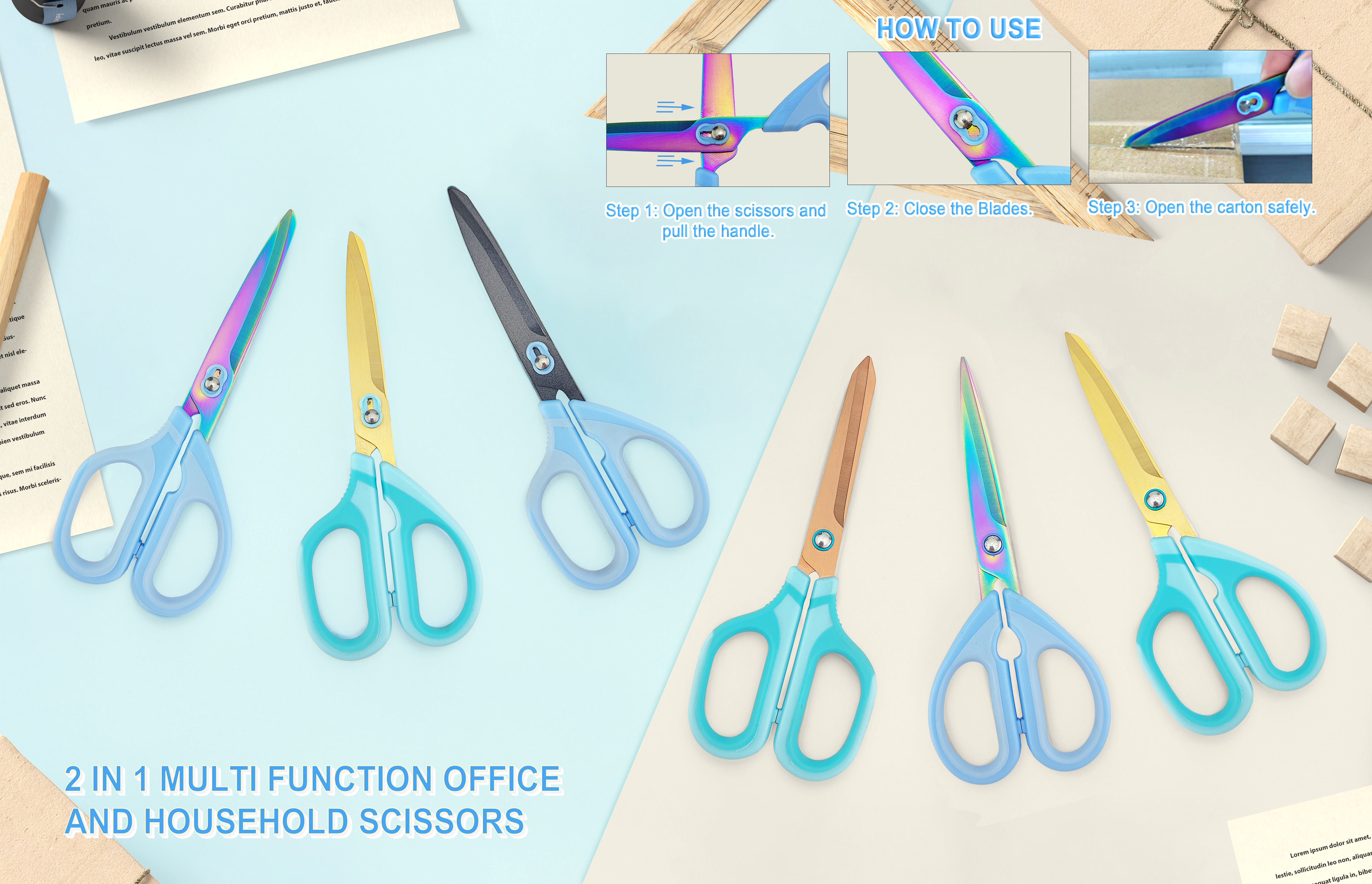
For retailers, importers, promotional product buyers, and office supply distributors, choosing a titanium scissors factory is not only about finding a sharp cutting tool. It is about matching product design, customization options, packaging, quality expectations, and commercial terms with the needs of a specific market. The original product concept highlights a modern direction in scissors: a 2-in-1 scissor that also works as a carton opener, with an ergonomic light blue grip handle and blade finish options such as gold, iridescent, black, and bronze. Those details matter because small design choices can influence how the product is positioned for home, office, gifting, or branded use.
This guide explains how to evaluate titanium scissors designs and how to discuss OEM or wholesale requirements with a supplier without relying on assumptions. Where technical details are not provided, buyers should ask direct questions about materials, coating, testing, packaging, and production terms before confirming an order.
Key Takeaways
- Modern titanium scissors are often sourced for appearance, comfort, and multifunction use, not cutting performance alone.
- The 2-in-1 scissor and carton opener concept can be useful for office, warehouse, shipping, and home packaging tasks.
- Blade finish choices such as gold, iridescent, black, and bronze can support retail segmentation or promotional programs.
- Buyers should confirm whether “titanium” refers to a coating, finish, material claim, or product series name.
- Customization should be reviewed together with packaging, labeling, quality checks, lead time, and after-sales responsibility.
What Defines a Modern Titanium Scissors Factory?
A modern titanium scissors factory is expected to do more than produce a standard pair of scissors. B2B buyers increasingly look for suppliers that can support product development, color selection, handle design discussions, sample confirmation, and packaging adaptation. In many markets, scissors are displayed as lifestyle stationery, home organization tools, craft accessories, or branded corporate gifts. This means the appearance and user experience can be as important as the basic cutting function.
However, buyers should separate design language from verified specifications. If a supplier describes a product as “titanium scissors,” ask whether the blade has a titanium coating, a titanium-colored finish, or another surface treatment. Request the exact material description, coating process if applicable, and any available test information. Avoid placing large orders based only on photos or marketing terms.
Trending Design: 2-in-1 Scissors with Carton Opener
One useful design trend is multifunctionality. The existing product concept describes a 2-in-1 scissor that also serves as a carton opener. This can be attractive for users who frequently open parcels, cut tape, trim paper, or handle packaging. For B2B buyers, the key is to define the target scenario. A product for office desks may require a different packaging style than one sold for warehouse packing stations or home delivery use.
The ergonomic light blue grip handle mentioned in the original article is another important point. Handle comfort affects repeat use, especially when buyers target office staff, teachers, crafters, or shipping teams. Before selecting a handle design, request samples and test them with different hand sizes if possible. Ask the supplier whether alternative handle colors, grip textures, or left-hand versions are available, but do not assume these options exist unless the factory confirms them.
Blade Finish Options and Market Positioning
The original article identifies several blade finish options: gold, iridescent, black, and bronze. These finishes can help a buyer create distinct product lines without changing the entire tool. For example, a black blade may fit a professional office assortment, while an iridescent finish may suit gift sets, craft supplies, or younger consumer segments. Gold and bronze finishes can support premium-looking stationery collections, provided the final quality matches the visual positioning.
When comparing blade finishes, ask practical questions. Does the finish affect cutting feel? Is it decorative or protective? How should the product be cleaned? Can the finish be scratched by hard materials? Are there any restrictions for the destination market? These questions help prevent misunderstandings and make the final product description more accurate.
Comparison Checklist for Sourcing Titanium Scissors
| Evaluation Area | What to Confirm | Why It Matters |
|---|---|---|
| Product description | Whether titanium means coating, finish, material, or product name | Prevents inaccurate listings and buyer complaints |
| Function | Scissor cutting use plus carton opener function | Ensures the 2-in-1 feature matches the target user |
| Handle design | Light blue ergonomic grip and any available alternatives | Affects comfort, brand fit, and retail differentiation |
| Blade finish | Gold, iridescent, black, bronze, or other confirmed options | Supports assortment planning and promotional programs |
| Customization | Logo, color, packaging, labeling, and sample process | Important for OEM, private label, and corporate gifting |
| Quality control | Inspection criteria, sample approval, and defect handling | Reduces risk before mass shipment |
Customization Options for OEM and Wholesale Buyers
Customizable titanium scissors can appeal to distributors, promotional gift companies, office supply brands, and retailers that want a differentiated product. The original article notes that blade colors and handle designs may be part of customization. In a sourcing discussion, it is useful to organize customization into three levels: appearance, branding, and packaging.
- Appearance: blade finish, handle color, grip style, and overall product look.
- Branding: logo placement, print method, brand color matching, and artwork approval.
- Packaging: retail card, gift box, bulk pack, barcode, instruction insert, and carton labeling.
Ask the factory what can be customized for a sample, what requires tooling or setup, and what minimum order rules apply. Do not assume any MOQ, price, or lead time until the supplier provides written confirmation. If the scissors are intended for corporate gifting, also confirm presentation details such as packaging finish, logo durability, and how the product will look when opened by the recipient.
Quality Questions to Ask Before Placing an Order
Quality expectations should be written clearly. Scissors are simple products, but small defects can damage customer satisfaction: uneven blade alignment, rough handle edges, loose pivots, inconsistent coating color, poor packaging, or weak carton opener performance. Buyers should request pre-production samples and compare them with final production samples when possible.
Useful supplier questions include: What blade material is used? What surface finish or coating is applied? How is sharpness checked? How is the carton opener function inspected? What are the acceptable tolerances for color variation? How are products packed to prevent scratches during transport? Can the supplier provide inspection photos or third-party inspection support if required? These are practical questions, not accusations, and they help both sides define the order correctly.
Choosing the Right Supplier Fit
A suitable factory is not always the one with the lowest quotation. Buyers should consider communication speed, sample accuracy, willingness to clarify specifications, packaging support, and ability to handle changes professionally. If the supplier cannot explain the product construction or customization limits, that is a warning sign. If they provide clear answers, stable samples, and realistic timelines, the sourcing process is usually smoother.
For private label or wholesale programs, prepare a clear inquiry sheet. Include target market, expected use, preferred blade finish, handle color, packaging type, logo needs, estimated order quantity, destination country, and quality expectations. This allows the factory to respond with relevant options instead of a generic quote.
Practical FAQ
What should buyers verify when sourcing titanium scissors?
Verify the exact meaning of “titanium,” including whether it refers to a coating, color finish, material claim, or product series. Also confirm blade material, handle design, packaging, and inspection standards.
Are 2-in-1 scissors with a carton opener suitable for office use?
They can be suitable for offices, mailrooms, home desks, and packing areas if the carton opener is comfortable and safe for the intended user. Request samples and test the function before ordering.
Can blade colors be customized?
The original product information mentions blade finish options including gold, iridescent, black, and bronze. For other colors or finishes, buyers should ask the supplier what is available and whether samples can be produced.
What information should be included in an OEM inquiry?
Include product function, blade finish, handle color, logo requirements, packaging style, estimated quantity, destination market, and any inspection or labeling requirements. This helps the supplier provide a more accurate response.
How can buyers reduce quality risks?
Approve physical samples, define inspection criteria, confirm packaging protection, and document all agreed specifications before production. If the order is large or the market has strict requirements, consider independent inspection support.
