





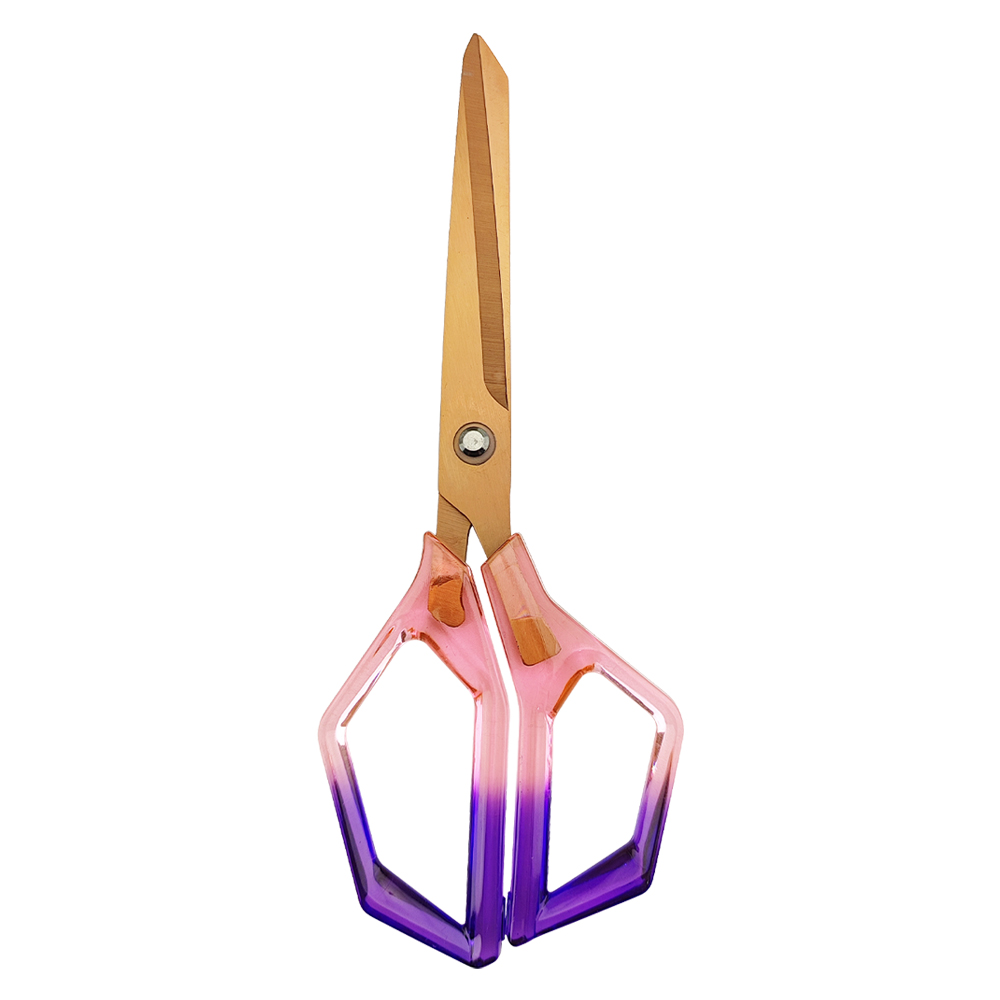
Titanium Transparent Scissors: A Practical Sourcing Guide
Titanium transparent scissors sit between everyday stationery tools and design-led office accessories. They are chosen not only for cutting paper, labels, packaging film, thread, or light craft materials, but also for how they look on a desk, in a gift set, or in a branded stationery range. The original product description highlights titanium-coated blades, transparent handles, a rose pink to violet gradient, ergonomic handles, and clean cutting performance. For buyers, the key question is not simply whether the scissors look attractive. It is whether the supplier can provide consistent quality, stable appearance, suitable packaging, and clear answers before a wholesale, OEM, or retail program begins.
Why This Scissor Style Appeals to Office and Stationery Buyers
Transparent scissors have a lighter, more modern visual character than traditional solid-color handles. The gradient handle described in the source, shifting from rose pink to violet, can work well for stationery shelves, creative office supplies, student sets, promotional kits, and lifestyle-focused e-commerce listings. The titanium coating adds a premium visual cue and is often associated by buyers with longer surface life and smoother cutting, although commercial buyers should still confirm the exact coating process and performance standards with the supplier.
For B2B sourcing, this product type is most relevant when appearance matters as much as utility. A plain office scissor may compete mainly on price. A transparent, colored, titanium-coated scissor competes on shelf impact, perceived value, comfort, packaging, and repeatable production quality.
What to Check in the Titanium-Coated Blades
The original article states that the scissors use a titanium coating and are intended to resist corrosion and scratches over time. Buyers should treat those statements as a starting point for supplier discussion, not as a substitute for verification. Ask what base blade material is used, what coating method is applied, and whether the supplier can share internal inspection criteria. If the product will be sold into a market with specific regulatory or labeling requirements, confirm what documents are available rather than assuming compliance.
- Ask whether the blade coating is decorative, functional, or both.
- Request samples from current production, not only showroom samples.
- Check whether the coating color and finish remain consistent across batches.
- Test cutting on the materials your customers actually use.
- Inspect the blade tips, pivot area, edge alignment, and surface finish.
Handle Design, Comfort, and Visual Consistency
The transparent handle is a major selling point, but it can also reveal production issues more easily than an opaque handle. Bubbles, flow marks, uneven color, rough edges, or mismatched left and right handle tones can reduce the perceived value of the product. The original article mentions ergonomic handles intended to reduce hand fatigue. For sourcing teams, this should be checked through sample handling rather than accepted only as a description.
Comfort depends on finger loop size, edge rounding, handle thickness, scissor weight, and pivot smoothness. If the scissors are aimed at adult office users, the handle opening and grip feel may need to differ from a student or promotional scissor. If the scissors are intended for gift sets or fashion stationery, color consistency may be just as important as cutting performance.
Comparison Checklist for Buyer Evaluation
Use the table below when comparing samples from different office scissors suppliers or when reviewing a titanium transparent scissor before purchase order approval.
| Evaluation Area | What to Review | Questions to Ask the Supplier |
|---|---|---|
| Blade coating | Color, smoothness, scratch visibility, edge condition | What coating process is used, and what inspection standard applies? |
| Cutting feel | Clean cut, resistance, blade alignment, pivot smoothness | Can samples be tested on paper, card, labels, or target materials? |
| Transparent handle | Clarity, gradient consistency, bubbles, sharp edges | How is handle color controlled across production batches? |
| Ergonomics | Finger fit, grip comfort, hand fatigue during repeated cuts | Is the handle designed for adult office use, students, or general stationery? |
| OEM options | Logo placement, color adjustment, packaging format | What customization options are available, and what are the requirements? |
| Packing | Retail card, bulk pack, barcode, protective cover if needed | Can packaging be adapted for wholesale, retail, or e-commerce fulfillment? |
OEM and Wholesale Sourcing Guidance
If you are sourcing titanium transparent scissors for a brand, distributor, supermarket stationery aisle, or online store, clarify the commercial and technical details early. Do not rely only on product photos. Attractive scissors can still create problems if carton packing, labeling, barcode placement, color matching, or sample approval procedures are unclear.
- Define the target user: office staff, students, crafters, gift buyers, or promotional customers.
- Confirm the intended cutting tasks and reject samples that do not match those tasks.
- Ask what OEM elements can be changed, such as handle color, logo, hang card, or set packaging.
- Request written confirmation of order details, artwork files, carton marks, and inspection criteria.
- Approve a pre-production sample before mass production when customization is involved.
- Ask how the supplier handles batch color variation and replacement of defective goods.
Commercial details such as minimum order quantity, lead time, pricing tiers, available certifications, and testing documents should be requested directly from the supplier. They should not be assumed from a product introduction page.
How Retailers Can Position This Product
For retailers, titanium transparent scissors can be positioned as a visually appealing desk accessory for everyday cutting tasks. The best product content should be specific: mention the transparent gradient handle, titanium-coated blades, and intended office or stationery use. Avoid vague claims that cannot be proven. Product photos should show the full scissor, blade finish, handle color, and scale in hand or on a desk.
For e-commerce listings, include clear use boundaries. These scissors are suitable for typical office and stationery cutting, but buyers should not market them as industrial shears unless the supplier provides evidence for that application. Clear expectations reduce returns and improve customer satisfaction.
Use and Care Tips for End Users
Even a well-made scissor performs better when used correctly. End users should keep the blades clean and dry, avoid cutting hard wire or materials outside the intended range, and store the scissors where the tips and blade edges will not be damaged. If adhesive from labels or tape builds up on the blades, wipe it off carefully with a suitable cleaner and dry the scissors before storage.
Key Takeaways
- Titanium transparent scissors combine a decorative handle style with everyday office cutting utility.
- The source describes titanium-coated blades, transparent gradient handles, ergonomic handling, and clean cutting.
- B2B buyers should verify coating quality, handle consistency, cutting performance, OEM options, and packaging details.
- Ask suppliers for samples, inspection criteria, customization requirements, and applicable documents before placing an order.
FAQ
Are titanium transparent scissors suitable for daily office use?
They are intended for common stationery and office cutting tasks. Buyers should test samples on the paper, labels, card, or packaging materials their customers are most likely to cut.
Does titanium coating mean the scissors never rust or scratch?
No coating should be treated as damage-proof without evidence. Ask the supplier how the coating is applied, how it is inspected, and what care instructions should be provided to users.
Can these scissors be customized for OEM projects?
The original article mentions OEM design opportunities. Buyers should confirm available customization options, logo methods, packaging formats, order requirements, and sample approval steps with the supplier.
What should I check first when reviewing samples?
Start with blade alignment, cutting smoothness, handle comfort, transparent handle clarity, gradient color consistency, and overall finish. Then review packaging and labeling details for your sales channel.
Are transparent handles more difficult to source consistently?
They can be more demanding because visual defects are easier to see. Ask how the supplier controls color variation, bubbles, surface marks, and handle edge finishing during production.
