




Drain Basket Supplier China: How to Source a Practical Colander and Mixing Bowl Set
For importers, wholesalers, supermarket buyers, and private-label kitchenware brands, a drain basket is not just a simple household item. It must be easy to use, space-saving, consistent in appearance, and suitable for repeated everyday handling. The original Bonet Houseware article introduced a two-in-one colander and mixing bowl set designed to reduce sink mess, save storage space, and support common food preparation tasks. This rewritten guide looks at the same product from a sourcing perspective, helping B2B buyers evaluate what to ask before placing an order with a drain basket supplier in China.
Why Drain Basket Design Matters in Kitchenware Sourcing
Traditional colanders and bowls can create several problems for end users. Separate pieces take up cabinet space, oversized strainers can be awkward to store, and poorly designed draining tools may cause water to splash onto counters. These small issues affect product reviews, repeat orders, and retailer confidence.
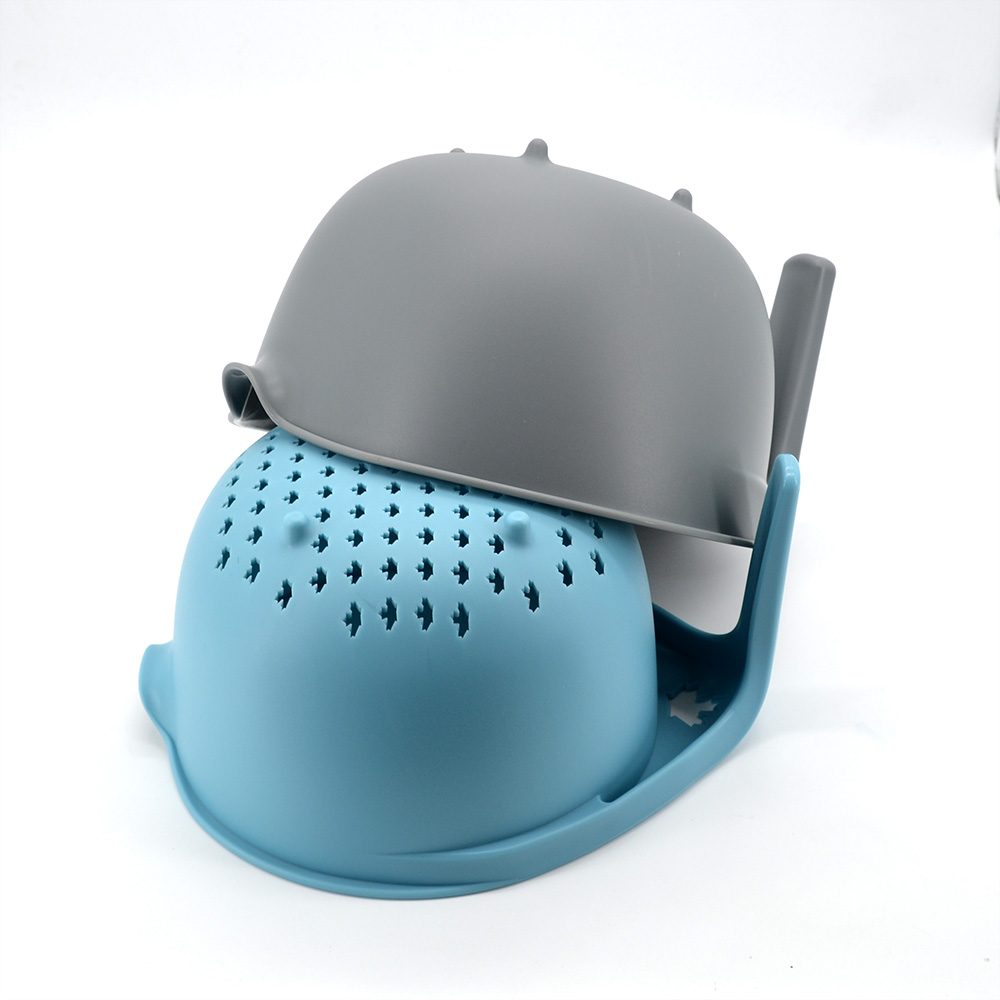
A two-in-one colander and mixing bowl set addresses this by combining straining and holding functions in a nested format. The colander can be used for rinsing fruits and vegetables or draining pasta, while the bowl below can catch water or serve as a mixing container. For buyers, the value is not only the concept but also how consistently the supplier can deliver the design, color, fit, and finish.
Product Overview: Two-in-One Colander and Mixing Bowl Set
The product described in the original article is a colander and mixing bowl set made from high-quality, BPA-free plastic. The colander is blush pink and includes decorative maple leaf perforations for drainage. It is paired with a matte grey mixing bowl designed to nest underneath. The set also includes an ergonomic star-shaped handle and an easy-pour spout intended to help reduce spills during use.
These visible and functional details are important for merchandising. Color contrast can help the product stand out on shelves or in online listings, while nesting supports compact storage. However, B2B buyers should verify all specifications directly with the supplier before purchasing, including dimensions, unit weight, packaging format, available colors, and whether custom branding is possible.
Comparison Checklist for B2B Buyers
Before choosing a China drain basket manufacturer or trading partner, buyers should compare both product design and supplier communication. The table below can be used during sample evaluation or quotation review.
| Evaluation Point | What to Check | Questions to Ask the Supplier |
|---|---|---|
| Material statement | Confirm the plastic type and BPA-free claim provided by the supplier. | Can you provide material details and supporting documentation? |
| Nesting fit | Colander should sit neatly with the bowl for storage and display. | Can you send photos or videos showing how the pieces nest? |
| Drainage design | Maple leaf perforations should drain effectively without weakening the basket. | Has the drainage pattern been reviewed for daily kitchen use? |
| Handle comfort | Star-shaped handle should be easy to grip when wet. | Can we evaluate a pre-production sample before order confirmation? |
| Pouring control | Spout should help guide liquid and reduce spills. | Can you provide sample testing or demonstration images? |
| Packaging | Retail packaging, carton strength, labels, and barcodes may vary. | What packaging options are available for wholesale or private label? |
| Commercial terms | MOQ, lead time, payment terms, and delivery conditions must be confirmed. | What are the current MOQ, production lead time, and export terms? |
Key Sourcing Questions to Ask a Drain Basket Supplier in China
A supplier profile or product page rarely answers every question a buyer needs. Clear communication before sampling reduces misunderstandings later. When discussing a drain basket or colander bowl set, prepare a structured inquiry rather than asking only for the unit price.
- What are the exact dimensions and weight of the colander and bowl?
- Is the blush pink and matte grey color combination standard, or can colors be customized?
- What material is used, and what documentation can be provided for BPA-free plastic?
- Can the product accept custom logo placement, labels, or retail packaging?
- What is the minimum order quantity for standard stock and for OEM customization?
- How are products inspected before shipment?
- Can the supplier provide samples for functional review before bulk production?
- What is the estimated production lead time after order confirmation?
These questions do not assume any specific factory capacity or certification. Instead, they help buyers verify whether the supplier can meet the needs of a target market, sales channel, and compliance process.
How to Evaluate Samples Before Bulk Orders
Sample review should go beyond appearance. A drain basket set may look attractive in photos, but buyers need to test how it performs in real kitchen tasks. Rinse leafy vegetables, drain cooked pasta, pour water from the bowl, and check whether the handle feels stable when the colander is wet. Also examine the perforations for smooth edges and consistency.
For online retail, take note of photography angles and how easily customers can understand the two-in-one function. For physical retail, consider whether the nested set displays well without taking too much shelf space. If private labeling is required, request a mockup showing logo position and packaging layout before approving mass production.
Use Cases for Wholesalers, Retailers, and Private-Label Brands
The colander and mixing bowl set is suitable for a range of kitchenware channels. A wholesaler may position it as a compact everyday prep item. A supermarket buyer may value the color combination and nested presentation. A private-label brand may focus on convenience for small apartments, family kitchens, and meal-prep routines.
Possible product uses include:
- Rinsing fruits such as berries, grapes, or apples.
- Washing vegetables before cooking or storage.
- Draining pasta, noodles, or blanched vegetables.
- Using the bowl separately for mixing or holding ingredients.
- Storing the colander and bowl together to save cabinet space.
Buyers should avoid overpromising in their own listings. Stick to verified features such as the nested format, colander-and-bowl pairing, BPA-free plastic claim if confirmed, decorative maple leaf drainage pattern, star-shaped handle, and easy-pour spout.
Quality and Compliance Considerations
Kitchenware buyers are responsible for meeting the requirements of their destination market. Before importing, ask the supplier what documentation is available, what testing can be arranged, and whether the product is suitable for the intended use. Do not rely on general statements alone.
Important topics include food-contact suitability, labeling language, packaging warnings where applicable, color consistency, odor checks, heat exposure limitations, and shipping carton durability. If your market requires specific testing, confirm whether the supplier can support third-party testing or provide samples for your own lab review.
Key Takeaways
- A two-in-one colander and mixing bowl set can solve practical storage and draining problems for everyday kitchen users.
- The original product features include a blush pink colander, maple leaf perforations, matte grey nesting bowl, star-shaped handle, easy-pour spout, and BPA-free plastic claim.
- B2B buyers should verify dimensions, materials, packaging, MOQ, lead time, customization options, and documentation before ordering.
- Sample testing should include drainage performance, nesting fit, grip comfort, pouring control, and visual finish.
FAQ
What should I ask first when contacting a drain basket supplier in China?
Start with the product specification sheet, available colors, material details, MOQ, sample policy, production lead time, packaging options, and export terms. This helps you compare suppliers fairly.
Can this colander and mixing bowl set be used for private label projects?
It may be possible, but buyers should ask the supplier directly about logo placement, custom packaging, color customization, artwork requirements, and any additional MOQ for OEM service.
How can I verify the BPA-free plastic claim?
Request material information and available documentation from the supplier. If your market requires formal proof, arrange third-party testing or ask whether the supplier can support testing with product samples.
What features should be checked during sample review?
Check drainage speed, perforation smoothness, bowl fit, handle comfort, pouring control, surface finish, color consistency, and packaging protection. Testing with real food preparation tasks is recommended.
Is the nested design important for wholesale buyers?
Yes. Nesting can reduce storage space, improve shelf presentation, and make the product easier for consumers to understand. It also helps online listings show the two-piece function clearly.
