




Top Flour Sifter Factory & Suppliers for Baking
Choosing a flour sifter factory is not only about finding a low unit cost. For importers, wholesalers, retail buyers, and private-label kitchenware brands, the better question is whether a supplier can deliver consistent baking tools that match your target market, packaging plan, quality expectations, and after-sales requirements. A flour sifter may look simple, but details such as mesh consistency, handle comfort, bowl compatibility, and accessory quality can affect user experience and repeat orders.
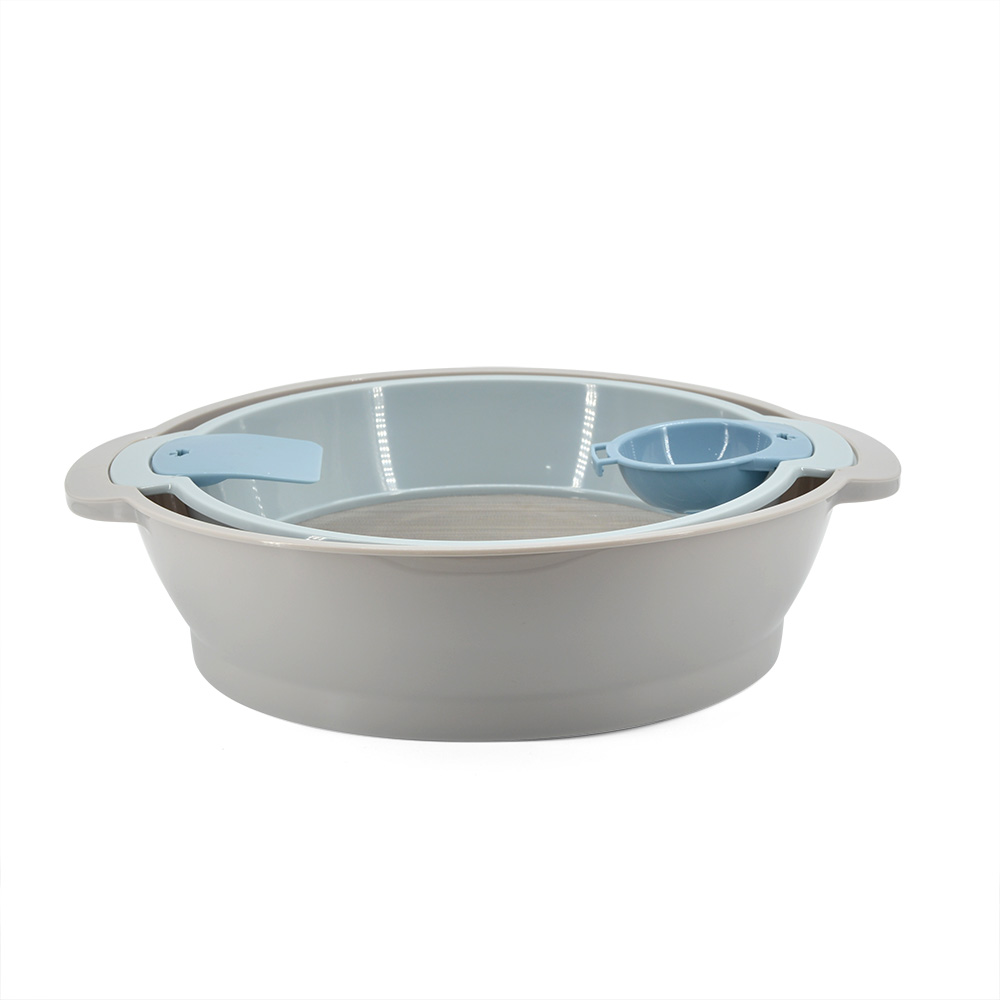
The original product concept for this article is a flour sifter set designed for baking tasks. Explicit features include a fine mesh sifter for aeration and lump removal, an ergonomic design for easier handling, a mixing bowl with graduated measurements, a flexible and sturdy spatula, and an egg separator. This guide explains how to evaluate those features from a B2B sourcing perspective without assuming unverified specifications such as material grade, certification status, capacity, or minimum order quantity.
Key Takeaways
- Assess a flour sifter factory by product consistency, communication, sampling process, packaging support, and quality control practices.
- For a flour sifter set, compare not only the sifter but also the mixing bowl, spatula, egg separator, and how the items work together.
- Ask suppliers direct questions about materials, testing, MOQ, lead time, labeling, carton strength, and replacement policy before placing an order.
- A fine mesh sifter can help aerate flour and remove lumps, but buyers should verify mesh performance with real samples.
What Buyers Should Expect From a Flour Sifter Factory
A dependable flour sifter factory should be able to explain its production process clearly. Buyers do not need to receive confidential manufacturing details, but they should receive practical answers about tooling, sample timing, inspection points, packaging options, and product customization limits. If you are sourcing for a retail chain or e-commerce brand, the supplier should also understand barcode placement, outer carton labeling, instruction sheets, and the importance of damage prevention during transit.
Because the source article mentions suppliers and factory sourcing, it is important to separate marketing language from verifiable information. Terms such as high quality, durable, or premium should be supported by sample review, material confirmation, and inspection criteria. If a supplier claims a specific material grade, food-contact compliance, or test result, ask for documentation and confirm whether it applies to the exact model and production batch you intend to purchase.
Evaluating the Flour Sifter Set as a Product
The flour sifter set described in the original article includes several baking tools, making it more than a single accessory. For buyers, a set can be attractive because it creates a complete baking solution for beginners, gift buyers, and home bakers. However, a set also creates more quality checkpoints. Each component must feel useful and coherent rather than added only to increase item count.
The fine mesh sifter is the central item. Its role is to aerate flour and help remove lumps before mixing. Buyers should test how easily flour passes through the mesh, whether the sifter clogs quickly, and whether the edge finishing feels safe and comfortable. The ergonomic design should be reviewed by different users, since handle size and grip comfort can vary by market.
The mixing bowl with graduated measurements adds practical value for recipe preparation. Buyers should check whether the measurement markings are easy to read, whether they remain visible after washing, and whether the bowl size fits the intended retail positioning. The spatula should be flexible enough for scraping batter but sturdy enough for regular mixing tasks. The egg separator should be simple to use and easy to clean.
Supplier Comparison Checklist
| Area to Compare | Why It Matters | Questions to Ask the Supplier |
|---|---|---|
| Sample quality | Shows real mesh performance, bowl markings, handle comfort, and accessory finishing. | Can you provide a production-like sample before order confirmation? |
| Material information | Prevents assumptions about food-contact suitability or durability. | What materials are used for each component, and can you provide supporting documents? |
| OEM and packaging | Important for private label, retail display, and e-commerce shipping. | What logo, color, instruction, and packaging options are available? |
| Quality inspection | Reduces the risk of inconsistent sets or missing accessories. | Which defects are checked during production and before shipment? |
| Commercial terms | Affects order planning and inventory cost. | What are the MOQ, lead time, payment terms, and carton details for this set? |
How to Verify Quality Before a Bulk Order
Quality verification should begin with samples, not catalog photos. Ask for at least one complete set in the intended packaging if packaging is part of your order. Inspect whether the flour sifter mesh is evenly fitted, whether the handle feels stable, and whether the sifter performs smoothly with common baking ingredients. Use flour, cocoa powder, or powdered sugar during testing if those are relevant to your customers.
Next, review the accessories as if you were the end user. Fill the mixing bowl to common measurement points and confirm that the graduated markings are positioned logically. Test the spatula with thick batter and softer mixtures. Try the egg separator with different egg sizes if your market commonly uses them. Record issues with photos and share them with the supplier before confirming the final specification.
For bulk orders, define acceptable and unacceptable defects in writing. Examples may include loose parts, unreadable measurement marks, missing accessories, sharp edges, poor printing, damaged packaging, or incorrect carton labeling. The exact standard should be negotiated with the supplier and, when appropriate, checked by a third-party inspection service.
Wholesale and OEM Sourcing Considerations
If you are sourcing a flour sifter set for wholesale or OEM programs, think beyond the product itself. Retail buyers may need shelf-ready packaging, multilingual instructions, or private-label artwork. E-commerce sellers may need stronger inner packaging to reduce damage during parcel delivery. Promotional buyers may care about compact carton size, gift appeal, and logo placement.
Before you ask for a quotation, prepare a clear request. Include target order quantity, destination market, packaging preference, branding needs, inspection requirements, and expected shipping method. If you do not know your exact specification yet, ask the factory which options are standard and which require customization. This helps you avoid hidden costs and unrealistic lead times.
- Request product photos, available specifications, and sample cost.
- Confirm what is included in the set: sifter, mixing bowl, spatula, egg separator, and any packaging materials.
- Ask whether the sample will match mass production.
- Clarify labeling, carton packing, and replacement procedures for defects.
- Compare at least two or three suppliers using the same requirement sheet.
Common Mistakes When Choosing Flour Sifter Suppliers
One common mistake is comparing only the quoted price. A lower price may exclude packaging, customization, inspection, or accessory quality. Another mistake is assuming that a supplier’s general claims apply to your exact item. Always confirm the details of the flour sifter set you plan to purchase.
Buyers should also avoid approving production based only on a digital mockup. A logo may look correct on screen but appear too small, poorly positioned, or difficult to read on the actual product or packaging. Physical samples are especially important when a set includes multiple components with different surfaces and shapes.
Practical FAQ
What should I ask a flour sifter factory first?
Start with the product scope, sample availability, MOQ, lead time, material information, packaging options, and quality inspection process. Ask for written confirmation so you can compare suppliers fairly.
Is a flour sifter set better than sourcing a single sifter?
It depends on your sales channel. A set can offer stronger retail value because it includes related baking tools, but it also requires more quality checks and packaging planning.
How can I confirm the fine mesh performs well?
Test a production-like sample with common dry ingredients. Check whether it aerates flour, removes lumps, and remains easy to use without excessive clogging.
Can I request private-label packaging?
Many suppliers may offer OEM or private-label options, but availability, cost, MOQ, and lead time must be confirmed directly with the factory or trading supplier.
What details should be included in a purchase specification?
List each component, confirmed materials, packaging format, artwork files, labeling needs, inspection criteria, carton requirements, delivery terms, and the approved sample reference.
Final Sourcing Advice
A good flour sifter factory should help you turn a useful baking set into a reliable commercial product. Focus on verifiable details: sample performance, component consistency, packaging durability, communication speed, and clear order terms. By asking better questions before production, buyers can reduce risk and select flour sifter suppliers that support long-term wholesale, OEM, or retail programs.
