




Top Fruit Cutting Tools Supplier: Quality Slicers
Choosing a fruit cutting tools supplier is not only about finding a low unit price. For retailers, hospitality buyers, kitchenware distributors, and promotional product teams, the better question is whether the slicers are practical, consistent, safe to handle, and easy for end users to clean and store. A well-designed fruit slicer can help prepare apples, pears, peaches, and other everyday fruit more quickly, but buyers should evaluate the product and the supplier with clear criteria before committing to wholesale orders.
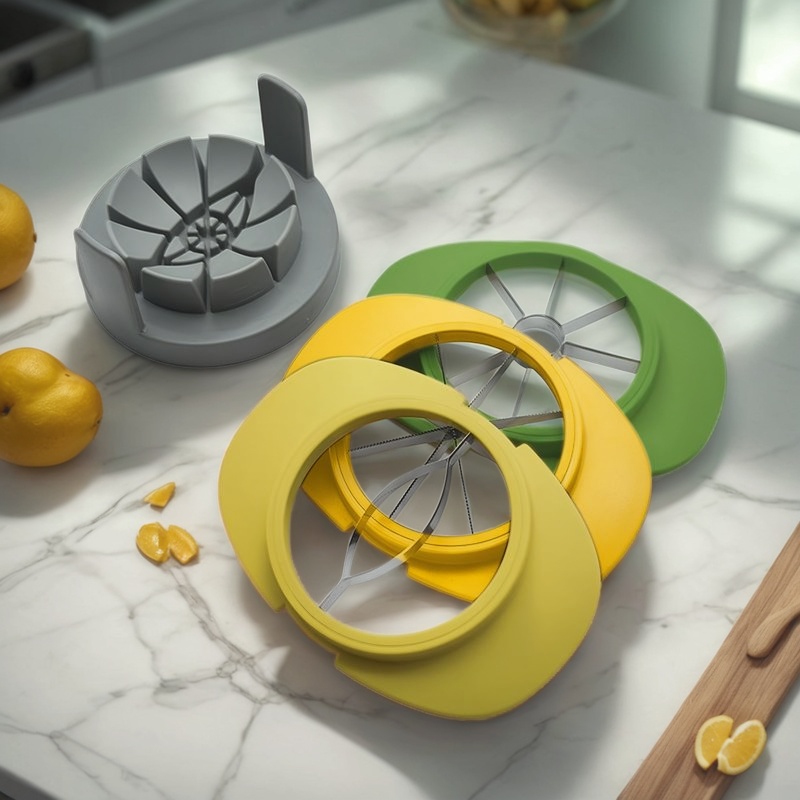
The Trio Color Fruit Slicer Set is a useful example of the type of item buyers often compare in this category. The set includes slicers with sharp, curved stainless steel blades and ergonomic, non-slip handles in yellow, lime green, and forest green. It also has a nesting design for compact storage and is described as dishwasher-safe. Those visible and stated features are a starting point, but a complete sourcing decision should also include packaging, quality control, after-sales support, and documentation questions.
Key Takeaways
- Assess both the slicer and the supplier; product appearance alone is not enough for B2B purchasing.
- Look closely at blade design, handle grip, storage efficiency, and cleaning method.
- For wholesale orders, ask about packaging, inspection standards, replacement handling, lead time, and customization options.
- Do not assume material grades, compliance results, or production capacity unless the supplier provides written confirmation.
What Defines a Reliable Fruit Slicer Manufacturer?
A reliable fruit slicer manufacturer should be able to explain how a tool is designed for repeated use, comfortable handling, and predictable cutting performance. In the case of a fruit slicer set, the user will usually expect the blades to pass through fruit with minimal pressure and the handles to remain stable even when hands are wet. The Trio Color Fruit Slicer Set addresses part of this expectation through curved stainless steel blades and ergonomic, non-slip handles.
For sourcing teams, however, the evaluation should go further. Ask whether the supplier can provide product samples from the same production batch style intended for the order. Check whether the handles feel secure, whether the blades are evenly finished, and whether the nesting design works smoothly without causing the tools to jam together. If the slicers will be sold at retail, also review how they sit in packaging and whether the color set is displayed clearly.
Product Features Buyers Should Review
Fruit cutting tools are simple products, but small design choices affect user satisfaction. A curved blade may help guide fruit into the cut, while a non-slip handle can reduce hand fatigue and improve control. Color can also play a functional role by making tools easier to identify in a drawer, a prep station, or a retail display. The yellow, lime green, and forest green handles in the Trio Color Fruit Slicer Set give the set a clear visual identity without needing complicated instructions.
Storage is another practical point. A nesting design can be valuable for households, small commercial kitchens, and retailers because it reduces the space required to store or display multiple slicers. Dishwasher-safe cleaning is also useful, especially for busy kitchens, but buyers should still ask the supplier for recommended cleaning instructions, temperature limitations, and care guidance to include with the product.
Comparison Checklist for Wholesale Fruit Cutters
Before selecting a fruit cutter wholesale partner, use a structured checklist. This helps prevent decisions based only on photos or catalog descriptions.
| Evaluation Area | What to Check | Questions to Ask the Supplier |
|---|---|---|
| Blade performance | Sharpness, edge consistency, curved blade shape, smooth cutting feel | Can you provide samples for cutting tests before bulk ordering? |
| Handle design | Grip comfort, non-slip feel, handle security, color consistency | How is handle quality checked during production? |
| Storage | Nesting fit, compactness, ease of removing each slicer | Will the nesting design remain the same in the bulk order? |
| Cleaning | Dishwasher-safe claim, cleaning instructions, residue removal | What care instructions should be printed on packaging or inserts? |
| Packaging | Retail display, barcode space, transit protection, set presentation | What packaging options are available for wholesale or OEM orders? |
| Commercial terms | MOQ, lead time, sample policy, defect handling | What are the current order requirements and replacement process? |
Sourcing Guidance for Retail, Hospitality, and OEM Buyers
Different buyers need different supplier answers. A retail buyer may focus on shelf appeal, packaging durability, and consumer instructions. A hospitality buyer may care more about cleaning speed, storage space, and repeated daily use. An OEM or private-label buyer should ask about logo placement, color matching, packaging artwork requirements, and whether changes affect lead time or cost.
When discussing fruit cutter wholesale supply, avoid relying on assumptions. Ask the supplier to confirm commercial details in writing, including minimum order quantity, carton details, sample charges, production lead time, and inspection process. If you require compliance documentation for a specific market, ask exactly which documents are available and whether they apply to the current product version. Do not treat general statements as proof of compliance.
How to Inspect Samples Before Ordering
A sample review should be practical and repeatable. Use the same fruit types across all suppliers when comparing tools. For the Trio Color Fruit Slicer Set or a similar slicer set, test how each slicer handles apples, pears, and peaches if those are the intended use cases. Note whether the tool requires excessive force, whether fruit sticks in the blades, and whether the handle remains comfortable during several cuts.
- Check visual finish, including blade edges, handle color, and any rough seams.
- Test the grip with dry and slightly wet hands to evaluate control.
- Use several pieces of fruit of similar size to compare cutting performance fairly.
- Place the slicers in their nested position and remove them repeatedly.
- Wash according to the supplier’s instructions and check for trapped residue.
- Review packaging for clear use, care, and safety information.
Use, Care, and Safety Notes for End Users
Even when buying at wholesale level, it is worth thinking like the end user. Fruit slicers with sharp blades should be stored away from children and handled carefully during washing. A nesting design is helpful, but the tools should still be placed where blades are not exposed to accidental contact. Dishwasher-safe cleaning can make maintenance easier, yet users should remove fruit fibers and seeds before washing to help keep the slicer clean.
For consumer instructions, keep language simple. Explain which fruits the slicers are intended for, how to position the fruit on a stable cutting surface, and how to press evenly without twisting. Clear instructions can reduce misuse and help customers get better results from the product.
Practical FAQ
What should I ask a fruit cutting tools supplier first?
Start with samples, current MOQ, lead time, packaging options, and quality inspection procedures. Then ask for any documents required for your target market.
Is stainless steel always the same in fruit slicers?
No. Stainless steel can vary by grade and finish. The source article states that the slicers have stainless steel blades, but buyers should ask the supplier to confirm the exact grade if it matters for their market.
Are dishwasher-safe slicers suitable for commercial kitchens?
Dishwasher-safe cleaning is useful, but commercial kitchens should confirm care instructions, washing conditions, and internal hygiene rules before adopting any tool.
Can a fruit slicer set be customized for wholesale or OEM orders?
Possibly, but customization should not be assumed. Ask the supplier about logo, color, packaging, and artwork options, plus how changes affect MOQ, price, and lead time.
Why does nesting design matter?
Nesting helps reduce storage space and can improve retail presentation. It is especially useful when selling or storing a multi-piece fruit slicer set.
Final Buying Advice
A good fruit cutting tools supplier should help you verify the product, not simply promote it. The Trio Color Fruit Slicer Set shows several useful features for this category: curved stainless steel blades, non-slip ergonomic handles in three colors, compact nesting, and dishwasher-safe cleaning. For B2B buyers, the next step is to confirm samples, packaging, inspection standards, commercial terms, and any market-specific documentation before placing a wholesale order.
