




Top Household Scissors Factory: Cutting Edge Designs
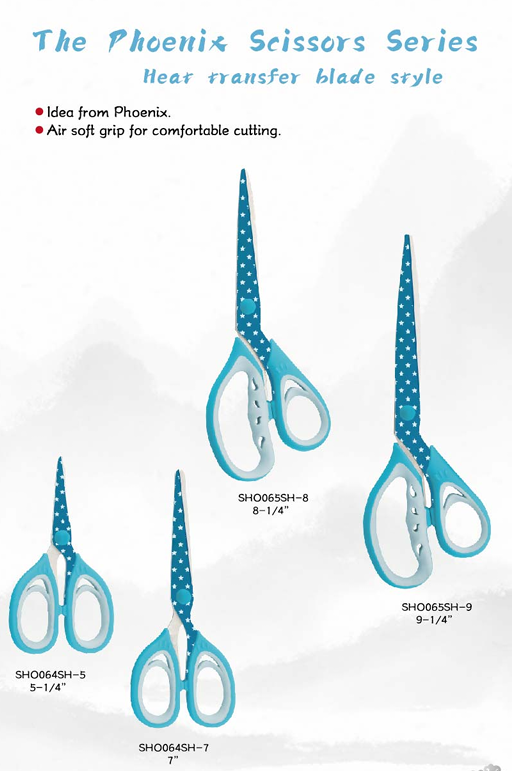
Finding the right household scissors factory is not only about comparing photos or unit prices. For importers, distributors, private-label brands, and retail buyers, the better question is whether a supplier can consistently provide scissors that fit the intended household use, target market, packaging plan, and quality expectations. The original Bonet Houseware article highlighted the Phoenix Scissors Series, including its heat transfer blade style, air-soft grip handles, and different sizes for varied cutting requirements. This rewritten guide expands that idea into a practical sourcing framework for B2B buyers.
Household scissors are everyday tools, but they are sold into many different channels: supermarkets, hardware stores, homeware chains, online marketplaces, promotional programs, and private-label ranges. Each channel may require different packaging, handle comfort, blade appearance, and quality checks. A professional household cutting tools manufacturer should help buyers clarify these points before production, not after a problem appears.
Key Takeaways
- Choose a household scissors factory based on product fit, quality control, communication, and OEM support, not price alone.
- Ask specific questions about materials, blade treatment, handle design, packaging, and inspection procedures before confirming an order.
- OEM household scissors can support branding and market differentiation, but they require clearer specifications and approval steps.
- Product samples should be tested for comfort, cutting performance, packaging durability, and consistency across sizes.
What Makes a Household Scissors Factory Stand Out?
A capable household scissors factory should understand how scissors are actually used in the home. Common tasks may include cutting paper, opening packages, trimming labels, working on crafts, or handling light kitchen and household jobs. Buyers should therefore evaluate whether the factory offers suitable product options for different users and retail price levels.
The Phoenix Scissors Series mentioned in the original article is positioned around a distinctive visual blade treatment and comfortable handle concept. Its heat transfer blade style may help the product stand out on a retail shelf, while air-soft grip handles are described as helping reduce hand fatigue. When assessing any similar product, buyers should request samples and check whether the design promise matches the user experience.
Beyond appearance, a reliable factory should provide clear answers on production consistency, sample approval, packaging options, and how quality is checked before shipment. If a supplier cannot explain its process in practical terms, buyers should be cautious about moving directly into a large order.
OEM Household Scissors vs. Standard Production Models
OEM household scissors are customized for a buyer’s brand, packaging, color preference, product set, or target market. Standard production models are existing designs that can often be ordered with fewer changes. Both options can be useful, but they serve different purchasing goals.
| Selection Point | OEM Household Scissors | Standard Production Models |
|---|---|---|
| Best for | Private label, brand differentiation, custom retail programs | Faster product selection and simpler repeat purchasing |
| Buyer input needed | Logo, colors, packaging brief, target price, sample approval | Model choice, quantity, packaging preference, shipment plan |
| Risk to manage | Misunderstood specifications or artwork errors | Limited differentiation from competing products |
| Questions to ask | What customization is available and what approval steps are required? | Which existing models are most stable in production? |
For OEM projects, do not rely on general descriptions such as “good quality” or “comfortable handle.” Create a written specification. Include dimensions, handle color, blade finish, packaging structure, barcode needs, labeling language, carton details, and inspection expectations. If commercial details such as MOQ, lead time, pricing, or logo setup fees are not published, treat them as supplier questions rather than assumptions.
How to Evaluate Design, Comfort, and Cutting Use
Household scissors are judged quickly by end users. They should feel stable in the hand, open and close smoothly, and cut cleanly for the intended task. A decorative blade style may attract attention, but it should not replace basic usability checks. When reviewing samples, buyers can use a simple checklist:
- Check whether the handle shape fits different hand sizes comfortably.
- Open and close the scissors repeatedly to feel resistance and alignment.
- Test cutting on common household materials that match the sales claim.
- Inspect the blade appearance and finish for visible defects.
- Compare several pieces from the same sample batch for consistency.
- Review whether the packaging protects the product during transport and display.
The Phoenix Scissors Series is described as offering a diverse range of sizes. This matters because one size does not suit every retail requirement. A smaller pair may be useful for detail work or compact household storage, while a larger pair may appeal to buyers looking for general-purpose cutting tools. The factory should help match product size and packaging to the buyer’s sales channel.
Questions Buyers Should Ask a Household Cutting Tools Manufacturer
Before choosing a household cutting tools manufacturer, prepare a focused supplier questionnaire. This reduces confusion and helps compare factories on the same basis. Important questions include:
- Which household scissors models are currently available for sampling?
- What customization options are possible for handles, blade appearance, logos, and packaging?
- What materials are used for the blades and handles, and how are they described in product documents?
- What quality checks are performed before shipment?
- Can the supplier provide pre-production samples for approval?
- How should buyers provide artwork files and packaging instructions?
- What are the current MOQ, lead time, payment terms, and shipping options?
- Are there market-specific labeling or compliance requirements the buyer must confirm?
These questions do not assume a supplier’s capabilities; they create a responsible discussion. A professional supplier should be willing to clarify what is available, what requires development, and what must be confirmed before order placement.
Quality Control Points for Household Scissors Orders
Quality control for scissors should cover both function and presentation. A product may look acceptable in a catalog but fail if cutting performance varies across a shipment. Buyers should define inspection points early. Common inspection areas include blade alignment, handle finish, opening and closing action, sharp edges on non-cutting areas, surface marks, packaging accuracy, barcode readability, and carton condition.
For retail buyers, packaging is especially important. A blister card, paper card, sleeve, or box must match the sales environment and protect the scissors during handling. Ask the supplier what packaging formats are available and whether samples can be reviewed before mass production. If the product will be sold online, consider whether packaging can withstand individual parcel shipping as well as bulk carton shipping.
How to Build a Clear Sourcing Specification
A clear specification protects both buyer and supplier. It should be short enough to use, but detailed enough to prevent mistakes. Include the model name or reference, size, handle color, blade appearance, packaging type, logo position, artwork version, quantity, carton marking, and required approval sample. If the order is for the Phoenix Scissors Series or a similar line, specify which sizes are included and whether the heat transfer blade style and air-soft grip handles are required.
Buyers should also define the approval process. For example, confirm digital artwork first, then physical sample, then pre-production sample if needed. Keep records of approved samples and written confirmations. This is especially useful for repeat orders, where small changes in color, packaging, or product finish can affect brand consistency.
Practical FAQ
What should I request first from a household scissors factory?
Start with a product catalog or model list, then request samples for the sizes and styles closest to your target market. Ask for current customization options, packaging choices, and commercial terms.
Are OEM household scissors better than standard models?
Not always. OEM is better when branding, colors, packaging, or differentiation matter. Standard models may be better for faster selection, lower development work, or testing a new market.
How can I judge handle comfort before ordering?
Test samples with several users, open and close them repeatedly, and try common household cutting tasks. If the handle is promoted as an air-soft grip, confirm that the sample feels comfortable during repeated use.
What details should be confirmed before mass production?
Confirm product model, size, blade appearance, handle color, packaging artwork, carton information, inspection expectations, MOQ, lead time, payment terms, and shipping plan directly with the supplier.
Can one scissors series cover different household needs?
It can if the series includes multiple sizes and the buyer chooses the right mix for the retail channel. The original Phoenix Scissors Series is described as having a diverse range of sizes, which can help buyers build a broader household cutting tools assortment.
Conclusion: Source for Fit, Not Just Price
A top household scissors factory should help buyers turn a simple product idea into a reliable retail item. Look for practical communication, sample support, consistent production, and clear OEM guidance. Designs such as the Phoenix Scissors Series show how visual blade treatment, handle comfort, and size variety can support product differentiation, but every claim should be checked through samples and written specifications. For B2B sourcing, the safest path is to ask precise questions, approve physical samples, and document every key detail before production begins.
