




Top Household Scissors Manufacturer Sourcing Guide
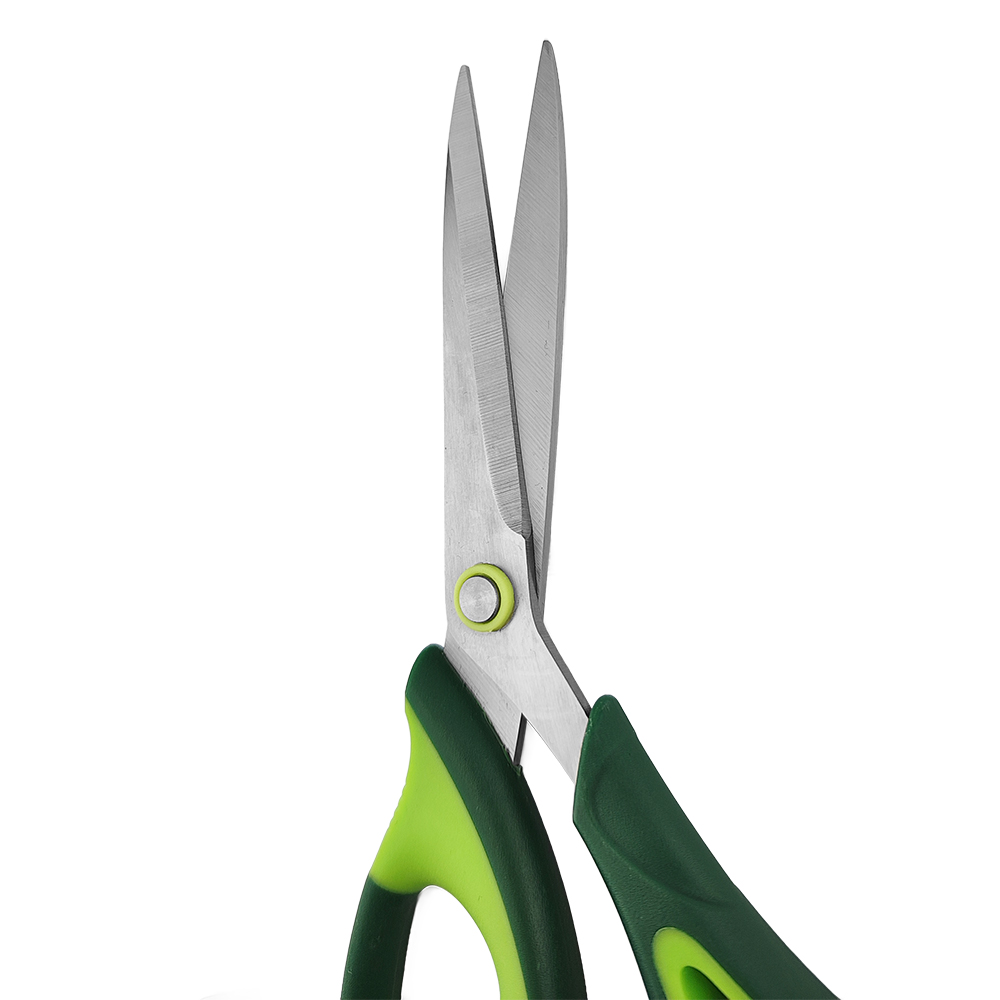
Choosing a household scissors manufacturer is not only about finding a sharp pair of scissors. For importers, distributors, private-label brands and promotional product buyers, the real task is to identify a supplier that can deliver consistent cutting performance, comfortable handling, reliable finishing and clear communication from sample to shipment. The original product example highlights a dual-tone green and lime household scissors design with an ergonomic handle, soft-touch grip areas, stainless steel blades, a slanted blade shape and a secure pivot screw. Those are useful starting points, but B2B buyers should still verify every commercial and technical detail before committing to an order.

What Buyers Should Look for in Household Scissors
Household scissors are used for paper, packaging, thread, light fabric, craft materials and general home tasks. Because use cases vary, a buyer should define the intended market before discussing design. A stationery retailer may prioritize smooth paper cutting and attractive shelf packaging, while a sewing accessory brand may care more about clean thread trimming and comfortable long-session handling. A wholesale buyer supplying supermarkets may need a dependable all-purpose item at a suitable retail price point.
When reviewing a manufacturer, ask for clear information about blade material, blade thickness, surface finish, handle material, handle comfort, edge retention expectations, packaging options and available customization. If a supplier describes the product as stainless steel, request the specific grade or internal material standard rather than assuming it. If a product is described as ergonomic, test whether the handle genuinely supports different hand sizes and cutting angles.
Design and Ergonomics: More Than Color
The referenced scissors use a green and lime dual-tone handle. Color can support brand recognition, but comfort is more important for repeat use. The source article notes an ergonomic handle, soft-touch materials and strategic indentations for a secure grip. These details can be valuable, especially for customers who cut for longer periods during crafting, home organization, packaging or light sewing work.
For OEM projects, buyers should ask whether handle color, logo placement and packaging artwork can be customized. Do not assume that every color combination is available for every order size. Instead, request confirmation of color matching methods, sample approval steps and any limitations related to molding, printing or packaging. If the scissors are intended for both right- and left-handed users, have samples tested by real users before describing them as suitable for both groups in marketing materials.
Blade Performance and Construction Checks
The original description mentions stainless steel blades, a honed edge, a slanted blade design and a secure pivot screw. These are useful product features to evaluate, but buyers should confirm how they perform in practice. A good household scissors sample should open and close smoothly, cut near the tip without tearing, maintain alignment and avoid uncomfortable resistance at the pivot.
Before placing a larger order, conduct simple application tests with the materials your customers are most likely to cut. For example, test printer paper, packaging tape, thin cardboard, cotton thread or light craft fabric. Record the number of cuts, cutting feel, visible blade marks and any loosening at the pivot. These practical checks help buyers compare suppliers beyond catalog claims.
Supplier Evaluation Checklist
A professional scissors supplier should be able to answer practical sourcing questions clearly. The table below can help procurement teams compare candidates without relying only on product photos or short descriptions.
| Evaluation Area | What to Check | Questions to Ask the Supplier |
|---|---|---|
| Blade material | Material statement and finish consistency | What blade material is used, and can it be documented in the quotation or specification sheet? |
| Cutting performance | Clean cutting on target materials | Can samples be tested on paper, thread, light fabric or other intended materials? |
| Handle comfort | Grip shape, soft-touch feel and hand fit | Is the handle design fixed, or are color and surface details customizable? |
| Pivot quality | Smooth opening, closing and blade alignment | How is pivot tightness checked during production? |
| OEM packaging | Retail card, blister, box or bulk pack options | What packaging formats are available, and what artwork files are required? |
| Quality control | Inspection process and defect handling | What inspection steps are used before shipment, and how are defects resolved? |
OEM and Wholesale Sourcing Questions
For private-label or wholesale orders, the right questions reduce risk. Buyers should not rely on broad claims such as premium, professional or factory direct without documentation. Instead, build a written specification and confirm the process step by step.
- Request a physical sample before approving color, handle feel, blade sharpness and packaging.
- Ask whether logo printing, handle color changes or packaging customization are available for the specific model.
- Confirm the exact product dimensions, materials and packing method in writing.
- Ask about lead time, minimum order quantity and sample cost rather than assuming standard terms.
- Clarify how the supplier manages pre-shipment inspection and replacement for defective goods.
- Check whether any market-specific labeling, safety or documentation requirements apply to your destination country.
How to Compare Samples Fairly
Sample comparison should be structured. Label each sample without revealing the supplier name to the testing team, then perform the same cutting tasks with each pair. Note grip comfort, blade movement, noise, cutting smoothness and whether the tips meet properly. A pair of scissors that looks attractive in a photo may feel stiff or awkward in repeated use, while a simpler model may provide better everyday value.
It is also useful to test several samples from the same supplier, not just one. Consistency matters in wholesale sourcing. If three samples feel different from one another, ask the supplier how tolerances are controlled and whether production units will match the approved sample.
Key Takeaways
- A household scissors manufacturer should be evaluated by performance, consistency, communication and customization options.
- Ergonomic handles, soft-touch grip areas, stainless steel blades and a secure pivot screw are useful features, but they should be verified by sample testing.
- OEM buyers should confirm materials, colors, packaging, lead time, MOQ and inspection procedures in writing.
- Practical cutting tests on target materials are more reliable than relying only on catalog language.
Practical FAQ
What should I ask a household scissors manufacturer first?
Start with the intended use, available product specifications, blade material, handle material, customization options, packaging choices, sample process, lead time and minimum order quantity. Ask for written confirmation rather than verbal estimates.
Can household scissors be customized for a private-label brand?
Many OEM scissors suppliers may offer branding options such as handle colors, logo placement or custom packaging, but availability depends on the model and order terms. Confirm feasibility, cost, sample timing and artwork requirements before planning a launch.
How can I judge whether scissors are comfortable?
Test the handle with different hand sizes and cutting tasks. Look for stable grip, reasonable opening resistance, smooth closing and no pressure points during repeated cuts. If a product is promoted for both right- and left-handed users, test both groups.
What materials should I test before buying in bulk?
Use materials that match your sales channel: printer paper for office and school use, thread and light fabric for sewing accessories, thin cardboard for household use, and packaging film or tape if your customers need utility scissors.
Should I request certifications or compliance documents?
Requirements depend on the destination market, sales channel and product positioning. Ask the supplier what documentation is available, then verify whether it meets your importer, retailer or local regulatory requirements. Do not assume compliance without reviewing documents.
