




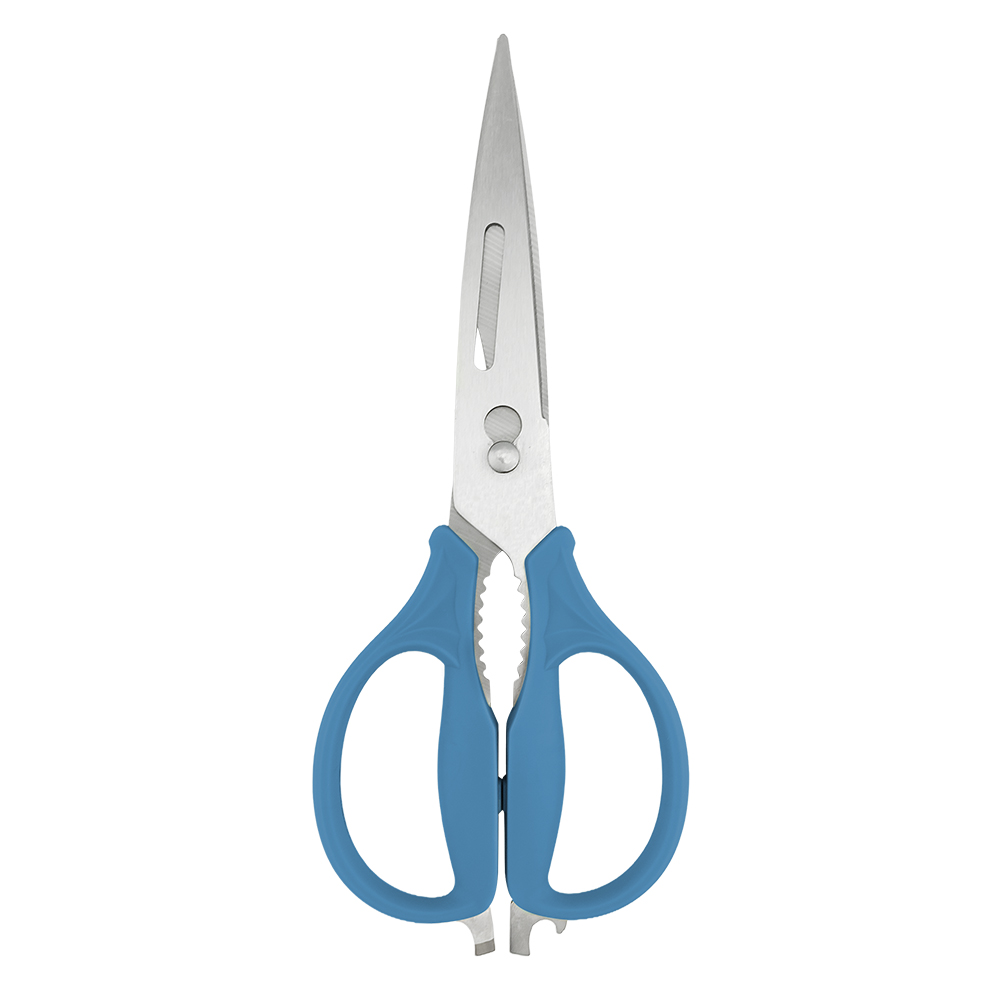
Top Kitchen Scissors Manufacturer: OEM & Wholesale Options
Kitchen scissors are a compact tool, but sourcing them well requires more than choosing a handle color and requesting a price. For retailers, distributors, restaurant-supply companies, promotional buyers, and private-label brands, the right kitchen scissors manufacturer should be able to explain product options clearly, support consistent production, and answer practical questions about materials, packaging, inspection, and after-sales handling.
The original article introduced kitchen scissors as an essential culinary tool and highlighted OEM and wholesale sourcing. This updated guide expands that idea into a buyer-focused checklist. It covers how to compare suppliers, what to ask before ordering, and how to avoid vague specifications that can lead to inconsistent products.
Key Takeaways
- Kitchen scissors can be sourced as standard wholesale items or customized through OEM development.
- Do not rely on general terms such as “high quality” or “stainless steel”; ask the supplier to confirm the exact material, finish, and performance expectations.
- For OEM projects, define handle color, blade style, packaging, branding position, and any added functions before requesting a quotation.
- Wholesale buyers should compare consistency, carton packing, delivery schedule, and replacement or complaint-handling procedures.
- A good supplier discussion should include samples, inspection points, labeling requirements, and product-use limitations.
Why Kitchen Scissors Are a High-Value Sourcing Category
Kitchen scissors, also called kitchen shears, are used for everyday preparation tasks such as cutting herbs, opening food packaging, trimming ingredients, and handling small kitchen jobs where a knife may be less convenient. Some designs may include extra functions such as a bottle opener, nutcracker area, serrated gripping section, or detachable blades, but these features should be confirmed for the specific model being sourced.
For B2B buyers, the appeal is clear: kitchen scissors are easy to display, practical for repeat retail sales, suitable for gift sets, and relevant to both home and food-service channels. However, because they are used near food and often cleaned repeatedly, buyers should pay close attention to blade construction, handle comfort, safety, and cleaning guidance.
OEM Kitchen Scissors: What Can Be Customized?
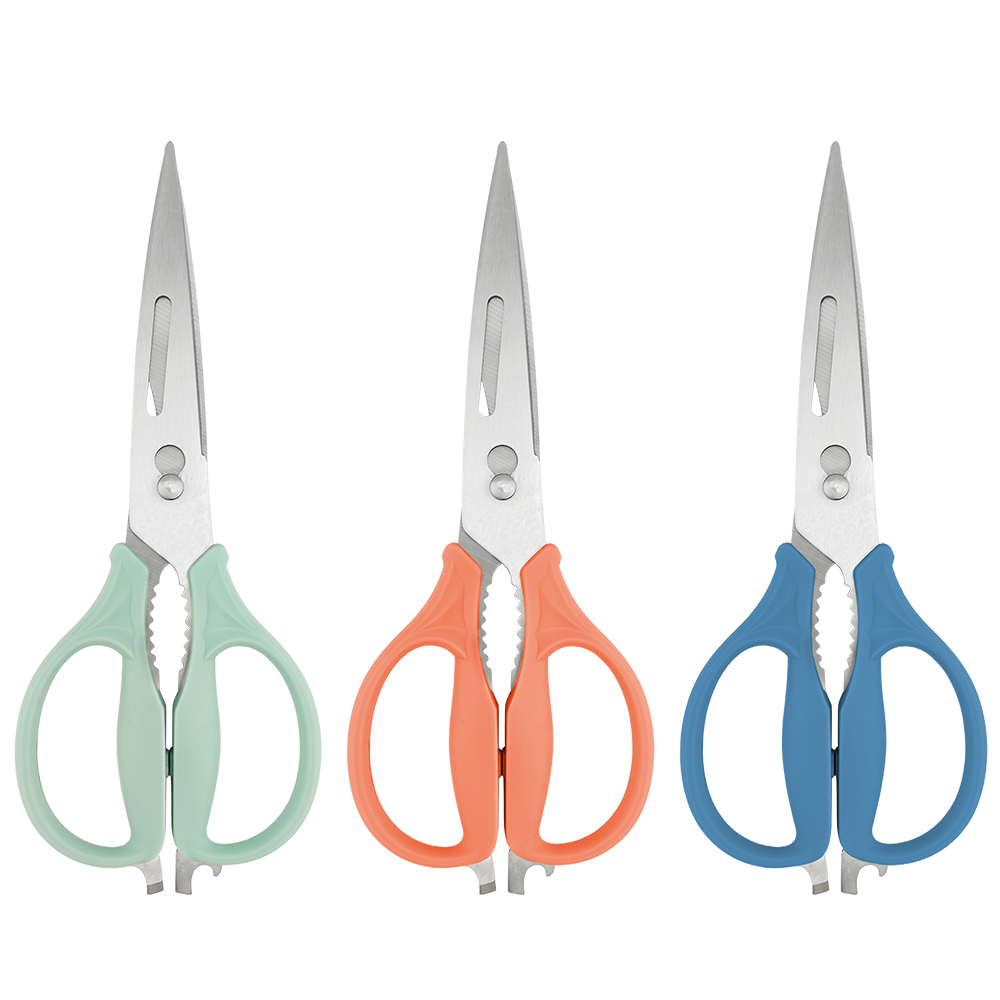
OEM kitchen scissors sourcing is suitable when a buyer wants a product aligned with a private label or a specific sales channel. Customization can be simple, such as changing the handle color, or more complex, such as creating a product set with branded packaging. The previous article mentioned possible color directions including mint green, coral orange, and azure blue. These are useful examples of how visual differentiation can support a brand line, but availability should always be confirmed with the manufacturer.
Typical OEM discussion points include:
- Handle design and color: Ask whether colors are selected from existing options or matched to a specific reference.
- Blade type: Confirm the blade material, thickness, edge style, surface finish, and whether the blades are detachable.
- Added functions: If you need a bottle opener, nutcracker, jar-grip area, or locking mechanism, confirm whether the selected model supports it.
- Logo and branding: Ask where branding can be placed, which process is used, and whether there are artwork requirements.
- Packaging: Compare blister card, color box, hanging card, or bulk packing depending on your retail or distribution needs.
Clear specifications reduce quotation errors. Instead of asking for “premium scissors,” provide target use, sales market, packaging format, and expected inspection criteria.
Wholesale Kitchen Scissors: How to Compare Supplier Options
Wholesale sourcing is different from OEM development because the buyer often selects from existing models. This can shorten decision-making and make replenishment easier, but it still requires careful evaluation. A wholesale kitchen scissors supplier should provide enough information to help you decide whether a model suits your channel.
Ask for product photos from multiple angles, sample availability, current packaging options, carton details, and whether the model is a regular item or subject to change. If your buyers require consistent appearance across repeat orders, ask how the supplier manages color, packaging, and component consistency.
For restaurant suppliers or culinary-school purchasers, usability may be more important than decorative packaging. In those channels, focus on grip comfort, safety during storage, cleaning method, and whether the scissors can handle the intended workload. Do not assume that every kitchen shear is designed for heavy-duty poultry cutting unless the supplier specifically confirms that use case.
Comparison Checklist for B2B Buyers
| Sourcing Point | What to Check | Question to Ask the Supplier |
|---|---|---|
| Blade material | Exact material description, finish, and edge style | What blade material is used for this model, and can it be documented on the quotation? |
| Handle comfort | Grip shape, surface texture, left/right-hand usability | Can you provide samples for grip and cutting tests before bulk order confirmation? |
| Cleaning design | Detachable or fixed blades, crevices, care instructions | Are the blades detachable, and what cleaning guidance should be printed or supplied? |
| Safety features | Locking mechanism, blade cover, storage format | Does this model include a lock or cover, and is it suitable for retail display? |
| OEM branding | Logo position, color options, packaging artwork | What files and approvals are needed for logo or packaging customization? |
| Quality control | Inspection points, sample approval, defect handling | Which inspection criteria are used before shipment, and how are complaints handled? |
| Commercial terms | MOQ, lead time, payment, packing, delivery terms | What are the MOQ, production lead time, carton packing, and trade terms for this item? |
Quality Questions to Ask Before Placing an Order
Quality should be discussed in measurable terms. A supplier may describe a product as durable or comfortable, but buyers need details that can be checked. Request a pre-production sample for OEM orders and keep an approved sample as a reference. For wholesale orders, ask whether the sample represents current production.
- What is the stated material for the blades and handle?
- Are the blades fixed or detachable?
- Is there a locking mechanism or protective storage feature?
- What cutting tasks is the model intended for?
- What cleaning and drying instructions should end users follow?
- What packaging is included in the quoted price?
- How are sharpness, alignment, appearance, and function inspected?
- What happens if goods arrive with visible defects or wrong packaging?
These questions are not only about avoiding problems. They also help create a common understanding between buyer and supplier before money is committed to tooling, packaging, or bulk production.
Packaging, Labeling, and Market Fit
Packaging affects cost, shipping efficiency, shelf presentation, and customer expectations. A product sold through supermarkets may need hanging packaging with clear use instructions, while an online bundle may require packaging that protects the scissors in transit. For private-label sales, the packaging should explain product use without making unsupported claims.
Buyers should also ask about labeling requirements for their target market. The supplier may be able to support artwork preparation, but legal and retail compliance requirements should be checked by the buyer or a qualified advisor. Avoid adding claims such as specific certifications, food-contact approvals, dishwasher suitability, or special performance results unless the supplier can provide appropriate documentation for that exact product.
How to Build a Clear RFQ for Kitchen Scissors
A complete RFQ, or request for quotation, saves time for both sides. Include your estimated order quantity, target packaging, destination country, preferred trade terms, and whether you are seeking an existing wholesale model or OEM customization. If you have a benchmark product, send photos and explain which features are required versus optional.
For OEM projects, attach logo files, color references, and packaging dimensions if available. For wholesale purchases, request a model list, sample cost, lead time, and whether the same model can be reordered later. If you need multiple kitchen tools in one range, ask whether the supplier can coordinate matching colors or packaging themes, but confirm what is actually available before presenting the range to your customers.
Practical FAQ
What is the difference between OEM and wholesale kitchen scissors?
OEM sourcing usually involves customized branding, colors, packaging, or product details. Wholesale sourcing normally means buying an existing model in bulk with fewer changes.
Can kitchen scissors include extra functions?
Some models may include features such as a bottle opener, nutcracker area, detachable blades, or a safety lock. Availability depends on the specific design, so buyers should confirm each function in writing.
Should I request samples before ordering?
Yes. Samples help buyers check grip comfort, cutting feel, appearance, packaging, and whether the item matches the supplier’s description. For OEM orders, an approved sample is especially important.
What should I ask about material?
Ask for the exact blade and handle material used for the quoted model. Do not assume a grade or finish unless it is stated by the supplier and shown in the specification.
How can I reduce sourcing risk?
Use a written specification, confirm packaging and labeling, approve samples, define inspection points, and clarify how defects or shipment discrepancies will be handled before placing the bulk order.
Final Sourcing Advice
A kitchen scissors manufacturer can support both standard wholesale supply and customized OEM projects, but the best results come from precise communication. Treat kitchen scissors as a functional tool, not just a small accessory. Confirm the intended use, materials, safety details, packaging, inspection process, and commercial terms before you commit. With a clear RFQ and sample-based approval process, buyers can choose kitchen scissors that fit their market, brand, and distribution needs.
