




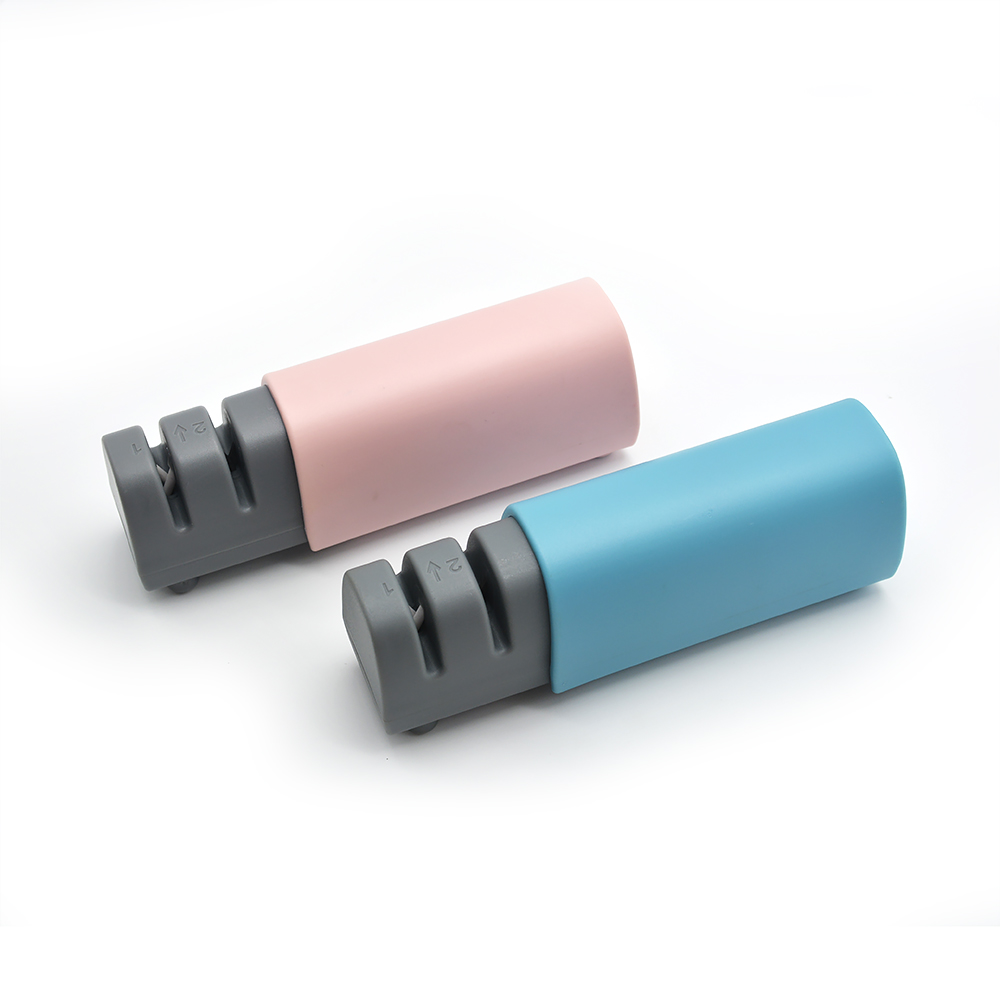
Top Knife Sharpener Supplier: Precision and Quality
Choosing a knife sharpener supplier is not only about finding a low unit price. For retailers, distributors, kitchenware buyers, and foodservice purchasers, the better question is whether the supplier can provide a practical sharpening product, clear commercial communication, and repeatable quality over time. A 2-Stage Manual Knife Sharpener is a common choice because it is simple to demonstrate, easy to store, and suitable for everyday blade maintenance when used correctly.
The original focus of this topic is a manual sharpener with coarse and fine sharpening slots, an ergonomic handle, a secure grip, and a vibrant green design. Those are useful product points, but buyers should still verify details such as compatible knife types, packaging, carton information, customization options, lead time, and after-sales support before placing a wholesale order.
Key Takeaways
- A reliable knife sharpener supplier should explain product use, limitations, packaging, and order terms clearly.
- A 2-stage manual sharpener usually offers a coarse slot for restoring dull edges and a fine slot for honing.
- Wholesale buyers should request samples before committing to a larger purchase.
- Industrial or foodservice buyers should confirm whether a manual sharpener is suitable for their daily workload.
- Do not assume material grade, certifications, MOQ, or capacity unless the supplier provides written confirmation.
What Buyers Should Expect From a Knife Sharpener Supplier
A professional knife sharpener supplier should make product selection easier, not more confusing. At minimum, buyers should expect clear photos, basic product descriptions, usage guidance, packaging information, and direct answers to commercial questions. If the supplier offers a 2-Stage Manual Knife Sharpener, ask how the coarse and fine slots are intended to be used, whether the sharpener is recommended for specific blade styles, and which knives should not be used with it.
For B2B sourcing, communication quality matters. A supplier that responds carefully to technical and order questions is easier to work with when you need repeat orders, packaging changes, or documentation for your sales channel. Avoid relying only on short promotional descriptions. Instead, collect the information your purchasing, merchandising, and quality teams need to evaluate the product properly.
Understanding the 2-Stage Manual Knife Sharpener
The product described in the original article is a 2-Stage Manual Knife Sharpener with coarse and fine slots. In general, this format is designed to help users perform two different sharpening tasks. The coarse stage is used when a blade has become noticeably dull, while the fine stage is used to refine or maintain the edge. This makes the product easier for non-specialist users to understand than a single-purpose sharpening tool.
The sharpener is also described as having an ergonomic handle and secure grip. These details matter because hand position and stability can affect user confidence during sharpening. The vibrant green design may also help the product stand out in a retail display or kitchenware assortment. However, buyers should not treat appearance as a substitute for product evaluation. A sample test is still important, especially if the item will be sold under a private label or included in a broader kitchen tool range.
Supplier Comparison Checklist
Before selecting a wholesale knife sharpener source, compare suppliers using practical criteria. The table below can help purchasing teams organize questions during quotation and sample review.
| Evaluation Point | What to Ask the Supplier | Why It Matters |
|---|---|---|
| Product function | How should the coarse and fine slots be used? | Clear instructions reduce misuse and customer complaints. |
| Knife compatibility | Which knife types are suitable or unsuitable? | Not every sharpener is appropriate for every blade. |
| Packaging | What retail, bulk, or customized packaging options are available? | Packaging affects shelf presentation, freight, and channel requirements. |
| Order terms | What are the MOQ, lead time, and payment terms? | These details determine whether the supplier fits your purchasing plan. |
| Quality control | What inspection steps are used before shipment? | Buyers need consistency across cartons and repeat orders. |
| Documentation | Can the supplier provide product instructions and requested documents? | Written information supports sales, compliance review, and customer service. |
Wholesale Knife Sharpeners: Questions for Bulk Buyers
Wholesale knife sharpeners are often purchased by kitchenware distributors, retail chains, online sellers, promotional product buyers, and hospitality suppliers. Each channel has different needs. A retail buyer may focus on packaging and display appeal. An online seller may need clear product images, concise instructions, and predictable carton dimensions. A foodservice buyer may care more about ease of use, cleaning, and staff training.
When requesting a quotation, include your intended market, expected order size, packaging requirements, and whether branding is needed. If OEM or private label service is important, ask what customization is possible and what artwork files are required. Do not assume that logo printing, color changes, or custom packaging are available unless the supplier confirms them. Also ask whether samples are from current production or only for reference, because sample accuracy affects purchasing decisions.
Industrial Knife Sharpener Supplier Considerations
The phrase industrial knife sharpener supplier can refer to very different needs. Some industrial buyers require powered sharpening equipment for high-volume blade maintenance. Others may only need simple manual sharpeners for light kitchen, staff room, or retail demonstration use. A 2-Stage Manual Knife Sharpener can be useful in many everyday settings, but buyers should be realistic about workload.
If your operation involves frequent sharpening of many knives, ask the supplier whether this manual model is intended for that level of use. Also ask about replacement policies, recommended maintenance, user instructions, and any limitations. For professional kitchens, staff should be trained to use the coarse and fine slots correctly and to clean knives after sharpening. For industrial applications outside normal kitchen use, confirm suitability before purchase rather than assuming the product will meet the requirement.
How to Review Samples Before Placing an Order
A sample review should be structured. First, check whether the product received matches the quotation and photos. Then review the handle comfort, grip stability, slot layout, and packaging. Test the sharpener only on appropriate knives and follow the supplier's instructions. Record observations from more than one user if the product will be sold to a broad customer base.
- Confirm the sample model, color, and packaging against the supplier's offer.
- Read the instructions before testing the coarse and fine slots.
- Check whether the handle feels stable during normal use.
- Evaluate whether the product description is clear enough for end customers.
- Ask the supplier to clarify any unclear claims before ordering in bulk.
Sample testing does not replace formal quality control, but it helps identify obvious mismatches early. For larger orders, buyers may also discuss pre-shipment inspection arrangements with the supplier or a third-party inspection provider.
Practical FAQ
What is a 2-stage manual knife sharpener?
It is a hand-operated sharpener with two sharpening stages. In this product topic, the sharpener includes coarse and fine slots, which are typically used for restoring a dull edge and then refining it.
Is this type of sharpener suitable for wholesale buyers?
Yes, it can be suitable for wholesale programs, retail assortments, and kitchenware distribution, provided the supplier confirms packaging, order terms, product details, and any required customization.
Can a manual sharpener replace industrial sharpening equipment?
Not always. A manual sharpener may work for everyday kitchen maintenance, but high-volume operations should ask whether the model is appropriate for their usage level.
What should I ask before buying in bulk?
Ask about MOQ, lead time, packaging, customization, sample availability, inspection process, knife compatibility, and written instructions. Request confirmation in writing before placing a purchase order.
Should buyers choose a supplier based only on price?
No. Price is important, but product clarity, communication, sample consistency, packaging support, and reliable order handling are also important for long-term sourcing.
Final Sourcing Advice
A good knife sharpener supplier helps buyers understand both the product and the purchasing process. For the 2-Stage Manual Knife Sharpener, the most useful confirmed details are its coarse and fine slots, ergonomic handle, secure grip, and green appearance. From there, buyers should ask targeted questions instead of filling gaps with assumptions. That approach leads to better product selection, fewer misunderstandings, and a more dependable wholesale sourcing process.
