




Left-Handed Children Scissors: Safety, Fit and Sourcing Guide
Left-handed children need scissors that match how their hand naturally opens, closes and views the cutting line. When a child uses a right-handed pair in the left hand, the blades can push apart instead of together, paper may bend, and the cutting line may be hidden. That frustration often looks like poor coordination, when the real problem is the tool.
This guide explains how parents, teachers, school buyers and wholesale sourcing teams can evaluate left-handed children scissors for safer craft sessions and more confident cutting. It also highlights what to ask an OEM scissors factory or supplier before placing an order, without assuming unverified specifications.
Key Takeaways
- True left-handed scissors should improve blade visibility and control for left-handed children.
- Rounded blade tips, a safe grip and a storage cover can reduce everyday handling risks.
- Fit matters: handle loops should suit small hands without forcing the wrist into an awkward angle.
- For school or wholesale purchasing, ask the supplier clear questions about materials, packaging, quality checks and age suitability.
Why Left-Handed Children Scissors Are Different
Children learn cutting skills through repetition. If the scissors are not designed for their dominant hand, they may squeeze harder, twist their wrist or tear the material instead of cutting it cleanly. Left-handed children scissors are intended to place the blades and handles in a more natural orientation for left-hand use, helping the child see the cutting path and apply pressure more effectively.
This is especially useful in classrooms, art rooms and home craft areas where children cut paper shapes, construction paper, thin cardstock or simple fabric craft pieces. A suitable pair will not make a child instantly skilled, but it can remove an unnecessary barrier and make practice less tiring.
Safety Features to Check Before Buying
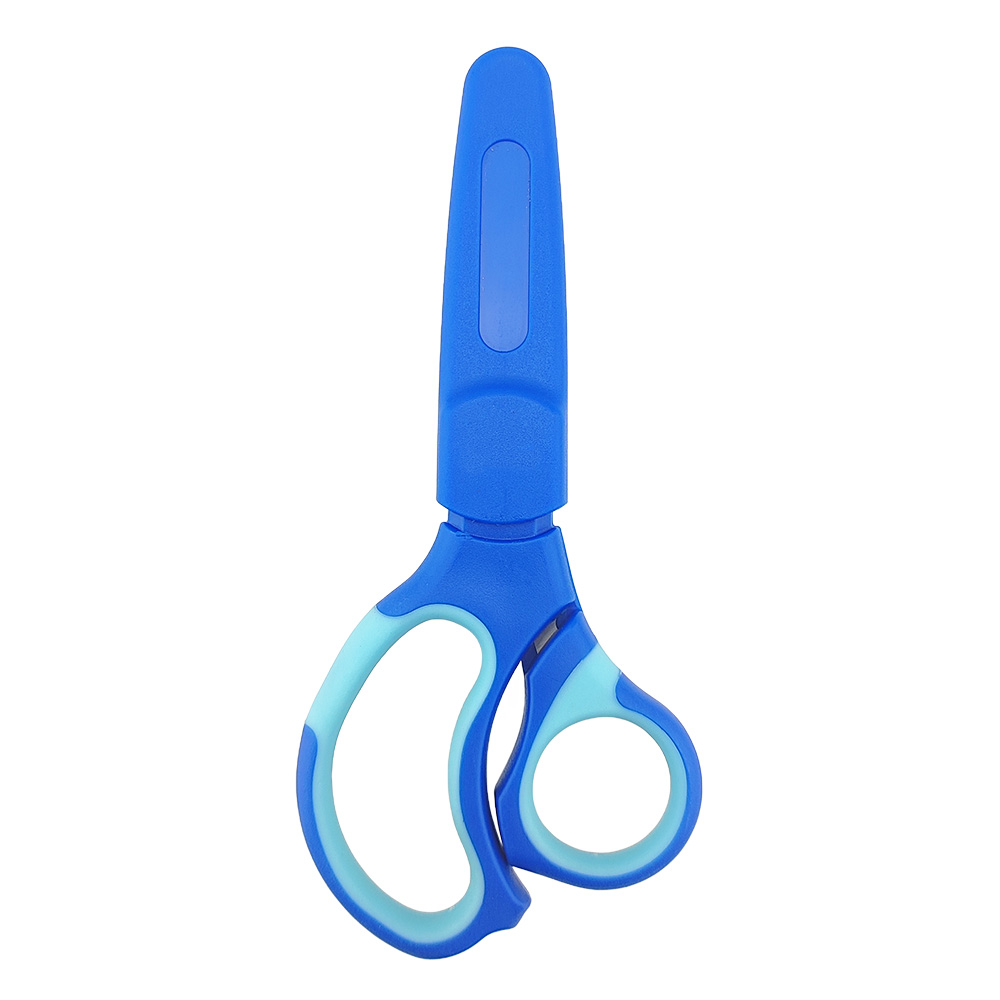
Safety is the first concern for children’s scissors. The original product description highlighted rounded blade tips, a soft-grip handle, a blue design and a blade cover for storage. These are useful features to look for because children often carry, share and store scissors in busy environments.
When comparing options, check for the following:
- Rounded tips: Helps reduce accidental pokes during normal classroom and craft use.
- Comfortable grip: A softer or more ergonomic handle can reduce pressure on small fingers during longer activities.
- Left-hand blade orientation: Confirm that the scissors are not only colorful but actually designed for left-handed cutting.
- Blade cover or safe storage: A cover is useful for pencil cases, craft drawers and travel storage.
- Smooth opening and closing: Children should not need excessive force to operate the scissors.
No safety feature replaces supervision. For younger children, adults should still demonstrate how to pass scissors handle-first, how to sit while cutting and how to store them after use.
Fit, Control and Age Suitability
A good pair of left-handed children scissors should fit the child’s hand, not just the product category. Oversized handles can reduce control, while very small loops may pinch fingers. The child should be able to place the thumb and fingers naturally in the loops, keep the wrist relatively straight and open the blades without strain.
For home or classroom selection, ask children to try a simple cutting path before buying in quantity. A straight line, a curved line and a small circle are enough to show whether the scissors feel stable. If the child constantly turns the paper to compensate, presses the blades sideways or complains of finger discomfort, try another size or handle shape.
Comparison Checklist for Selection and Sourcing
| Evaluation Point | What to Look For | Question to Ask a Supplier |
|---|---|---|
| Left-handed design | Blade and handle orientation suitable for left-hand use | Are these true left-handed scissors or universal-handle scissors? |
| Tip safety | Rounded blade tips for children’s craft use | Can you provide product photos or samples showing the tip shape? |
| Grip comfort | Handle loops that fit small hands and reduce fatigue | What handle sizes or age ranges are available? |
| Storage | Blade cover or protective packaging when not in use | Is a safety cover included, optional or packed separately? |
| Cutting use | Suitable for paper, craft sheets or other intended materials | What materials do you recommend these scissors for and not for? |
| Bulk purchasing | Consistent quality across cartons and colors | What inspection process is used before shipment? |
Guidance for Schools, Retailers and OEM Buyers
If you are sourcing from an OEM scissors factory or wholesale supplier, avoid relying only on a product name. Terms such as “school scissors,” “safety scissors” and “left-handed scissors” can mean different things across suppliers. Request samples and verify the details with your own team before confirming an order.
Useful commercial questions include:
- What materials are used for the blades and handles, and can the supplier document them?
- Which ages or hand sizes is the product designed for?
- Are packaging options available for classroom packs, retail cards or private label projects?
- What colors are standard, and which require custom production?
- What is the MOQ, lead time and sample policy?
- What quality checks are performed for blade alignment, handle finish and opening/closing action?
- Are any compliance documents available for the destination market?
These questions help buyers compare suppliers fairly. They also prevent misunderstandings about features that matter to end users, such as whether a blade cover is included or whether the item is suitable for a specific school age group.
Use and Care Tips for Parents and Teachers
Even well-designed children scissors last longer and stay safer when they are used correctly. Keep a dedicated pair for paper crafts if possible, because cutting sticky tape, wire, thick packaging or unsuitable materials can damage the blades or make the scissors harder for a child to control.
After use, wipe the scissors if adhesive or paper dust collects near the pivot. Store them closed, ideally with the blade cover fitted if one is supplied. In classrooms, assign a tray or labeled container so children know where scissors belong. For left-handed children, label the scissors clearly to prevent them from being mixed with right-handed pairs.
Practical FAQ
How do I know if scissors are truly left-handed?
Hold them in the left hand and check whether the child can see the cutting line without twisting the wrist. If the blade position hides the line or pushes the paper away, the scissors may not be a true left-handed design.
Are rounded tips enough to make scissors safe for young children?
Rounded tips help reduce risk, but they are only one safety feature. Supervision, proper storage, suitable materials and correct handling instructions are still important.
Can left-handed children use universal scissors?
Some can, but many children get better control from scissors specifically designed for left-hand use. For early cutting practice, a true left-handed pair is often easier.
What should wholesale buyers confirm before ordering?
Confirm the left-handed blade orientation, handle size, safety cover availability, packaging, intended age range, MOQ, lead time and any documentation needed for the target market.
What materials should children cut with these scissors?
Use them for the materials recommended by the supplier, commonly school and craft materials such as paper or light craft sheets. Avoid hard, thick or sticky materials unless the supplier confirms suitability.
