




Plastic Measuring Cup Manufacturer Sourcing Guide for Wholesale Buyers
Choosing a plastic measuring cup manufacturer is not only about finding a low unit price. For importers, distributors, retailers, kitchenware brands, and hospitality suppliers, the better question is whether the product is consistent, easy to use, clearly marked, and suitable for the target sales channel. Measuring cups are simple tools, but small differences in markings, handles, spouts, material clarity, and packaging can affect customer satisfaction and repeat orders.
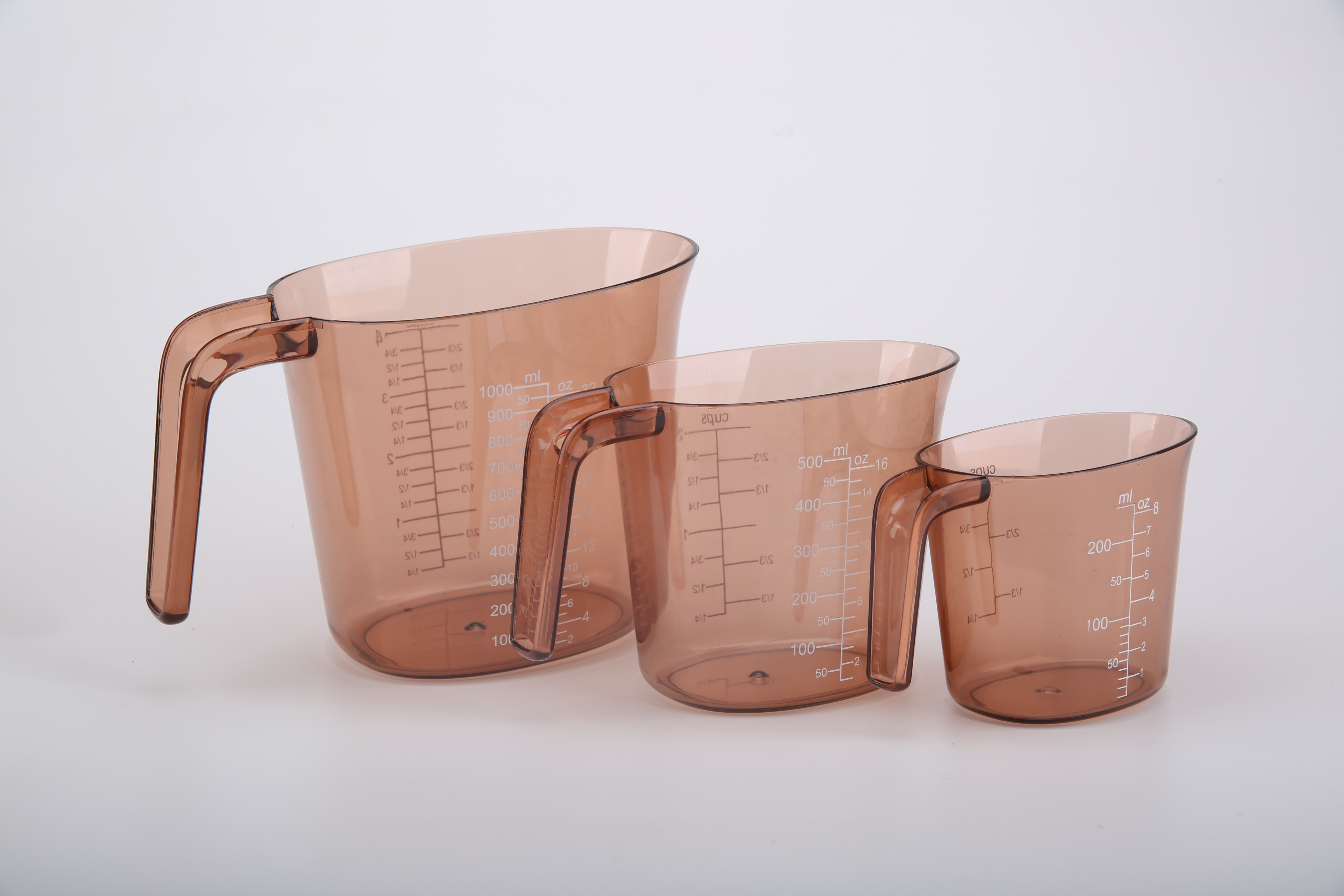
The original product information describes amber measuring jugs made from food-grade tinted plastic, with ml and oz markings visible from any angle, sizes from 300ml to 1000ml, ergonomic handles, and drip-free spouts. Those are useful starting points for a sourcing discussion. This guide explains how buyers can evaluate those details, what to ask before placing a wholesale order, and how to compare suppliers without relying only on promotional claims.
Key Takeaways
- Confirm the exact plastic material, food-contact documentation, marking method, and usable temperature range before ordering.
- Ask for samples in every size you plan to buy, especially if the range includes 300ml to 1000ml measuring jugs.
- Check whether ml and oz markings remain readable when the cup is empty, filled, and viewed from different angles.
- Review handle comfort, spout pouring control, carton strength, labeling, and barcode needs for your sales channel.
- For OEM or wholesale projects, clarify customization, lead time, inspection process, and replacement policy in writing.
What Buyers Should Expect from a Plastic Measuring Cup Manufacturer
A reliable manufacturer should be able to explain the product clearly and answer technical questions without vague language. For plastic measuring cups, this includes the material type, whether the product is intended for food contact, how measurement lines are applied, and how the product is packed for shipment. If a supplier describes an item as food-grade, ask which documents support that statement and whether they apply to your destination market.
For wholesale buyers, consistency matters as much as design. A measuring cup that looks acceptable in a sample but varies across production can create returns and complaints. Before confirming an order, ask whether the supplier can provide pre-production samples, production photos, or third-party inspection support. If the measuring cups will be sold under your brand, also ask how the supplier controls color, logo placement, packaging artwork, and carton labeling.
Product Features to Review Before Ordering
The amber measuring jug described in the source has several practical features: tinted plastic, visible ml and oz markings, multiple capacities from 300ml to 1000ml, ergonomic handles, and drip-free spouts. Each feature should be checked in real use, not only in catalog photos.
Tinted plastic may help reduce light exposure for certain ingredients, but buyers should ask what level of tint is used and whether the color affects readability. Measurement markings should be easy to see on a shelf, on a counter, and while pouring. A handle should feel secure when the jug is full, and the spout should pour cleanly without requiring an awkward wrist angle.
| Checklist Item | What to Check | Questions to Ask the Supplier |
|---|---|---|
| Material | Plastic type, food-contact suitability, odor, surface finish | What material is used, and what documentation is available? |
| Capacity range | Whether 300ml, 500ml, 1000ml, or other sizes match your assortment | Which sizes are in regular production, and can they be ordered together? |
| Markings | Readability of ml and oz scales from different angles | Are markings molded, printed, or otherwise applied? |
| Handle and spout | Grip comfort, stability when full, pouring control | Can samples be tested with water before bulk approval? |
| Packaging | Retail pack, bulk pack, carton strength, labeling | What packaging options are available for wholesale or OEM orders? |
How to Compare Wholesale Plastic Measuring Cups
When comparing wholesale plastic measuring cups, avoid comparing only by capacity and price. Two 1000ml measuring jugs may perform differently if one has faint markings, a narrow handle, or a spout that drips. Request physical samples and test them in conditions similar to how end users will use them.
- Fill each sample to several measurement lines and check whether the markings are accurate and readable.
- Pour water slowly and quickly to see whether the spout controls flow cleanly.
- Hold the jug when full to evaluate handle comfort and balance.
- Place samples on a flat surface to check stability and base shape.
- Inspect edges, seams, and surfaces for rough areas or visible defects.
- Review packaging to see whether the product can survive warehouse handling and transportation.
If you sell through retail stores, the appearance of the product on the shelf may be important. If you sell to bakeries, restaurants, or food-preparation users, durability, accuracy, and repeat ordering may matter more. Align the buying criteria with the customer segment rather than using one generic checklist for every channel.
OEM and Private Label Questions to Ask
Many buyers searching for a plastic measuring cup manufacturer are also considering OEM or private label supply. Before discussing decoration or packaging, confirm whether the base product is suitable for your market. Then ask what customization is realistic for the order size and schedule you have in mind.
Useful OEM questions include: Can the supplier add a logo to the cup or packaging? Are custom colors available for tinted plastic? Can the supplier provide packaging dielines for artwork? What is the approval process for samples? What quality standard is used during production? What happens if an inspection finds defects? These questions help prevent misunderstandings before money is committed.
Do not assume that every supplier can support every type of customization. Some factories may only offer existing molds and standard packaging, while others may support brand labels, color changes, or new packaging formats. Ask for clear written confirmation and sample evidence.
Quality Control Points for Measuring Accuracy and Usability
For measuring cups, usability and measurement clarity are the heart of product quality. A product can look attractive but still disappoint customers if the scale is hard to read or if the spout spills. Buyers should define inspection points before production begins.
Common checks include capacity accuracy at key measurement lines, legibility of ml and oz markings, surface cleanliness, color consistency, handle strength, and carton condition. If the product is described as having drip-free spouts, test pouring at different fill levels. If markings are said to be visible from any angle, review them under normal kitchen lighting, not only under studio lighting.
For regulated markets, buyers should also discuss food-contact requirements with the supplier and, if necessary, an independent testing partner. The supplier should not be expected to guess which rules apply to your market; the buyer should state the destination country and required documents clearly.
Packaging, Shipping, and Retail Readiness
Plastic measuring cups are lightweight, but they can still be scratched, compressed, or poorly presented if packaging is not planned well. Wholesale buyers should ask whether the cups are nested, individually packed, labeled, or shipped in bulk cartons. For retail, barcode placement, product description, warning text, and language requirements may need to be reviewed before printing.
Carton strength is also important for importers and distributors. Ask for carton dimensions, gross weight, packing quantity, and pallet suggestions if applicable. If the measuring cups include multiple sizes, confirm whether mixed cartons are available or whether each size must be packed separately. These details affect warehouse efficiency and landed cost.
Practical FAQ for Buyers
What sizes should I request first?
Start with the sizes that fit your target channel. The source product mentions 300ml to 1000ml, so buyers can request samples across that range and test which capacities are most practical for their customers.
Are amber plastic measuring cups better than clear cups?
Amber tinted plastic can reduce light exposure and create a distinct shelf appearance. However, buyers should check whether the tint affects scale readability and whether customers in the target market prefer amber or clear products.
What should I verify before calling a product food-grade?
Ask the supplier what material is used and what food-contact documentation is available. Requirements vary by market, so buyers should confirm the documents needed for the destination country.
How can I check whether the spout is really drip-free?
Test samples with water at different fill levels and pouring speeds. A clean pour should be evaluated in real handling conditions, not only from a product photo.
What is the best way to compare suppliers?
Use the same sample checklist for each supplier: material information, marking readability, handle comfort, spout performance, packaging, communication speed, and willingness to answer technical questions.
Final Sourcing Advice
A good plastic measuring cup manufacturer should provide more than a catalog image. Buyers should expect clear answers, usable samples, consistent markings, practical packaging options, and written confirmation of product and order details. For amber measuring jugs with ml and oz markings, sizes from 300ml to 1000ml, ergonomic handles, and drip-free spouts, the right sourcing process is to test the product exactly as customers will use it.
Before placing a wholesale order, prepare a short specification sheet, request samples, confirm documentation needs, and define inspection points. This approach helps buyers reduce risk and choose measuring cups that are accurate, practical, and suitable for their market.
