








Top Stationery Scissors Factory: Quality & Design
Choosing a stationery scissors factory is not only about finding a low unit cost. For distributors, retailers, promotional product buyers, and office supply brands, the better question is whether a supplier can provide consistent cutting performance, suitable design options, stable communication, and packaging that fits the sales channel. Stationery scissors may look simple, but small differences in blade alignment, handle comfort, finish, and quality inspection can affect user experience and repeat orders.
This guide explains how to assess a stationery scissors manufacturer or paper cutting scissors supplier for wholesale and OEM projects. It focuses on practical sourcing decisions: what to check, what to ask, and how to compare suppliers without relying on unsupported claims.
Key Takeaways
- Start with the intended use: office, school, craft, home, or promotional stationery.
- Ask the factory to clarify available blade materials, coatings, handle materials, and packaging options before confirming a design.
- Evaluate samples for cutting feel, alignment, comfort, finish, and durability during repeated use.
- For OEM orders, confirm artwork files, color matching, sample approval steps, lead time, and inspection standards in writing.
- Do not assume certifications, test results, MOQ, or production capacity; ask the supplier to provide current documentation where needed.
Define the Scissors Application Before Comparing Factories
A reliable sourcing process begins with the product scenario. Office scissors for daily paper cutting have different priorities from children’s school scissors, craft scissors, or premium stationery gift sets. Buyers should define who will use the scissors, what materials they will cut, how often they will be used, and how they will be sold.
For general office use, buyers usually focus on smooth cutting, comfortable handles, and dependable bulk availability. For schools, safety expectations, blade tip design, age suitability, and packaging warnings may matter more. For craft or design-oriented stationery, appearance, color, handle shape, and finish can influence shelf appeal. If the product will be used in a branded promotion, logo placement, color consistency, and presentation packaging are important.
OEM Design Options: What Buyers Should Clarify
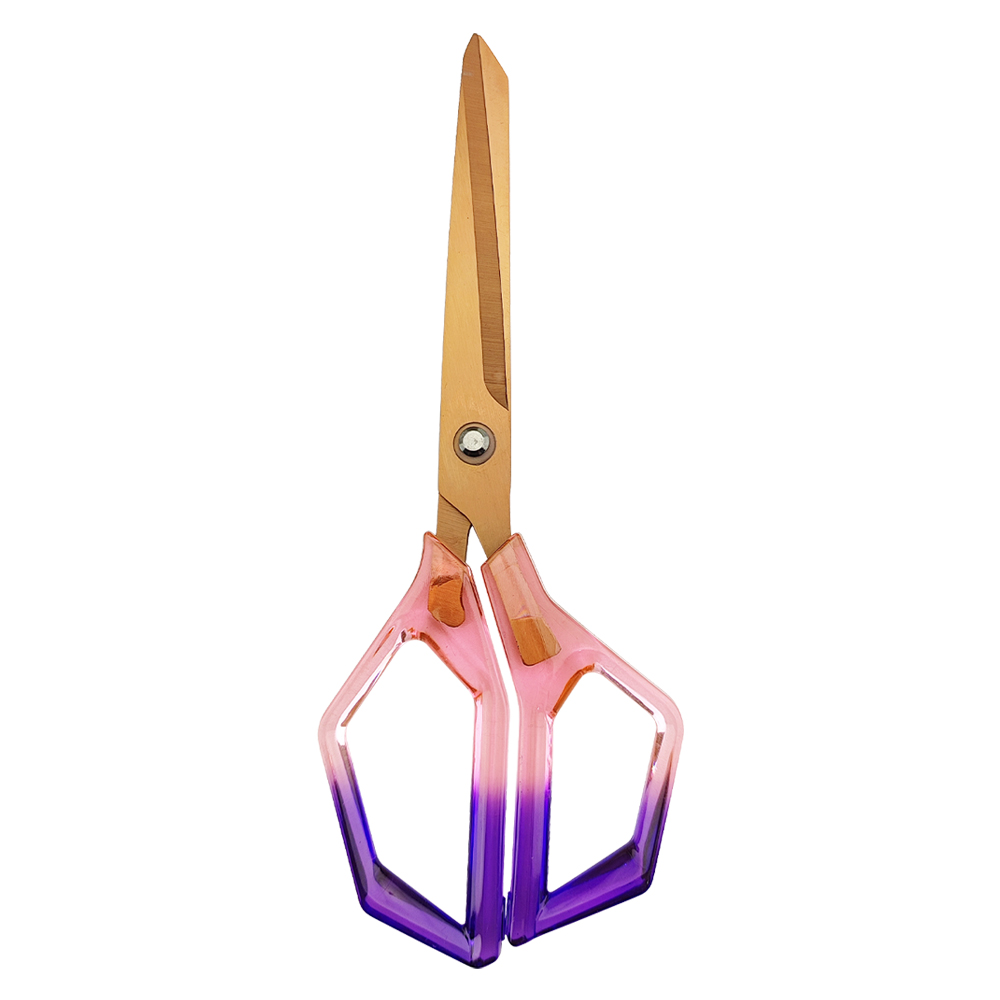
Office scissors OEM projects allow a buyer to develop a product that reflects a brand, retail range, or seasonal collection. The original article mentioned an example design direction with rose gold alloy blades and ergonomic pentagon-shaped handles. Such details show how blade finish and handle geometry can turn a common stationery item into a more distinctive product. However, every OEM feature should be confirmed with the factory based on actual sample availability and production feasibility.
Before requesting a quotation, prepare a simple design brief. Include target market, expected retail positioning, preferred blade length, handle color, logo method, packaging format, and any usage requirements. If you do not know the exact specification, ask the factory what standard molds, colors, finishes, and package templates are already available. Using existing options can reduce development complexity compared with a fully custom tool.
Quality Factors in Stationery Scissors Manufacturing
Quality should be judged by performance, not only by appearance. A polished blade or attractive handle does not guarantee a clean cut. When reviewing samples, test several pairs from the same batch if possible. Cut common office paper, thin card, wrapping paper, and other materials relevant to the intended customer. The scissors should open and close smoothly, cut near the tip as well as near the pivot, and avoid tearing or pushing paper away from the blade line.
Key construction points include blade alignment, pivot tightness, edge consistency, handle comfort, and surface finishing. Handles should not have sharp plastic edges or uncomfortable pressure points. Blade tips should be appropriate for the user group. The finish should be even, with no obvious burrs, stains, or loose parts. For any claimed coating, material, or special treatment, ask the supplier to identify what is actually used and whether documentation is available.
Comparison Checklist for Supplier Evaluation
| Evaluation Area | What to Check | Questions to Ask the Supplier |
|---|---|---|
| Product range | Office, school, craft, promotional, or specialty scissors | Which existing models are available for sampling and OEM adaptation? |
| Materials and finish | Blade material, handle material, coating, color, surface quality | Can you confirm the material and finish for this exact model in writing? |
| Cutting performance | Smooth opening, clean paper cuts, tip performance, pivot stability | What inspection steps are used before shipment? |
| OEM support | Logo placement, handle color, packaging, artwork approval | What files do you need, and how is the pre-production sample approved? |
| Commercial terms | MOQ, lead time, payment terms, carton details, spare sample policy | What are the current terms for this model and order quantity? |
| Compliance needs | Market-specific safety or labeling requirements | Can you provide current documents required for our destination market? |
How to Review Samples Before Placing a Bulk Order
Sample approval is one of the most important steps when working with a stationery scissors factory. Do not approve a product based only on photos. Request physical samples and inspect them under normal use conditions. If the scissors are for retail, also review the package, barcode placement, hanging hole, print clarity, and protection during transport.
- Check the appearance first: color, finish, logo, and packaging layout.
- Open and close the scissors repeatedly to test movement and pivot feel.
- Cut different paper weights and note whether the blades snag or separate.
- Hold the scissors for several minutes to judge handle comfort.
- Compare the approved sample with the written specification before mass production.
For larger orders, consider defining an inspection checklist in advance. The checklist can include acceptable appearance standards, cutting test method, quantity sampling plan, carton labeling, and packaging requirements. The factory may have its own process, but buyers should make expectations clear before production begins.
Packaging, Branding, and Retail Readiness
Packaging can affect both cost and customer perception. A simple polybag may be suitable for institutional supply, while blister cards, paper cards, or gift-style packaging may be better for retail. If sustainability, plastic reduction, or recyclable materials are important to your market, ask the supplier what packaging options are available and what documentation can support any environmental claims.
Branding details should be confirmed early. Logo printing, laser marking, handle color matching, and printed inserts can each have different setup requirements. Buyers should provide clear artwork and confirm whether colors will be matched to a standard reference. Keep in mind that colors can look different on metal, plastic, and printed paper, so physical samples are more reliable than digital mockups.
Practical FAQ for Stationery Scissors Buyers
What should I ask a stationery scissors factory first?
Ask which models are available, what materials and finishes they use, whether OEM branding is possible, what the current MOQ and lead time are, and how samples are approved before bulk production.
Can I create a custom office scissors design?
Often yes, but the scope depends on the supplier’s existing molds, finishing options, and development process. Ask whether your design can use an existing model or requires new tooling.
How do I judge whether paper cutting scissors are good quality?
Test cutting smoothness, blade alignment, tip performance, handle comfort, pivot stability, and finish consistency. Use the same materials your customers are likely to cut.
Should I request compliance documents?
If your market or sales channel requires specific safety, labeling, or material documentation, ask the supplier for current documents related to the exact product and shipment.
Is the cheapest quotation the best choice?
Not always. Compare the quotation with sample quality, packaging, communication, inspection process, and the supplier’s ability to meet your target market requirements.
Final Sourcing Advice
A strong stationery scissors supplier should help buyers match product design with real use, not simply provide a catalog item. By defining the application, testing samples carefully, confirming OEM details, and asking direct questions about materials, packaging, and inspection, buyers can reduce sourcing risk and build a more consistent stationery product line.
