




Top Tailor Scissors Supplier for Precision Cutting
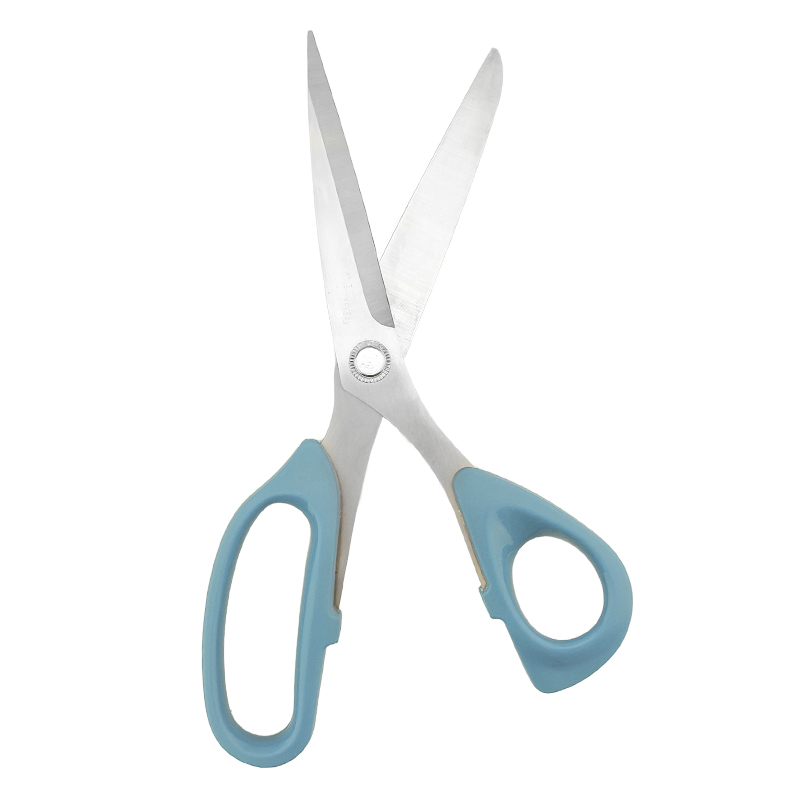
Choosing a dependable tailor scissors supplier is not only about finding a sharp cutting tool. For wholesalers, sewing brands, craft retailers, uniform suppliers, and professional tailoring distributors, the right scissors must be consistent, comfortable, durable, and suitable for the customers who will use them every day. The original product information highlights SoftTouch Scissors with sharp stainless steel blades, a soft blue grip, lightweight handling, and an ergonomic design intended to reduce hand fatigue. Those details make the product relevant for buyers sourcing tailor scissors for sewing, crafting, and professional fabric work.
This guide explains how to evaluate tailor scissors from a B2B sourcing perspective without relying on vague claims. It focuses on what buyers can inspect, what questions to ask a supplier, and how to compare options before placing a wholesale, OEM, or repeat purchasing order.
Key Takeaways
- Sharp stainless steel blades and a smooth joint are central to clean fabric cutting.
- Soft-grip ergonomic handles can help reduce discomfort during long cutting sessions.
- Wholesale buyers should request samples and test the scissors on multiple fabric types.
- Commercial details such as MOQ, packaging, customization, and lead time should be confirmed directly with the supplier.
- Do not rely on appearance alone; check cutting consistency, handle comfort, and finishing quality.
What Makes Tailor Scissors Different from General Scissors?
Tailor scissors are designed for fabric work, where a clean cut matters. In sewing and pattern cutting, a poor blade can pull threads, create uneven edges, or make long cutting lines harder to control. General office scissors may cut paper well but often lack the blade length, balance, or edge control needed for fabric.
The SoftTouch model described in the original article is positioned for sewing, crafting, and tailoring use. Its stainless steel blades are presented as sharp and suitable for cutting fabrics ranging from delicate silks to heavier denim. Buyers should treat this as a starting point for sample testing: verify whether the scissors maintain a smooth cut through the exact materials your customers handle most often.
Blade Quality and Cutting Precision
The blade is the first quality checkpoint for any tailor scissors supplier. Stainless steel is useful because it is commonly chosen for scissors and cutting tools, but the buying decision should go beyond the material name. Inspect the edge alignment, tip finish, blade thickness, and how cleanly the blades meet from pivot to tip.
For B2B sourcing, test each sample with practical cutting tasks. Use lightweight cotton, lining fabric, denim, felt, and layered fabric if those are relevant to your market. A reliable pair of tailor scissors should cut without snagging, chewing, or forcing the user to repeatedly close the blades over the same section. If the supplier offers multiple blade sizes or handle options, ask which models are intended for professional tailoring, household sewing, classroom use, or craft kits.
Ergonomic Handle Design for Longer Use
Comfort becomes important when scissors are used for hours at a cutting table. The original article notes a soft blue handle finish and soft grip technology intended to reduce hand fatigue. For retailers and distributors, this is a useful feature to verify because comfort can influence repeat purchases and customer reviews.
During sample evaluation, ask several users to test the scissors rather than relying on one opinion. Check whether the handle opening suits different hand sizes, whether the grip feels secure, and whether the scissors remain comfortable during repeated long cuts. Also check for rough edges around the handle, uneven coating, or a slippery finish. A visually attractive handle is helpful, but B2B buyers should prioritize consistent comfort and finishing quality.
Supplier Evaluation Checklist
When comparing China tailor scissors suppliers or any wholesale source, document your findings in a structured way. This helps purchasing teams avoid choosing only on price and makes supplier discussions more specific.
| Evaluation Point | What to Check | Questions to Ask the Supplier |
|---|---|---|
| Blade performance | Clean cutting on target fabrics, no snagging, consistent tip control | Which fabrics is this model designed to cut? |
| Handle comfort | Grip feel, opening size, coating finish, comfort after repeated use | Are alternative handle colors or designs available? |
| Joint movement | Smooth opening and closing without looseness or stiffness | How is joint consistency checked before shipment? |
| Packaging | Retail display suitability, blade protection, barcode or label needs | What packaging options can be quoted? |
| Order terms | MOQ, lead time, sample availability, carton details | What commercial terms apply to this model? |
| Customization | Logo, color, packaging artwork, private label feasibility | What OEM details need to be provided? |
Wholesale and OEM Buying Considerations
If you are sourcing tailor scissors for wholesale distribution, craft retail, sewing kits, or private label programs, clarify requirements before requesting a quotation. A supplier can respond more accurately when you provide the intended market, estimated order quantity, target packaging style, and any branding requirements.
Ask whether samples are available, how long sample preparation takes, and whether the sample matches mass production materials and finishing. Confirm whether the quoted price includes packaging, labeling, or customization. If your sales channel requires warnings, country-of-origin marking, barcode labels, or retailer-specific packing rules, share those requirements early. Avoid assuming that compliance documents, test reports, or certifications are included unless the supplier explicitly confirms them and provides current documentation for review.
How to Test Samples Before Placing an Order
- Inspect the scissors visually for scratches, uneven coating, burrs, or loose parts.
- Open and close the scissors several times to feel for smooth, stable movement.
- Cut straight and curved lines through the fabrics your customers use most.
- Check whether the blade tips meet cleanly for small detail cuts.
- Ask different users to test comfort during repeated cutting.
- Record results and compare all samples under the same conditions.
For larger orders, consider requesting a pre-shipment inspection plan or agreeing on acceptable quality points in writing. This may include packaging checks, visual inspection, basic cutting tests, and carton labeling review. The goal is not to create unnecessary complexity, but to reduce misunderstandings before goods ship.
Use and Care Guidance for End Customers
Even strong tailor scissors perform better when users care for them properly. Retailers and brands can reduce customer complaints by including simple care instructions in packaging or online product pages. Recommend that customers use tailor scissors for fabric rather than paper, wire, cardboard, or adhesive materials. Cutting unsuitable materials can dull the blade more quickly.
Customers should wipe the blades after use, keep the scissors dry, and store them closed in a safe place. If the joint becomes stiff, users should follow the supplier's maintenance guidance rather than applying unsuitable chemicals. For shared sewing rooms or workshops, labeling fabric scissors clearly can prevent misuse.
Practical FAQ
What should I ask a tailor scissors supplier before ordering?
Ask about sample availability, MOQ, lead time, packaging options, customization support, quality inspection steps, and which fabrics the scissors are designed to cut. If documentation is required for your market, request it before confirming the order.
Are stainless steel blades enough to guarantee good scissors?
No. Stainless steel is a useful material detail, but buyers should also test sharpness, edge alignment, joint smoothness, handle comfort, and consistency across samples.
Can SoftTouch tailor scissors be used for denim?
The original product description states that the scissors can cut fabrics from delicate silks to heavy denims. Buyers should still test samples on the denim weight and layer count used by their customers.
What is important for OEM or private label orders?
Confirm logo placement, handle color options, packaging artwork requirements, labeling, sample approval steps, and whether production samples will match the approved reference sample.
How can retailers reduce returns on tailor scissors?
Choose samples that cut cleanly, provide clear use-and-care guidance, protect the blades in packaging, and avoid overstating performance beyond what has been tested.
Final Sourcing Advice
A strong tailor scissors supplier should help buyers move from attractive product photos to measurable quality checks. For the SoftTouch Scissors, the useful stated points are sharp stainless steel blades, ergonomic soft-grip handles, lightweight handling, and suitability for sewing, crafting, and tailoring. The next step for any wholesale buyer is to request samples, test them on real materials, and clarify commercial details directly with the supplier before committing to a production order.
