




Top Textile Shear Manufacturers: A Practical Guide to Specialty Shears
Choosing textile shear manufacturers is not just a purchasing task; it affects cutting accuracy, operator comfort, fabric waste, and the consistency of finished garments. Tailoring studios, sewing schools, fabric retailers, upholstery workshops, and distributors all need shears that feel reliable in daily use. A low-cost pair may look acceptable in a catalog, but if the blades drag, the pivot loosens, or the handle becomes uncomfortable, the true cost shows up in slower production and customer complaints.
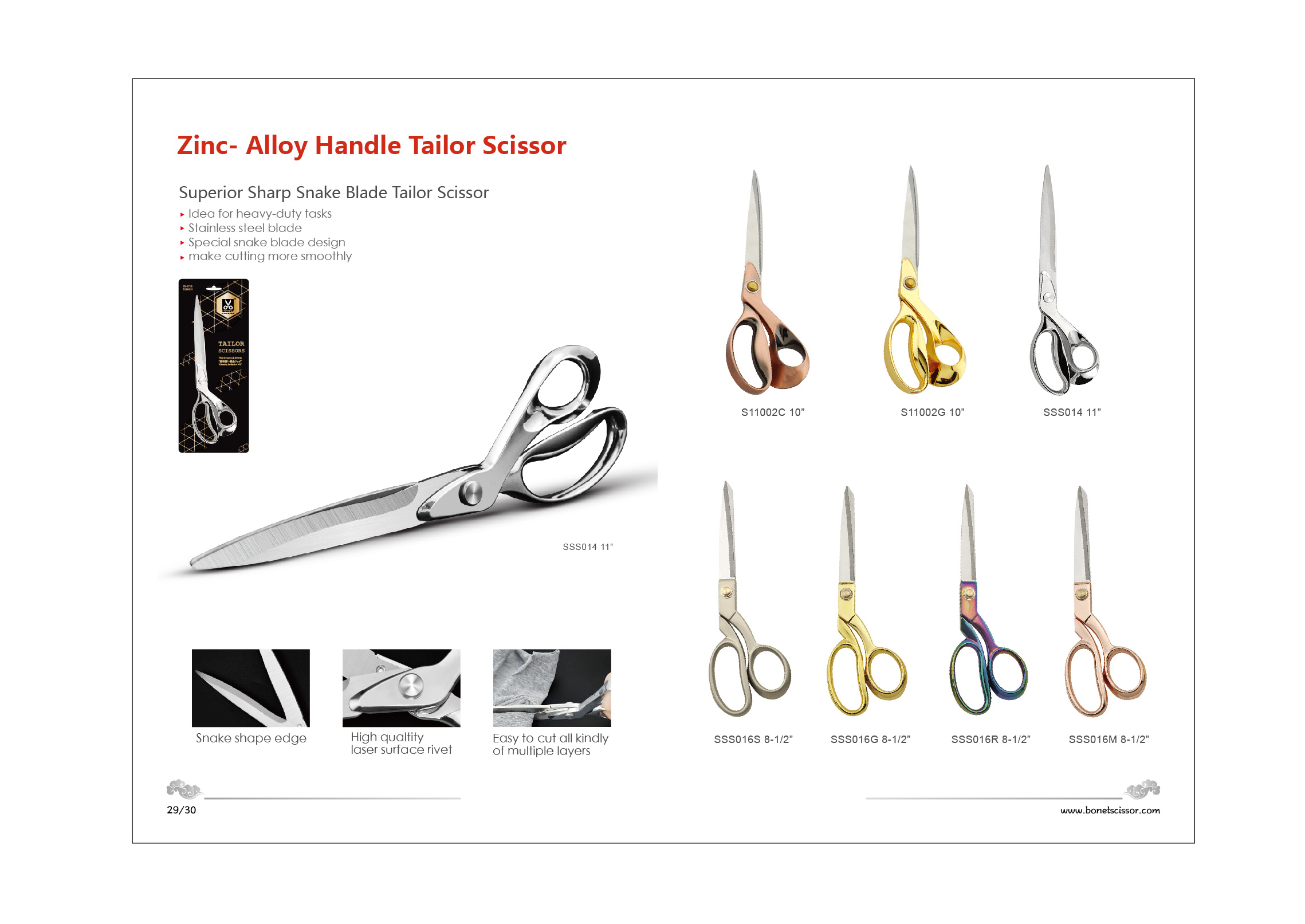
This guide focuses on specialty textile shears for professional and wholesale buyers, including the zinc-alloy handle tailor scissors shown above. The original product information describes stainless steel blades, a snake blade design intended to reduce friction, a zinc-alloy handle, and a laser surface rivet. It also notes several sizes and finishes, including an 11-inch silver model and 8-1/2 inch versions in copper, gold, black rainbow, and brass finishes. Use those details as a starting point, then verify commercial and technical requirements directly with the supplier before placing a bulk order.
Key Takeaways
- Textile shears should be evaluated by cutting performance, comfort, finish quality, pivot stability, and after-sales support.
- For B2B sourcing, ask manufacturers to confirm material details, packaging options, sample availability, lead time, and quality inspection standards.
- Specialty features such as a snake blade design or decorative finishes should be tested on real fabrics, not judged by photos alone.
- Wholesale buyers should request consistent labeling, carton information, and replacement or defect handling terms before ordering.
What Makes Specialty Textile Shears Different?
Textile shears are designed for long, controlled cuts through woven, knitted, or layered materials. Compared with general household scissors, a good pair of fabric shears should keep the lower blade steady on the cutting surface while the upper blade moves cleanly through the material. This helps reduce shifting, jagged edges, and hand fatigue.
Specialty textile shears may also include design choices that support specific users. A tailor may prefer longer blades for straight cuts on suiting fabric, while a craft retailer may stock medium sizes that suit hobby sewing. For the featured product, the available finishes can help retailers create a visually varied display, but function should still come first. A decorative surface is useful only if the blade alignment, handle comfort, and pivot control meet the buyer’s expectations.
How to Evaluate Textile Shear Manufacturers
When comparing textile shear manufacturers, look beyond the product photo. A dependable supplier should be able to answer practical questions about production consistency, inspection, packaging, and communication. Avoid assuming a material grade, hardness level, or certification unless it is provided in writing by the supplier.
For wholesale and OEM buyers, ask these questions early:
- Can the supplier provide samples from current production, not only showroom stock?
- What blade material, handle material, and surface finish are used, and can these details be documented?
- How is blade alignment checked before shipment?
- What packaging formats are available for retail, workshop, or distributor channels?
- Can the supplier support private labeling, and what artwork files or approvals are required?
- What is the normal lead time, and how does it change during peak seasons?
- How are defects, shortages, and mixed finish issues handled after delivery?
Comparison Checklist for Wholesale Buyers
The table below can be used when reviewing samples from several textile shear manufacturers. It is intentionally practical: each point can be checked by a buyer, merchandiser, or sample-room technician before a larger order is discussed.
| Selection factor | What to check | Why it matters |
|---|---|---|
| Blade action | Open and close the shears slowly; cut cotton, denim, lining, and layered scraps if relevant. | Shows whether the blades move smoothly and cut cleanly across different fabric weights. |
| Pivot and rivet | Check for wobble, uneven pressure, or loosening after repeated cuts. | A stable pivot helps maintain accuracy during regular professional use. |
| Handle comfort | Test grip size, pressure points, and balance during several minutes of cutting. | Comfort affects productivity, especially in studios and workshops. |
| Finish consistency | Compare samples in silver, copper, gold, black rainbow, brass, or other offered finishes. | Retailers need consistent appearance across a shipment. |
| Packaging | Review blister cards, boxes, labels, barcodes, or bulk packing options. | Packaging must match the sales channel and protect the product in transit. |
| Supplier documentation | Request written confirmation of materials, order terms, and inspection process. | Reduces misunderstandings before wholesale or OEM orders. |
Notes on the Zinc-Alloy Handle Tailor Scissors
The featured tailor scissors are described with a zinc-alloy handle and stainless steel blades. The original product information also highlights a snake blade design intended to reduce friction and support a smoother slicing motion through fabric. For professional users, these are meaningful claims to test during sample evaluation. Try cutting long straight lines, curved shapes, and small notches. Observe whether the fabric lifts, drags, or frays at the edge.
The product range includes an 11-inch silver option and 8-1/2 inch versions in several finishes, such as copper, gold, black rainbow, and brass. This size and finish variety may suit distributors serving both professional tailors and retail sewing customers. However, buyers should confirm the exact size list, finish availability, packing method, and any private label options before preparing a purchase plan.
Sourcing Guidance for OEM, Wholesale, and Retail Programs
For B2B buyers, the best sourcing process is structured. Start with a short supplier brief that explains the target market, expected use, order channel, and packaging needs. A factory or trading supplier can respond more accurately when they know whether the shears will be sold to professional tailors, craft stores, sewing schools, garment factories, or online consumers.
Before committing to volume, request samples in the exact sizes and finishes you intend to buy. If multiple finishes are important, inspect each one. A black rainbow finish, for example, may vary visually from piece to piece depending on production method; buyers should decide what level of variation is acceptable. If the shears will be sold under your brand, ask about logo placement, package printing, label content, and approval samples.
Do not rely only on verbal assurances. Ask the supplier to confirm order terms in writing, including product description, finish, quantity, packaging, shipment method, lead time, and inspection responsibilities. If you require a specific compliance document or market requirement, state it clearly and ask whether the supplier can provide appropriate documentation. Do not assume certification or test results unless they are supplied and verified.
Care and Handling Tips to Share with End Users
Even durable textile shears perform better when users handle them correctly. Retailers and distributors can reduce complaints by including simple care instructions with each sale.
- Use fabric shears only on textiles; paper, wire, and plastic can dull the cutting edge.
- Wipe blades after use, especially after cutting coated, adhesive, or dusty materials.
- Store shears closed and dry to protect the edge and finish.
- Avoid dropping shears, as impact can affect blade alignment or the pivot.
- If cutting becomes rough, consult a qualified sharpening service rather than forcing the blades.
Practical FAQ
What should I test first when comparing textile shear samples?
Start with blade smoothness and cutting accuracy. Cut several fabrics that match your real customers’ use, including thin lining, medium cotton, and heavier material if relevant. Check the full blade length, not just the tip.
Are decorative finishes suitable for professional users?
They can be, as long as the cutting performance, comfort, and durability meet expectations. Finishes such as copper, gold, black rainbow, and brass may support retail appeal, but samples should be tested for consistency and handling.
Can I assume all stainless steel blades have the same performance?
No. Stainless steel is a broad description. Ask the supplier for the exact material information they can provide, and evaluate the actual cutting performance through samples.
What should wholesale buyers ask before placing an order?
Ask about sample availability, confirmed sizes and finishes, packaging choices, lead time, inspection process, private label options, and how quality issues are resolved after shipment.
How can retailers position specialty textile shears responsibly?
Focus on practical benefits that can be demonstrated: clean cutting, comfortable handling, suitable sizes, and care guidance. Avoid unsupported claims about material grade, test results, or professional endorsements unless documented.
Final Thoughts
Finding the right textile shear manufacturers requires more than choosing the most attractive product image. The best sourcing decisions combine sample testing, clear specifications, realistic quality checks, and written supplier communication. The zinc-alloy handle tailor scissors shown here offer several useful starting points for evaluation, including stainless steel blades, a snake blade design, a laser surface rivet, and multiple size and finish options. For wholesalers, retailers, and OEM buyers, the next step is to verify details, test samples on real fabrics, and build a purchasing plan around the needs of the end user.
