




Top Vegetable Cutting Basket Manufacturer Insights
A vegetable cutting basket is a simple kitchenware item with a practical purpose: it helps users wash, drain and prepare vegetables with less mess. For importers, distributors, retailers and private-label kitchenware buyers, however, the product is not simple to source well. Small differences in plastic quality, drainage design, cutting surface stability, handle comfort and packaging can affect customer satisfaction and repeat orders.
This guide explains how to evaluate a vegetable cutting basket manufacturer or supplier with a sourcing mindset. It does not replace direct factory due diligence, but it gives buyers a structured way to compare options, ask better questions and reduce avoidable quality risks.
Key Takeaways
- Confirm the product design fits the target market: washing, draining, chopping and storage habits vary by customer group.
- Ask suppliers to document material, packaging, quality control and production details instead of relying only on catalog descriptions.
- Request samples and test them for stability, drainage, ease of cleaning and normal daily handling.
- Compare factories on communication, consistency and inspection process, not only on unit price.
What a Vegetable Cutting Basket Is Used For
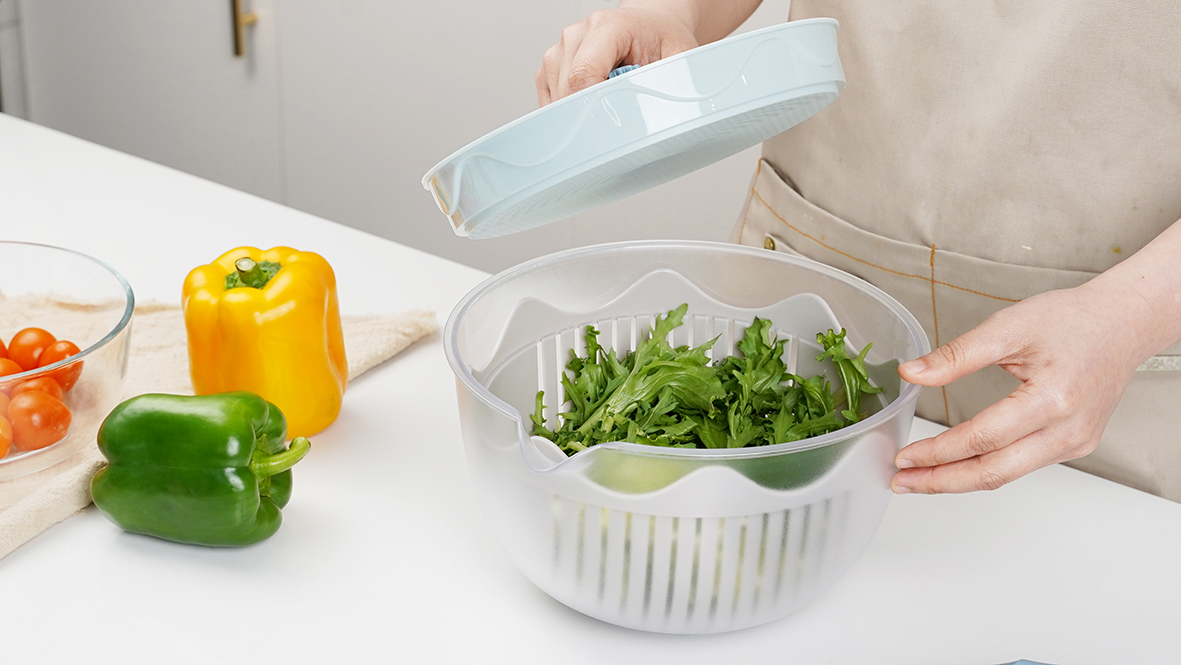
Most vegetable cutting baskets combine several food-preparation steps in one product. A typical design may include a basket or colander section for rinsing produce, drainage holes for water release, and a surface or lid that can assist with cutting or temporary food placement. Some designs are intended mainly for washing and draining, while others focus more on compact chopping and countertop use.
Before contacting a factory, define the intended retail positioning. Is the buyer sourcing for value retailers, supermarket promotions, e-commerce bundles, home organization brands or hospitality supply? The answer affects acceptable material feel, packaging, color options, carton strength and inspection expectations.
Design Features Buyers Should Review
The original product concept is based on convenience, but convenience must be verified in the sample. Buyers should review how the basket performs in real kitchen routines rather than judging only by product photos.
- Drainage performance: Check whether water drains quickly and whether small cut vegetables get trapped in the holes.
- Stability: A non-slip base or stable bottom can reduce movement during rinsing or light chopping. Ask whether this feature is included in the exact model being quoted.
- Handle comfort: Handles should be easy to grip when the basket is wet or filled with produce.
- Cleaning ease: Avoid designs with deep grooves that collect food residue unless they can be cleaned easily.
- Storage: Confirm whether the design nests, stacks or requires more shelf space than expected.
If the supplier describes the product as multifunctional, ask for photos or videos showing each function. Clear demonstration helps reduce misunderstanding between buyer and factory.
Material and Food-Contact Questions
The original article mentions sturdy, BPA-free plastics as a desirable sourcing point. Buyers should treat such terms as claims to verify for the specific order, not assumptions. Ask the supplier what material is used, whether the quoted model is BPA-free, and what documentation can be provided for the destination market.
Because food-contact requirements differ by country and sales channel, buyers should clarify which regulations or retailer standards apply before production. Do not rely on a generic product listing. A professional supplier should be able to explain available material information, colorant details, care instructions and any limitations such as temperature exposure or dishwasher suitability. If a claim is important for marketing, request written confirmation and supporting documentation before placing a bulk order.
Supplier Comparison Checklist
Price is important, but it is only one part of sourcing. The table below can help buyers compare vegetable cutting basket suppliers in a practical way.
| Evaluation Area | What to Check | Questions to Ask |
|---|---|---|
| Product sample | Finish, fit, drainage, stability and cleaning | Can you send a sample from current production or the same tooling? |
| Material | Plastic type, color consistency and food-contact suitability | What material is used, and what documentation is available? |
| Design options | Colors, packaging, logo placement and accessory parts | Which options are standard, and which require custom tooling or setup? |
| Quality control | Incoming material checks, in-process checks and final inspection | What defects are commonly inspected before shipment? |
| Packaging | Retail box, label, barcode, carton strength and drop risk | Can packaging be adjusted for e-commerce or wholesale distribution? |
| Commercial terms | MOQ, lead time, payment terms and sample cost | What terms apply to this exact model and order quantity? |
Inside a Vegetable Cutting Basket Factory
A reliable factory should be able to describe how the product moves from raw material preparation to molding, trimming, assembly if required, inspection and packing. Buyers do not need to know every technical detail, but they should understand where defects are most likely to occur. For plastic kitchenware, possible issues may include rough edges, warping, uneven color, weak handles, poor lid fit or drainage holes with burrs.
When discussing production, avoid accepting vague phrases such as high quality without evidence. Ask how the factory checks dimensions, appearance and function. If third-party inspection is part of the buyer process, confirm whether the supplier allows it and at what production stage. Also ask how nonconforming goods are handled. A supplier that communicates openly about quality control is usually easier to manage than one that only provides polished catalog images.
OEM, Wholesale and Private-Label Considerations
For OEM or private-label orders, confirm what can be customized without changing tooling. Common customization requests may include color, logo, label, instruction sheet and retail packaging. More complex changes, such as altering drainage patterns, handle shape or basket dimensions, may require tooling discussion, longer development time and additional cost. These details should be agreed in writing before sample approval.
Wholesale buyers should also consider carton configuration and shelf presentation. A product that looks attractive as a single sample may create problems if it scratches during transport, wastes carton space or arrives without clear use instructions. Ask the supplier for packed-carton photos, gross weight, carton dimensions and loading information if needed for freight planning.
Sample Testing Before Bulk Orders
Sample review should be practical and repeatable. Wash leafy greens, rinse heavier vegetables, drain water, hold the filled basket by the handle and clean it after use. Place it on a wet countertop to check movement. If a cutting surface is included, test normal light preparation and inspect whether the surface marks easily or becomes unstable.
- Inspect the sample visually under good light for sharp edges or surface defects.
- Wash and drain different produce sizes to evaluate hole spacing.
- Check grip comfort when the basket is wet.
- Clean the product and look for trapped residue.
- Compare the approved sample with the pre-shipment goods during inspection.
Practical FAQ
What should I ask a vegetable cutting basket manufacturer first?
Start with the exact model, material, available colors, packaging options, MOQ, lead time and sample availability. Then ask what quality checks are used for that product.
Can I claim the basket is BPA-free?
Only if the supplier confirms that the specific product and material are BPA-free and provides documentation suitable for your market and sales channel.
Is the lowest-priced supplier a good choice?
Not always. A low quote may exclude packaging, inspection support, customization or consistent material quality. Compare the full offer, not only the unit price.
How many samples should I test?
For serious sourcing, request more than one sample when possible, especially before a large order. Multiple samples help reveal consistency issues that a single sample may hide.
What details should be written into the purchase order?
Include model, material, color, packaging, labeling, approved sample reference, inspection criteria, quantity, delivery terms and any agreed documentation requirements.
Final Sourcing Advice
Choosing a vegetable cutting basket manufacturer is about matching product function with reliable production and clear communication. A good supplier should help buyers understand the product, verify claims and prepare for bulk shipment without making unsupported promises. By testing samples carefully, asking direct questions and documenting requirements, buyers can source a practical kitchenware item that meets customer expectations and reduces after-sales problems.
