




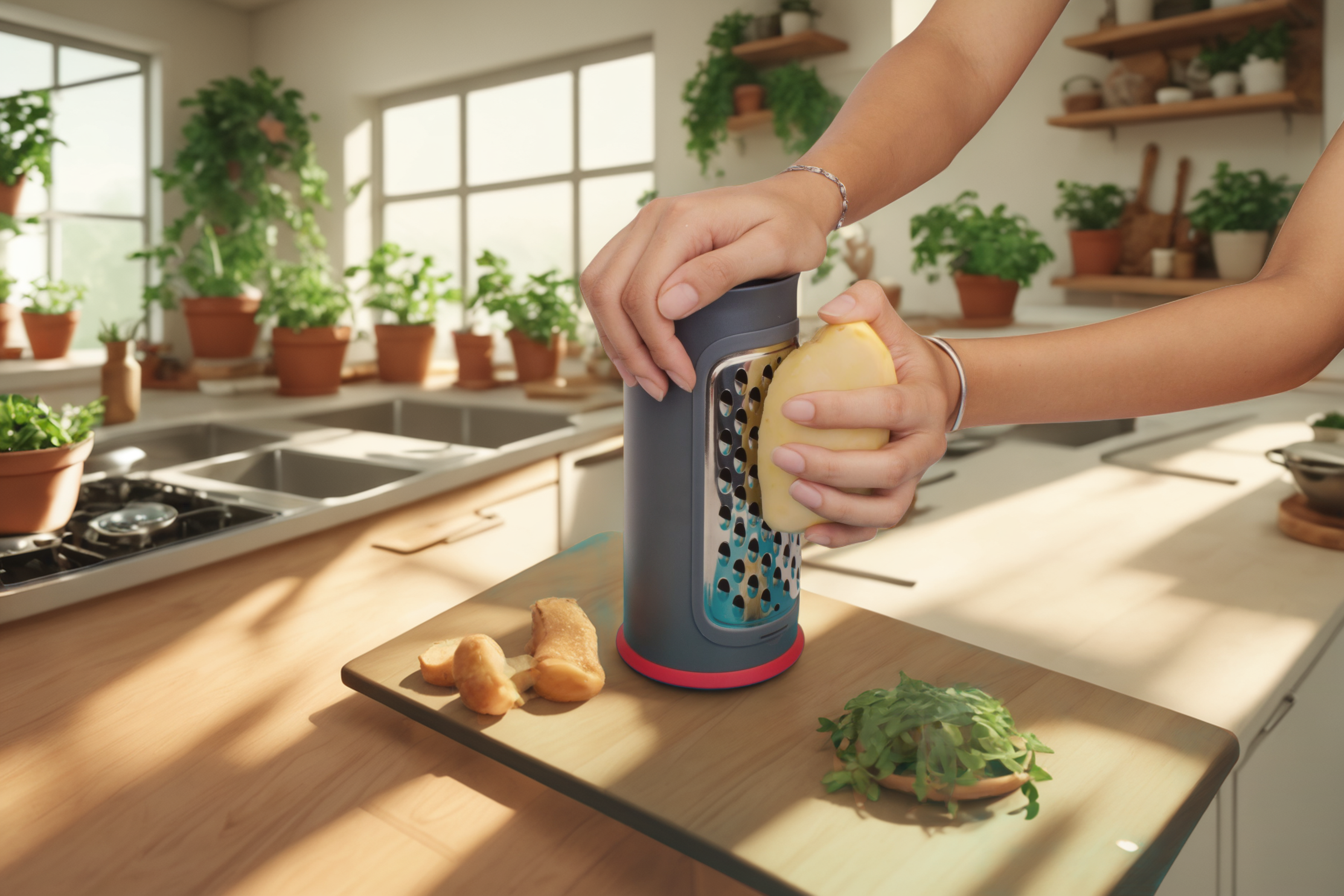
Multifunctional Cylinder Grater: Practical Buying and Use Guide
A good grater is one of the simplest tools in the kitchen, but the right design can make daily food preparation faster, cleaner, and more comfortable. The multifunctional cylinder grater is designed around a vertical, cylindrical form rather than the flat shape of a traditional hand grater. This makes it useful for common prep tasks such as shredding potatoes, grating ginger, and preparing garlic for sauces, stir-fries, marinades, and breakfast dishes.
This guide explains what to look for when choosing a cylinder grater, how to use it safely, how it compares with other grater styles, and how to clean and store it for regular use. It focuses on practical product-selection and use-and-care advice instead of vague claims.
Key Takeaways
- A cylindrical grater can provide controlled vertical pressure and help grated ingredients collect neatly at the bottom.
- Look for a stable base, comfortable grip area, and a stainless steel grating surface with clean perforations.
- It is especially practical for potatoes, ginger, garlic, and other ingredients that need quick preparation in small to medium quantities.
- Cleaning immediately after use helps prevent food from drying inside the perforations.
What Makes a Cylinder Grater Different?
A cylinder grater uses a compact upright body instead of a long flat surface. The original product description highlights a cylindrical form, an ergonomic feel in the hand, a stainless steel grating surface, precision-style perforations, and a red non-slip base. These details matter because grating is a repetitive task: a tool that stays steady and feels controlled can reduce frustration during prep.
The vertical design can also help reduce scattered food. As ingredients are grated, they can fall downward and collect near the bottom, making transfer to a bowl, pan, or cutting mat easier. This is helpful when preparing ingredients such as shredded potato for hash browns, ginger for stir-fry, or garlic for seasoning pastes.
Best Uses in Everyday Cooking
A multifunctional kitchen grater is most valuable when it fits common routines. For breakfast, it can help prepare potato shreds for pancakes or hash browns. For lunch and dinner, it can be used for aromatics such as ginger and garlic. In home kitchens where counter space is limited, a compact grater can be easier to store than larger box graters or electric appliances.
For best results, match the ingredient to the task. Firm potatoes are easier to grate when peeled or scrubbed and cut into pieces that are comfortable to hold. Ginger works best when washed and trimmed; peeling is optional depending on the recipe and texture preference. Garlic should be peeled first, and small cloves should be handled carefully to keep fingers away from the grating surface.
Buying Checklist: What to Compare Before Choosing
Not every grater with a modern shape performs the same way. Before purchasing a cylinder grater, compare the physical details that affect daily use. If buying online, review product photos closely and ask the seller for missing information rather than assuming specifications.
| Feature to Check | Why It Matters | Questions to Ask |
|---|---|---|
| Grating surface | Stainless steel is stated for this product type and is commonly chosen for kitchen cutting surfaces. | What material is the grating surface? How should it be cleaned? |
| Perforation pattern | The size and sharpness of holes affect whether food is finely grated or roughly shredded. | Is it intended for fine grating, shredding, or mixed tasks? |
| Base stability | A red non-slip base is noted in the source and can help keep the tool steady on a countertop. | What surfaces does the base grip best? Is it removable? |
| Body shape | A compact cylindrical form can support vertical pressure and easier storage. | Is the body comfortable for different hand sizes? |
| Cleaning access | Food can remain in holes or at the bottom if not rinsed promptly. | Are there cleaning instructions or brush recommendations? |
How to Use a Cylinder Grater Safely
Although a grater is a basic kitchen tool, safe technique is important. Place the grater on a clean, dry, flat surface so the non-slip base can work properly. Hold the tool securely and move the ingredient with steady pressure rather than forcing it. If the ingredient becomes too small to hold safely, stop and use the remaining piece in another way, such as mincing it with a knife.
- Wash the grater before first use and after each use.
- Prepare ingredients into manageable pieces before grating.
- Keep fingers and knuckles away from the perforated surface.
- Use even strokes and avoid twisting the tool aggressively.
- Transfer grated food promptly to reduce moisture buildup.
For wet ingredients such as potato, consider grating over a bowl or cutting mat and draining excess liquid if the recipe requires it. For ginger and garlic, scrape collected food from the bottom area with a spoon or spatula rather than with your fingers.
Cleaning and Storage Tips
The easiest time to clean a grater is immediately after use. Starchy potato, fibrous ginger, and sticky garlic can dry into the perforations if left too long. Rinse the grating surface under running water, brushing from the back side when possible to push food particles out rather than deeper into the holes. Use mild dish soap and a soft brush or sponge; avoid pressing fingertips directly against the cutting surface.
After washing, let the grater dry fully before storage. Moisture trapped at the base or inside the lower collection area can cause odors or residue. Store it upright in a utensil holder or in a drawer where the grating surface will not rub against softer tools. If the grater has a non-slip base, keep it away from sharp objects that could damage the contact surface.
Cylinder Grater vs. Flat and Box Graters
A flat grater is lightweight and often easy to rinse, but it can scatter food if used without a bowl. A box grater offers multiple grating surfaces and is suitable for larger quantities, but it takes more storage space. A cylinder grater sits between these options: compact, controlled, and practical for frequent small to medium prep tasks.
If you regularly shred large amounts of cabbage, cheese, or vegetables for batch cooking, a larger tool may still be more efficient. If your usual tasks involve aromatics, potatoes, and quick meal prep, the cylinder design can be a convenient everyday choice. The best option depends on what you cook most often, how much counter space you have, and how easy the tool is to clean after real use.
Practical FAQ
Can a cylinder grater be used for potatoes?
Yes. The original product description specifically mentions firm potatoes. For better control, cut large potatoes into pieces that are easy to hold and grate with steady pressure.
Is it suitable for ginger and garlic?
Yes. Ginger and garlic are both mentioned as suitable ingredients. Because they are small or fibrous, work carefully and stop before the piece becomes too small to grip safely.
Does the vertical shape reduce mess?
The vertical design can help grated ingredients collect near the bottom instead of spreading across the countertop. For very wet ingredients, use a bowl or cutting mat to catch liquid.
What should I ask before buying?
Ask about the grating surface material, cleaning instructions, base design, dimensions, and whether the tool is intended for fine grating, shredding, or general kitchen prep.
How should I maintain the non-slip base?
Keep the base clean and dry before use. Wash away oil or food residue, and avoid storing it against knives or sharp tools that could damage the gripping surface.
