




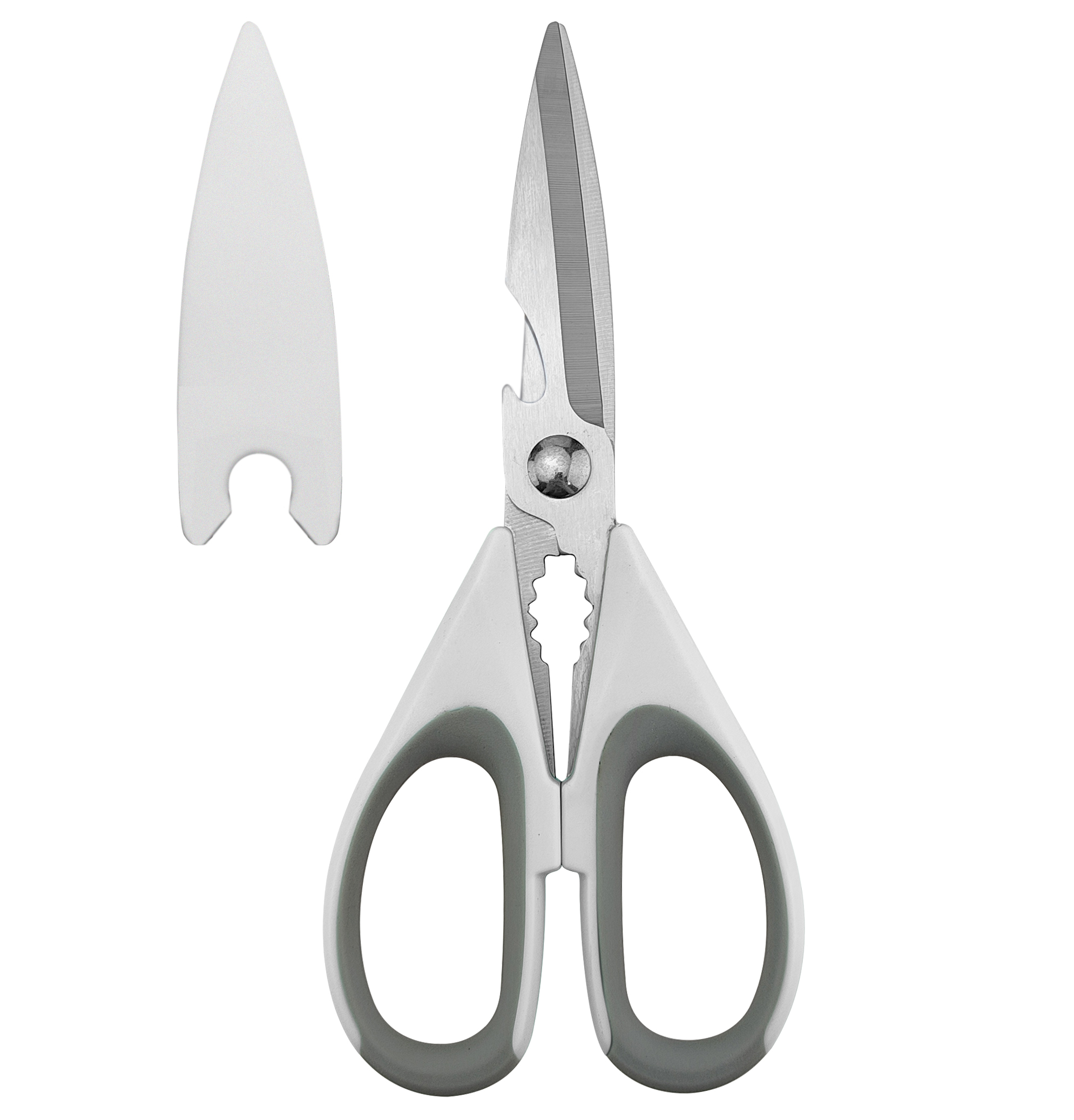
Transform Your Kitchen Tasks with Premium Kitchen Scissors
Why Kitchen Scissors Deserve a Place in Daily Prep
Kitchen scissors, often called kitchen shears, are one of the most practical tools for everyday food preparation. A good pair can handle many small cutting jobs more safely and efficiently than a knife, especially when you are trimming herbs, portioning cooked food, opening packaging, or cutting poultry into smaller pieces. For home cooks, the right scissors reduce mess and speed up repetitive tasks. For small food businesses, catering teams, or retail buyers evaluating kitchen tools, they are also an important item because customers expect comfort, durability, and easy cleaning.
The original appeal of premium kitchen scissors is versatility: one compact tool can cut, grip, crack, and open. However, not every pair is suitable for every task. The best choice depends on blade design, handle comfort, cleaning method, storage protection, and any added functions such as a nutcracker, jar-lid grip, or bottle opener.
Key Takeaways
- Premium kitchen scissors should be chosen by task, not just appearance.
- Look closely at blade sharpness, handle grip, hinge strength, and cleaning access.
- Integrated tools can save drawer space, but only if they match your real kitchen habits.
- Dishwasher-safe claims should be checked against the supplier’s care instructions.
- Safe storage, drying, and regular inspection help extend useful life.
Common Kitchen Scissor Tasks
A dependable pair of kitchen scissors can simplify both raw and cooked ingredient preparation. They are useful for snipping fresh herbs directly over a pan, cutting spring onions, trimming fat, portioning bacon, opening food pouches, shaping parchment, and cutting pizza, noodles, or flatbreads. Heavier-duty models may also be used for poultry joints or shells, depending on their blade thickness and hinge strength.
Some multi-purpose designs include a toothed area between the handles that works as a nutcracker or gripping surface. Others pair the scissors with a protective sheath that may include a bottle opener. These extras can be helpful in compact kitchens, but they should not distract from the main requirement: clean, controlled cutting. If the blades flex too much, the handles pinch, or the hinge feels loose, extra features will not compensate.
What to Compare Before Buying
When comparing kitchen scissors, focus on features that affect performance and hygiene. Stainless steel blades are common in quality kitchen scissors because they support sharp cutting and resist typical kitchen moisture when cared for correctly. Even so, buyers should ask the supplier what material is used, how the hinge is assembled, and what cleaning method is recommended. Do not assume that all scissors are dishwasher-safe or suitable for cutting bones unless the product instructions clearly state so.
| Feature to Check | Why It Matters | Questions to Ask |
|---|---|---|
| Blade design | Sharp, well-aligned blades reduce tearing and slipping. | Are the blades straight, serrated, or mixed? What tasks are they intended for? |
| Handle grip | Non-slip, ergonomic handles improve control, especially with wet hands. | Is the handle comfortable for different hand sizes? Does it pinch under pressure? |
| Hinge construction | A stable hinge supports clean cutting and long-term reliability. | Is the hinge fixed, adjustable, or detachable for cleaning? |
| Integrated tools | Nutcracker, jar grip, or bottle opener functions may reduce tool clutter. | Are these features tested for the intended use, and where are they located? |
| Cleaning guidance | Food residue can collect near the pivot and handle joints. | Is hand washing recommended? Are they dishwasher-safe according to the supplier? |
| Storage protection | A sheath helps protect hands, blades, and drawer contents. | Is a safety cover included, and does it fit securely? |
How to Use Kitchen Scissors Safely
Kitchen scissors are easy to use, but they still require care. Always cut on a stable surface when working with firm foods, and keep fingers clear of the blade path. For slippery items such as poultry skin or herbs just washed under water, dry the ingredient or grip it with a towel before cutting. If the scissors struggle, stop and switch to a stronger tool instead of forcing the handles closed.
- Use the right scissors for the task; do not use light household scissors for tough food prep.
- Keep raw meat, seafood, and ready-to-eat foods separate to avoid cross-contamination.
- Cut away from your hand and body whenever possible.
- Do not twist the blades sideways while cutting hard items.
- Store the scissors in a sheath, block, or dedicated drawer area after cleaning.
Cleaning and Care Tips
Cleaning is especially important because food particles can collect at the hinge. After use, rinse the scissors promptly, wash with warm water and mild detergent, and scrub around the pivot area. If the model comes apart for cleaning, follow the manufacturer’s instructions for separating and reassembling the blades. Dry thoroughly before storage to help preserve the blade finish and reduce odors.
If the supplier states that the scissors are dishwasher-safe, place them securely so they do not strike other utensils during the wash cycle. Even when dishwasher cleaning is allowed, occasional hand washing and immediate drying are good habits. For scissors with a sheath, clean the sheath too, especially if it has been in contact with moisture or food residue.
When Extra Features Are Worth It
Multi-purpose kitchen scissors can include a nutcracker area between the handles, a jar-lid grip, a bottle opener, or a protective cover with an added opener. These features are useful when they are sturdy, easy to clean, and positioned where they will not interfere with cutting. They are less useful if they make the scissors bulky or harder to control.
For a small kitchen, a compact multi-tool design may save space. For frequent poultry preparation, blade strength and hinge stability should matter more than the number of added functions. For gifting or retail selection, neutral colors such as gray and white can fit many kitchen styles, but comfort and cutting quality should remain the priority.
Guidance for Retail and Wholesale Buyers
If you are sourcing kitchen scissors for resale, private label, promotional sets, or hospitality use, request clear product information before placing an order. Ask about blade material, handle material, packaging options, care instructions, whether a sheath is included, and what functions are supported by the design. If you need OEM branding, confirm print or packaging options, lead times, sample availability, and quality inspection procedures directly with the supplier.
Avoid relying only on product photos. Samples should be checked for blade alignment, handle comfort, hinge movement, cutting smoothness, and ease of cleaning. If the product will be marketed for food contact, import, or professional use, ask the supplier what documentation is available for your market and verify requirements with qualified compliance support.
FAQ
Are kitchen scissors better than a knife?
They are better for some jobs, such as snipping herbs, cutting packaging, trimming small pieces of meat, or portioning cooked foods. A knife is still better for chopping, slicing, and precision cuts on a board.
Can kitchen scissors cut poultry?
Some heavier kitchen shears are designed for poultry, while lighter scissors are not. Check the product instructions before cutting bones or joints, and do not force the blades if resistance is too high.
Should kitchen scissors go in the dishwasher?
Only if the supplier or care label says they are dishwasher-safe. Hand washing and thorough drying are generally safer for preserving blade performance and keeping the hinge clean.
What is the purpose of the notch between the handles?
On many multi-purpose designs, the toothed or curved area between the handles is used as a nutcracker or gripping tool for lids and shells. Use it only for suitable tasks and clean it after use.
How do I store kitchen scissors safely?
Use a protective sheath, utensil organizer, magnetic strip rated for the tool, or a dedicated drawer section. Keep the blades closed and away from loose hands reaching into the drawer.
