




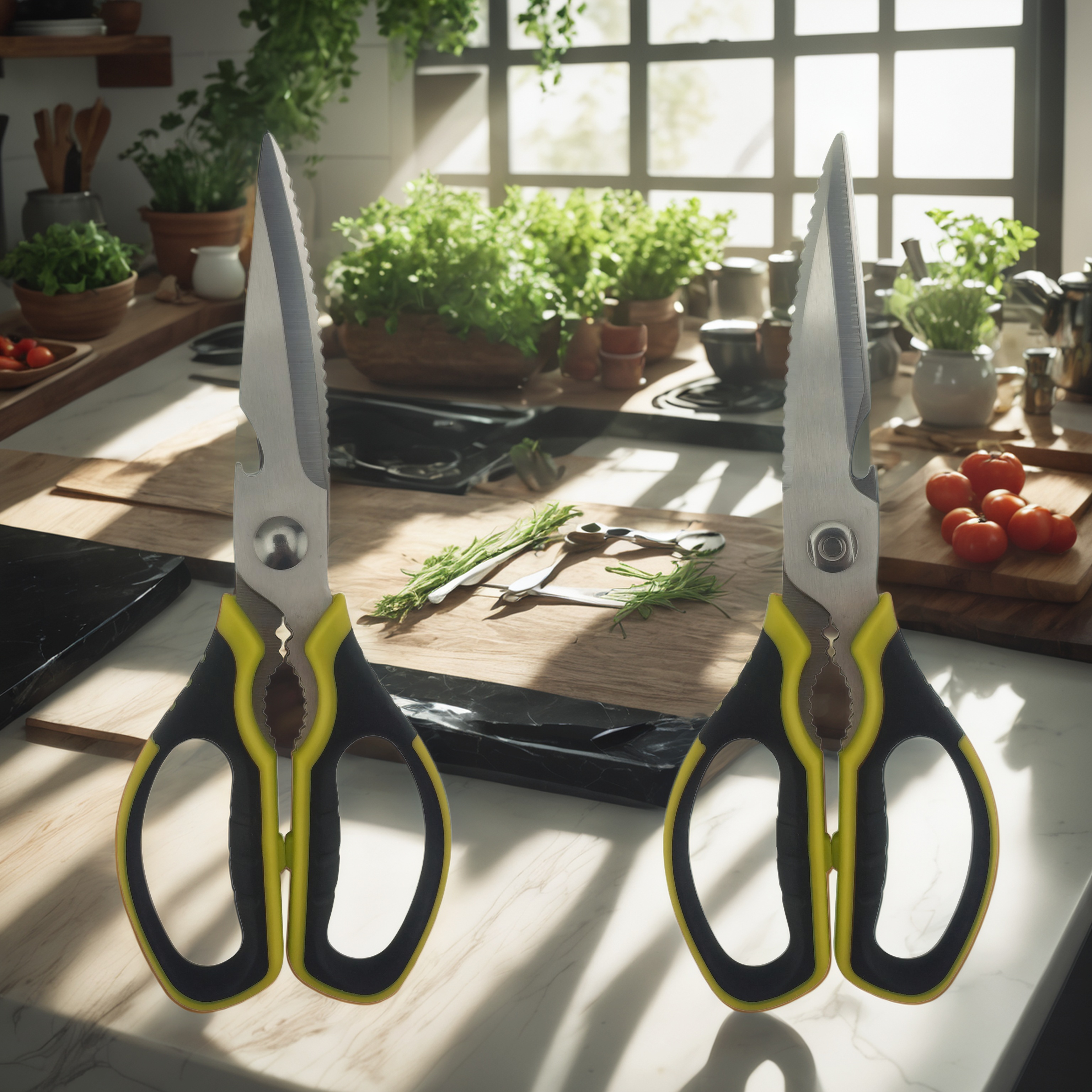
Multi-Functional Kitchen Scissors: Practical Sourcing Guide for Buyers
Multi-functional kitchen scissors are no longer a simple backup tool kept in a drawer. For home cooks, they can cut herbs, trim vegetables, open food packaging, and help prepare meat or fish. For retailers, importers, and private-label brands, they are also a product category where comfort, blade performance, packaging, and supplier reliability all affect repeat purchases.
The original article highlighted the SKI101 model, the role of stainless steel blades, a serrated edge, a bone-cutting notch, ergonomic handles, and integrated functions such as a bottle opener or nutcracker. Those are useful starting points, but buyers need a more structured way to evaluate whether a kitchen scissors product is suitable for their market, price tier, and brand promise.

Key Takeaways
- Multi-functional kitchen scissors should be assessed by cutting performance, comfort, safety, cleaning convenience, and packaging suitability.
- Stainless steel blades, a serrated edge, a bone-cutting notch, and ergonomic handles are explicit features to confirm during product review.
- For OEM kitchen scissors, buyers should ask suppliers about material options, sample policy, packaging choices, branding methods, and quality inspection steps.
- Do not rely only on appearance; request samples and test the scissors on realistic kitchen tasks before bulk purchasing.
What Multi-Functional Kitchen Scissors Are Used For
A practical pair of kitchen scissors can reduce the need to switch between knives, cutting boards, and small tools during food preparation. Typical uses include snipping herbs, cutting leafy vegetables, trimming fat, opening food packaging, cutting cooked foods into smaller portions, and preparing poultry or fish when the blade design is suitable for that task.
For consumer-facing products, the value is convenience and control. For B2B buyers, the value is broader: a single SKU can appeal to home cooks, gift buyers, supermarkets, kitchenware stores, online retailers, and private-label assortments. However, that broad appeal only works when the product performs reliably in everyday scenarios.
Core Features to Evaluate Before Buying
The source article describes blades made from premium stainless steel, but buyers should still ask the supplier to confirm the exact material option available for the model being quoted. Stainless steel is widely used for kitchen cutting tools because it is suitable for wet kitchen environments, but performance depends on blade geometry, heat treatment, edge finishing, and overall assembly quality.
A serrated edge can help grip slippery foods, while a bone-cutting notch may support tougher preparation tasks. These features should be checked directly on samples. If the scissors are marketed for poultry or fish preparation, the hinge strength, blade thickness, and handle stability become especially important. If they are marketed mainly for light kitchen use, ease of opening, grip comfort, and simple cleaning may matter more.
Comparison Checklist for Product Selection
| Evaluation Point | Why It Matters | Questions to Ask a Supplier |
|---|---|---|
| Blade material | Affects edge life, corrosion resistance, and perceived quality. | What stainless steel option is used for this model, and can it be changed for OEM orders? |
| Cutting edge design | Straight, serrated, or notched designs suit different tasks. | Does the sample include a serrated edge and bone-cutting notch as shown? |
| Handle comfort | Comfort affects user satisfaction during repetitive cutting. | What handle materials, colors, and grip textures are available? |
| Integrated tools | Functions such as bottle opener or nutcracker add convenience but must be durable. | Which extra functions are included in the quoted model? |
| Cleaning method | Food-contact tools must be easy to clean after use. | Can the scissors be separated for cleaning, or are they fixed at the pivot? |
| Packaging | Retail presentation affects shelf appeal and shipping protection. | What packaging formats are available for wholesale or private label? |
OEM and Wholesale Sourcing Considerations
When sourcing OEM kitchen scissors, buyers should move beyond a photo-based quotation. Product images are useful for early screening, but they do not show the smoothness of the hinge, the sharpness of the edge, the comfort of the handle, or how the scissors feel after repeated cutting.
A specialist scissors supplier or Yangjiang scissors manufacturer may be able to support different handle colors, logo placement, packaging formats, and product combinations. Still, buyers should not assume any capability without written confirmation. Ask whether the supplier can provide pre-production samples, artwork templates, packing specifications, and inspection standards before placing a bulk order.
Important commercial details such as minimum order quantity, lead time, sample cost, payment terms, carton packing, and available compliance documentation should be confirmed directly with the supplier. These details vary by model, customization level, order size, and destination market.
Quality Checks Buyers Should Perform
Before confirming a bulk order, test samples in a way that reflects real consumer use. Cut herbs, food packaging, vegetable stems, and poultry skin if those tasks match the product positioning. Check whether the blades cut cleanly from base to tip, whether the handles remain comfortable, and whether the pivot feels stable without excessive looseness.
- Inspect the surface finish for burrs, stains, uneven polishing, or sharp handle edges.
- Open and close the scissors repeatedly to check smoothness and alignment.
- Test cutting performance on both light and firmer kitchen materials.
- Wash and dry the sample to observe whether cleaning is convenient.
- Review packaging strength, barcode placement, warning text, and brand presentation.
If the product includes a bottle opener, nutcracker, or other integrated function, test each function separately. Added functions are only useful when they feel stable and do not compromise the main cutting performance.
Use and Care Guidance for End Customers
Retailers and brands should provide simple care instructions with multi-functional kitchen scissors. Clear guidance can reduce misuse and improve customer satisfaction. End users should wash the scissors after contact with raw food, dry them promptly, and store them safely away from children. They should avoid using kitchen scissors on materials outside the intended kitchen tasks, such as wire, hard plastic, or non-food items that may damage the cutting edge.
If the scissors are not designed to separate at the pivot, cleaning around the joint becomes especially important. If they do separate, packaging or instructions should explain how to reassemble them correctly. This kind of practical information helps consumers use the product properly and reduces avoidable complaints.
FAQ
Are multi-functional kitchen scissors suitable for poultry?
Some models include a bone-cutting notch and are designed for tougher kitchen preparation, but buyers should confirm the intended use with the supplier and test samples before marketing them for poultry tasks.
Can these scissors be customized for private label orders?
OEM options may include logo, handle color, packaging, or product set configuration, depending on the supplier and model. Ask for artwork requirements, samples, and written confirmation of available customization.
What should importers ask before placing a wholesale order?
Ask about blade material, handle material, sample availability, MOQ, lead time, packing details, inspection process, labeling support, and any documentation needed for the destination market.
Is a serrated edge necessary?
A serrated edge can improve grip on slippery foods, but it is not the only quality factor. Blade alignment, sharpness, handle comfort, and pivot stability are also important.
How should retailers position this product?
Position it as a practical kitchen cutting tool for everyday food preparation. Avoid exaggerated claims, and focus on clear functions such as herb cutting, package opening, trimming, and other tasks supported by the actual product design.
Final Buying Advice
Multi-functional kitchen scissors can be a strong product for kitchenware assortments when the design is practical and the supplier communication is clear. Buyers should preserve the useful selling points, such as stainless steel blades, serrated cutting support, a bone-cutting notch, ergonomic handles, and integrated tools, while verifying every detail through samples and written specifications.
For B2B sourcing, the best approach is straightforward: define the target customer, request samples, test realistic use cases, confirm customization options, and clarify all commercial details before mass production. That process helps turn a versatile kitchen tool into a dependable product for retail, wholesale, or OEM programs.
