




Two-Purpose Scissors: Practical Guidance for Kitchen and Craft Use
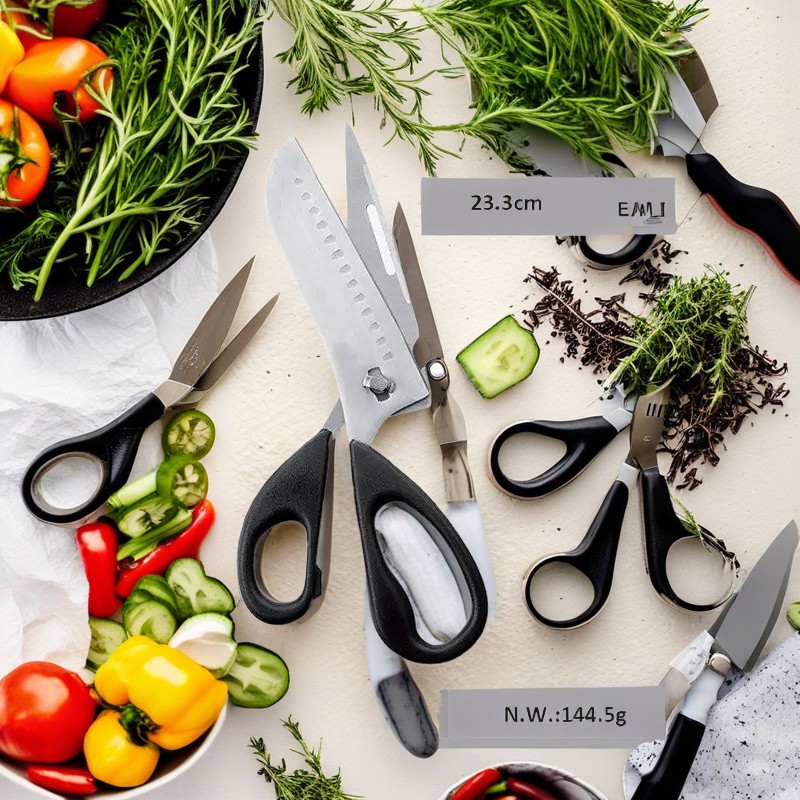
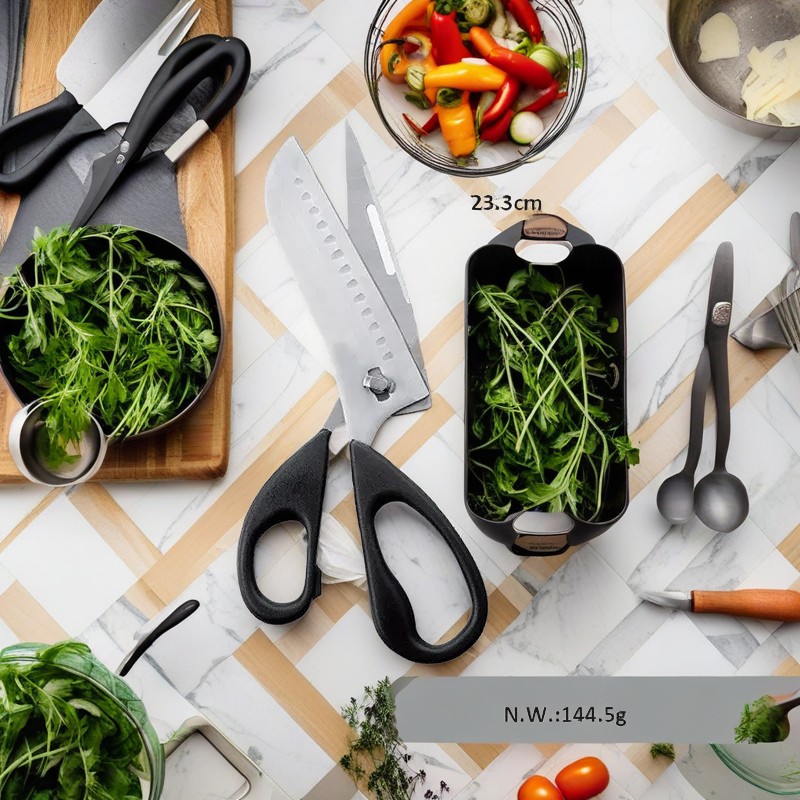
Two-purpose scissors are designed for households that want one reliable cutting tool for more than a single job. The 23.3cm stainless steel multi-function kitchen scissors shown here combine kitchen preparation, packaging tasks, and light craft use in one compact tool. They are not a replacement for every knife, pruning shear, or workshop cutter, but they can reduce the number of tools you reach for during everyday tasks.
The key is understanding what this type of tool does well, where it has limits, and how to care for it. For buyers comparing multipurpose scissors, useful selection points include blade design, grip comfort, cleaning method, weight, and integrated functions such as a bottle opener, nutcracker, or fish scale scraper.
Key Takeaways
- Two-purpose scissors are best for routine kitchen cutting, food preparation, packaging, and light craft tasks.
- This model is described as 23.3cm long and 144.5g, with stainless steel blades and a black handle.
- The blade design includes smooth and serrated cutting edges for different materials.
- Integrated functions mentioned in the original product description include a bottle opener, nutcracker, and fish scale scraper.
- Good results depend on matching the tool to the task and cleaning it promptly after food use.
What Makes Two-Purpose Scissors Different?
Standard household scissors are often designed for paper, tape, thread, or light packaging. Kitchen scissors, by contrast, need to handle wet foods, herbs, poultry trimming, and sometimes tougher packaging. Two-purpose scissors sit between these categories. They are intended to be useful in both kitchen and non-kitchen situations without requiring a dedicated tool for every small job.
The original product description highlights stainless steel blades with both a smooth edge and a serrated edge. This matters because a smooth edge gives cleaner cuts on herbs, soft vegetables, paper, and thin materials, while a serrated edge can help grip slippery or tougher surfaces. For example, a serrated section can be useful when cutting through thick food packaging or trimming meat where a smooth blade might slide.
Kitchen Uses: Food Prep, Packaging, and Small Jobs
In the kitchen, scissors can be faster and safer than a knife for certain tasks. They are especially convenient when you need short, controlled cuts rather than long slicing motions. Common kitchen uses include snipping herbs, cutting leafy greens, opening sealed bags, trimming fat from meat, and portioning some cooked foods.
The product description also mentions use for poultry bones and fish scale scraping. For these jobs, use judgment. Small bones or cartilage may be manageable, but very hard bones can damage many household scissors or create a safety risk. If you regularly process poultry, fish, or meat in large quantities, ask the supplier what tasks the scissors are designed to withstand and whether there are care limitations.
Craft and Household Uses Beyond the Kitchen
Two-purpose scissors are also useful outside food preparation. They can help open cardboard mailers, trim plastic packaging, cut twine, prepare school project materials, or trim flower stems. The stainless steel blade and sturdy design described in the original article make the tool more capable than lightweight stationery scissors for some household jobs.
However, it is best to separate food and non-food use when hygiene matters. If you use the scissors for craft glue, tape, garden materials, or plastic packaging, clean them carefully before returning them to food prep. For households that do frequent crafts, keeping one pair for kitchen use and another pair for utility tasks may be more practical.
Feature Checklist: What to Compare Before Buying
Not all multi-function scissors are the same. Use the checklist below to compare options and confirm details before purchasing, especially if you are buying for a shared kitchen, catering setup, retail shelf, or household gift set.
| Feature | Why It Matters | What to Check |
|---|---|---|
| Blade material | Affects cutting feel, cleaning, and durability | Confirm the stainless steel type if that detail is important to you |
| Blade edges | Smooth and serrated edges handle different tasks | Check whether both edge styles are included |
| Length and weight | Influences comfort and control | This model is described as 23.3cm and 144.5g |
| Handle design | Comfort matters during repeated cutting | Look for a secure grip and comfortable finger openings |
| Integrated tools | Can reduce the need for separate small tools | Confirm bottle opener, nutcracker, or scale scraper functions |
| Cleaning method | Important after cutting meat, fish, or sticky packaging | Follow supplier cleaning instructions and ask about dishwasher suitability |
How to Use Two-Purpose Scissors Safely
Because two-purpose scissors handle varied materials, safe use begins with choosing the right task. Use scissors for controlled cuts, not twisting, prying, or forcing through hard objects. If the material does not cut with steady pressure, stop and switch to a more suitable tool.
- Keep fingers clear of the blade path and cut away from your body.
- Use short cuts for slippery foods instead of trying to cut too much at once.
- Do not use kitchen scissors on electrical wire, metal, or very hard plastic unless the supplier confirms suitability.
- Wash the scissors after contact with raw meat, poultry, or fish.
- Dry thoroughly before storage to help preserve the blade and hinge area.
Cleaning and Maintenance Tips
The original article describes the scissors as durable, easy to maintain, rust-resistant, and dishwasher-safe. Even so, many cutting tools last longer when they are rinsed promptly, washed with mild detergent, and dried completely. Food particles can collect near the hinge or integrated tool areas, so inspect those points after use.
If you notice sticky residue from tape or packaging, remove it before the next food-use task. Avoid soaking scissors for long periods, and do not store them while wet. If the hinge becomes stiff, check the supplier’s care guidance before applying oil, especially if the scissors are used for food preparation.
When One Pair Is Enough—and When It Is Not
A two-purpose tool is most valuable when it handles frequent small jobs. For many homes, one pair can cover herb cutting, food packaging, trimming, bottle opening, and occasional craft use. The advantage is convenience: you spend less time switching between tools and more time completing the task.
Still, one tool should not be expected to do everything. Heavy butchery, thick cardboard production work, garden pruning, or detailed craft cutting may call for specialized equipment. If you buy for a business, school, cooking class, or retail program, ask the supplier about intended use, replacement parts, packaging options, and any documentation needed for your market rather than assuming all multi-function scissors meet the same requirements.
Practical FAQ
Can these scissors be used for both food and crafts?
Yes, they are described for kitchen and craft applications. For hygiene, clean them thoroughly between non-food and food tasks, or keep separate pairs if they are used often for glue, tape, or outdoor materials.
What does the serrated edge do?
A serrated edge helps grip tougher or slippery surfaces. It can be useful for packaging, some meat trimming, and materials that may slide under a smooth blade.
Are they suitable for cutting bones?
The original description mentions poultry bones, but users should be cautious. Small, light bones may be different from dense bones. If bone cutting is a main requirement, ask the supplier for intended-use guidance.
How should I clean them after cutting raw meat or fish?
Wash with warm water and mild detergent, pay attention to the hinge and integrated tool areas, and dry completely. Follow the supplier’s dishwasher guidance if you plan to machine wash them.
What should buyers confirm before ordering in quantity?
Ask about materials, packaging, cleaning instructions, intended applications, customization options, lead time, and any compliance documents required for your sales market. Do not assume these details unless the supplier confirms them.
