




Understanding and Choosing OEM Stationery Scissors
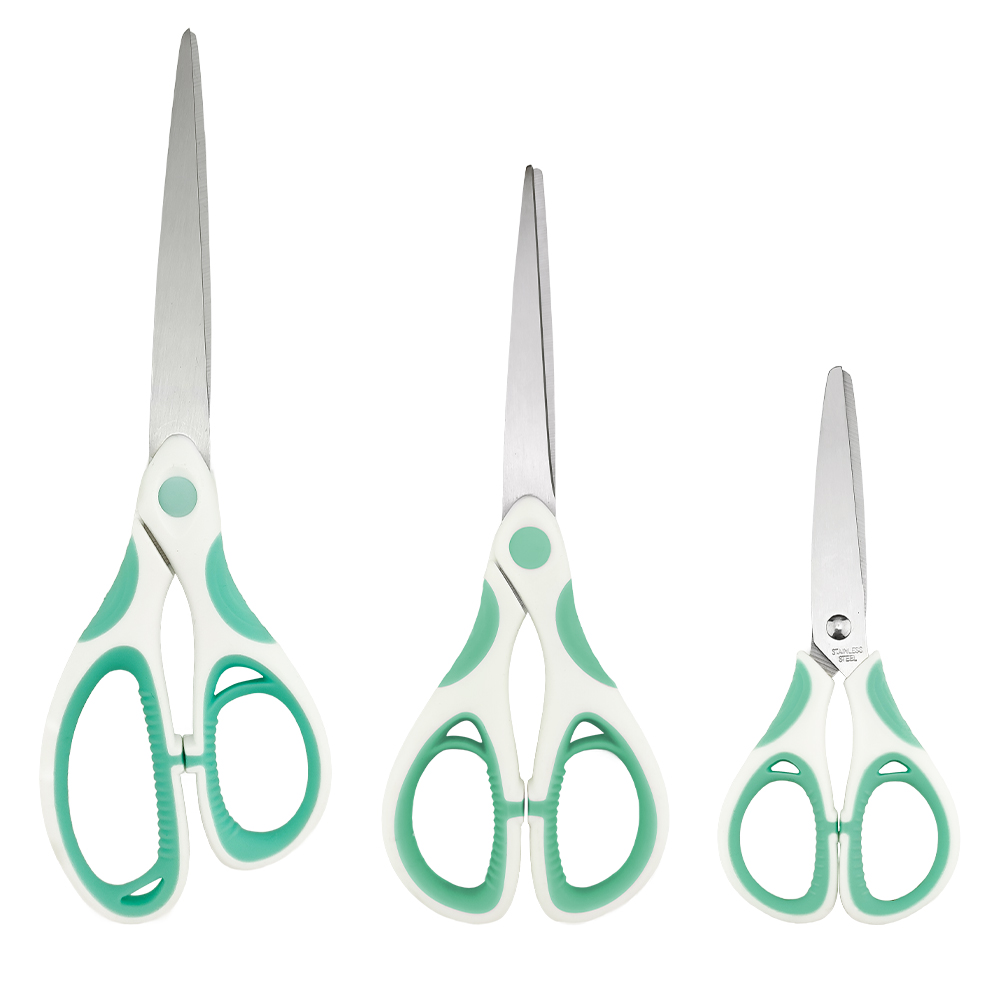
OEM stationery scissors are common products for schools, offices, homes, craft kits, and retail stationery lines. For buyers, the challenge is not simply finding a pair of scissors that cuts paper. The real task is choosing a supplier that can support the intended market, age group, packaging plan, brand requirements, and quality expectations without creating avoidable safety or consistency problems.
The original product description highlights several useful points: stationery scissors may be used in schools, offices, and homes; stainless steel blades are valued for durability and sharpness; ergonomic handles and soft-touch grips can improve comfort; and child safe versions often use rounded tips and protective features. These are good starting points, but B2B sourcing requires a more structured review before placing an OEM order.
Key Takeaways
- Define the end user first: student, office worker, crafter, household user, or retail stationery buyer.
- Ask the supplier to confirm blade material, handle material, edge performance, safety design, and packaging options in writing.
- For children’s scissors, review rounded tips, grip size, blade exposure, labeling, and any applicable market requirements.
- Request samples and compare cutting performance, comfort, finish, and batch consistency before confirming production.
- Avoid relying only on appearance; supplier communication, quality control process, and documentation matter in OEM sourcing.
What OEM Stationery Scissors Usually Need to Deliver
Stationery scissors are everyday tools, so small design decisions affect user satisfaction. A school scissor should feel safe and manageable for repeated classroom use. An office scissor should handle documents, envelopes, light packaging, and general desk tasks. A retail stationery product may need attractive colors and packaging, but it still has to cut cleanly and feel dependable in the hand.
In OEM projects, the buyer usually wants some level of customization, such as color selection, handle style, packaging, logo placement, or product assortment. Before discussing branding, confirm the functional basics: blade length, handle size, left-hand or right-hand suitability if required, opening and closing smoothness, tip shape, and the type of materials used. If stainless steel blades are offered, ask the supplier to specify the exact grade rather than assuming it from a general description.
Choosing a Stationery Scissors Manufacturer
A good stationery scissors manufacturer should be able to explain how its products are made, inspected, packed, and shipped. Buyers should ask direct questions instead of accepting broad claims such as “high quality” or “safe for children.” Useful questions include: What materials are used for the blade and handle? What customization is available? Can the supplier provide pre-production samples? How is sharpness checked? How are rounded tips inspected? What packaging formats are available? What information is needed to prepare artwork?
Communication is also part of supplier evaluation. A reliable OEM partner should respond clearly, identify possible trade-offs, and avoid promising specifications that have not been confirmed. For example, if a buyer needs a product for a school channel, the supplier should be willing to discuss age suitability, labeling, safety design, and packaging durability. If a buyer needs a private-label retail item, the supplier should clarify color matching, logo position, carton marking, and sample approval steps.
Comparison Checklist for OEM Buyers
| Selection Point | What to Check | Questions to Ask the Supplier |
|---|---|---|
| Blade material | Durability, sharpness, corrosion resistance, finish | What stainless steel grade is used, and can it be documented? |
| Handle design | Grip comfort, size, shape, and control | Are ergonomic handles or soft-touch grips available for this model? |
| Child safety | Rounded tips, blade exposure, protective design | How are child safe features verified during inspection? |
| Cutting performance | Clean cutting on paper and common stationery materials | Can samples be tested before order confirmation? |
| Customization | Color, logo, packaging, assortment options | What files, color references, and approvals are required? |
| Quality control | Consistency between samples and production | What inspection points are used before shipment? |
Safety Guidance for Child Safe Stationery Scissors
Child safe stationery scissors require careful product definition. Rounded tips are an important visible feature because they reduce the risk associated with pointed ends. Protective design elements may also help young users handle the scissors with more confidence. However, buyers should not assume that a rounded tip alone makes a product suitable for every age group or market.
For school and children’s retail channels, ask the supplier which age range the model is intended for and what warnings or labeling are recommended. Check whether the handles fit the expected hand size and whether the blades open smoothly without feeling loose. Teachers and parents often prefer scissors that are easy to control, not overly sharp for the intended user, and comfortable during repeated paper-cutting tasks. If the product will be sold in a regulated market, buyers should confirm applicable requirements with their compliance team and ask the supplier what supporting documents can be provided.
Ergonomics, Grip, and Daily Use
Ergonomic handles and soft-touch grips can make stationery scissors more comfortable, especially for students, office staff, and craft users who cut for longer periods. Comfort is not only about softness. The handle opening, finger rest, balance, and blade action all influence whether the tool feels stable. A scissor that looks attractive in packaging may still disappoint users if the grip is too small, the edges feel rough, or the cutting action is stiff.
When reviewing samples, test them with realistic tasks. Cut standard paper, folded paper, labels, envelopes, and light craft materials if those uses match the intended market. Check whether the scissors track straight, whether the blade tips align, and whether the handles cause pressure points. If the OEM product is intended for children, include adult supervision in testing and focus on safe control rather than maximum sharpness.
OEM Customization and Packaging Considerations
OEM stationery scissors often compete on shelf presentation, but packaging should also protect the product and communicate essential information. Common buyer decisions may include blister cards, paper cards, display boxes, multi-piece school packs, or private-label sets. Before finalizing artwork, confirm product dimensions, barcode placement, warning text, country-of-origin marking, and carton requirements with the supplier.
Buyers should also plan how approvals will work. A practical process includes confirming a specification sheet, reviewing physical samples, approving packaging artwork, and agreeing on inspection criteria before production. If color matching matters, provide a clear reference rather than a general color name. If a logo will be printed or applied to the product or package, request a sample that shows the actual placement and scale.
How to Evaluate Samples Before Ordering
- Inspect the blade finish for burrs, stains, gaps, or uneven alignment.
- Open and close the scissors several times to check smoothness and stability.
- Cut different paper weights to judge clean cutting and tip performance.
- Hold the handle for several minutes to identify pressure points or slipping.
- Review packaging strength, print clarity, and product fit inside the package.
- Record any differences between the sample and the written specification.
Sample review should be documented. Photos, written notes, and agreed tolerances help prevent misunderstanding later. If the first sample is not acceptable, ask whether the issue is a design limitation, a sample defect, or a change that can be improved in production.
Practical FAQ
What does OEM mean for stationery scissors?
OEM usually means the supplier produces scissors according to a buyer’s requested design, branding, packaging, or specification. The exact scope should be agreed before ordering.
Are stainless steel blades always the best choice?
Stainless steel is commonly valued for durability and sharpness, but buyers should ask for the exact material grade and confirm whether it matches the target market and price position.
What should buyers check for child safe scissors?
Check rounded tips, grip size, blade exposure, smooth operation, labeling, and the supplier’s quality control process. Also confirm applicable market requirements independently.
How can I compare two stationery scissors suppliers?
Compare sample quality, response clarity, customization options, inspection process, packaging support, and the supplier’s ability to answer technical questions in writing.
Should I approve production from photos only?
For OEM scissors, physical samples are strongly recommended. Photos can show appearance, but they cannot fully confirm cutting feel, comfort, alignment, or packaging strength.
For B2B buyers, the best OEM stationery scissors are not chosen by appearance alone. A stronger sourcing decision comes from matching the product to the user, asking precise supplier questions, testing real samples, and documenting expectations before production begins.
