




Corn Steamer Manufacturing: What Buyers Should Know Before Sourcing
Corn steamers, corn cookers, and corn-serving accessories may look simple, but sourcing them well requires more than choosing a shape from a catalog. For wholesalers, importers, kitchenware brands, and promotional product buyers, the real work is understanding how the product is designed, produced, inspected, packaged, and supported by the supplier. The original article described corn cookware manufacturing as a blend of practical design and consumer convenience. This guide expands that idea into a clear B2B sourcing framework for buyers evaluating corn steamers, corn trays, corn holders, and related kitchen accessories.
Key Takeaways
- Start with the product use case: home cooking, outdoor dining, food service, retail gifting, or promotional sales.
- Ask suppliers for material, heat-resistance, packaging, and quality-control details instead of assuming specifications.
- Compare factories and trading suppliers by communication quality, sample handling, documentation, and after-sales process.
- For OEM or private-label orders, confirm tooling, branding, artwork, carton requirements, and lead-time assumptions in writing.
Understanding the Corn Steamer and Corn Cooker Category
The term “corn steamer” can refer to several products. Some buyers mean a cooking vessel or microwave-friendly cooker designed to heat corn evenly. Others use the term more broadly for corn preparation and serving items, such as trays, holders, tongs, or seasoning tools used at barbecues and family meals. Before contacting a supplier, define the exact product type and intended channel.
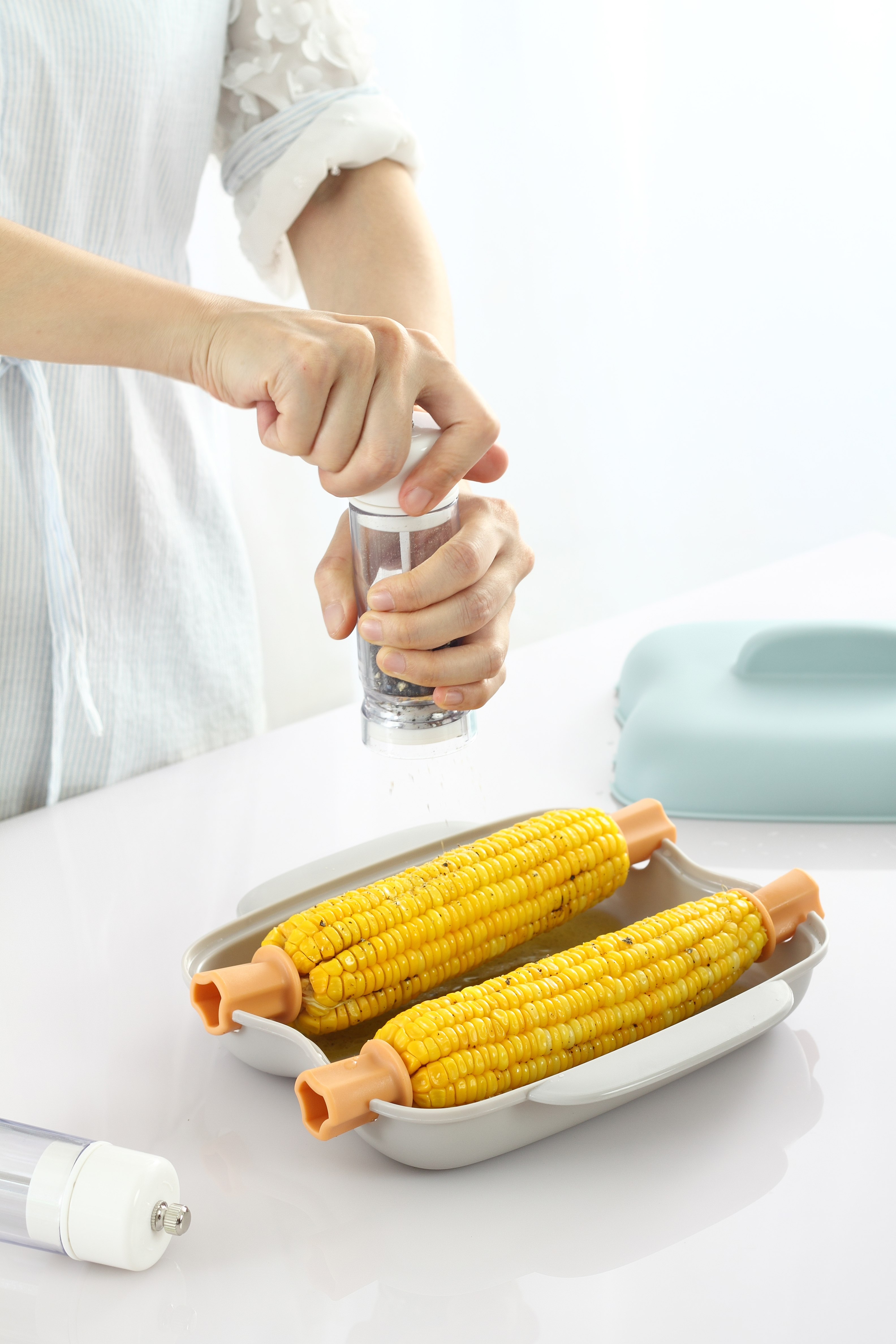
A home-use product should be easy to handle, easy to clean, and suitable for the buyer’s target market expectations. A commercial or food-service product may need stronger durability and larger capacity. A retail set may focus on presentation, packaging, and accessory combination. The original product description mentioned a corn set with a tray that holds two corn cobs, soft-grip corn holders for comfortable handling, and a pepper grinder for seasoning. Those details are useful because they show how corn products are often sold not as a single item, but as a practical serving solution.
How Corn Steamer Manufacturing Typically Starts
Manufacturing begins with a design brief. The supplier needs to know the product category, approximate size, intended use, target price level, packaging style, and whether private labeling is required. For a cooking product, buyers should ask which materials are proposed and whether those materials are suitable for the intended temperature and food-contact use in the target market. For serving accessories, the key questions may involve grip comfort, stability, surface finish, and ease of cleaning.
The original article noted that corn cooker production often involves selecting heat-resistant plastics and metals, as well as attention to assembly precision. Buyers should treat this as a topic for verification. Ask the supplier what materials are used, whether any components are assembled manually, how parts are joined, and what routine checks are performed during production. If the product includes moving parts, handles, inserts, or accessory components, request a sample before confirming an order.
Supplier Types: Factory, Trading Company, or OEM Partner
A corn cooker supplier may be a direct manufacturer, a trading company, or a sourcing partner working with multiple factories. None of these options is automatically better; the right choice depends on order complexity and the buyer’s internal resources.
| Supplier Option | Best For | Questions to Ask |
|---|---|---|
| Direct factory | Custom molds, repeat orders, tighter production discussion | Do you make this item in-house? Which processes are outsourced? |
| Trading company | Mixed kitchenware orders, smaller assortments, multiple product categories | Which factory produces the item? How do you manage quality inspections? |
| OEM or private-label partner | Brand-specific packaging, logo application, set combinations | What branding methods are available? Are tooling or artwork fees required? |
| Wholesale supplier | Standard products, faster catalog selection, retail-ready purchasing | What stock or standard models are available? Can packaging be adjusted? |
Product Design Points Buyers Should Review
For corn cookware and serving accessories, small details strongly affect customer satisfaction. A tray that does not hold the corn securely can lead to messy dining. A holder that is uncomfortable can feel unsafe when corn is hot. A seasoning tool that looks attractive but is difficult to refill may create complaints after purchase.
- Capacity: Confirm whether the item is designed for one cob, two cobs, or a larger quantity.
- Handling: Check grip shape, hand comfort, and whether the product feels stable during normal use.
- Cleaning: Ask whether the design has grooves, gaps, or assembled areas where food residue may collect.
- Storage: Consider whether the product nests, stacks, or fits standard retail packaging.
- Set logic: If selling a set, make sure each accessory has a clear role and does not add cost without value.
Quality Control and Compliance Questions
Buyers should not assume a corn steamer or accessory automatically meets the requirements of every market. Food-contact rules, labeling requirements, warning statements, and retailer testing expectations vary by destination and channel. Instead of relying on general claims, ask for documentation that matches your specific product and sales region.
Useful supplier questions include: What material is used for each component? Can you provide current food-contact documentation if required? What are the inspection steps before shipment? How are defects classified? Can the product be checked for appearance, fit, function, packaging accuracy, and carton strength? If the supplier cannot answer these questions clearly, the buyer should slow down and request more evidence before placing a larger order.
Packaging, Retail Presentation, and Private Labeling
Packaging is especially important for corn-serving sets because customers need to understand the contents quickly. A set that includes a two-cob tray, soft-grip holders, and a pepper grinder should show the components clearly and explain their use without exaggerated language. For e-commerce, packaging may need to protect the product during parcel delivery. For retail shelves, the package may need strong visual clarity, barcode placement, and multilingual information depending on the market.
When discussing private label or OEM packaging, provide the supplier with artwork files, brand color requirements, carton marks, and any retailer packing instructions. Ask whether the supplier can provide a packaging dieline, pre-production sample, and photo confirmation before mass packing. These steps reduce the risk of errors that are expensive to fix after shipment.
How to Compare Corn Steamer Suppliers
A good sourcing decision balances product quality, communication, commercial terms, and risk control. Price matters, but the lowest quote may not include the same material, packaging, inspection level, or service. Request quotations in a comparable format so each supplier is responding to the same requirements.
- Ask for clear product photos or videos, not only catalog images.
- Request samples and compare them against your written specification.
- Confirm what is included in the quotation: product, packaging, branding, accessories, and export cartons.
- Clarify lead time, payment terms, shipment terms, and how production delays are communicated.
- Define how defective goods or packaging mistakes will be handled.
Practical FAQ
What is the difference between a corn steamer and a corn serving set?
A corn steamer or cooker is usually designed for heating or cooking corn. A serving set is used after cooking and may include trays, holders, seasoning tools, or other dining accessories.
Should I source from a factory or a wholesale supplier?
Choose a factory if you need customization, repeated production, or detailed technical discussion. Choose a wholesale supplier if you need standard products, mixed items, or simpler purchasing.
What should I confirm before ordering an OEM corn cookware product?
Confirm materials, dimensions, branding method, packaging artwork, sample approval, inspection standards, lead time, and responsibility for any tooling or setup costs.
Can I assume a corn cooker is safe for all cooking methods?
No. Always ask the supplier to confirm the intended use and limitations. Do not market a product for microwave, oven, stovetop, or dishwasher use unless the supplier provides appropriate support for that claim.
What is the most common sourcing mistake?
The most common mistake is approving an order based only on a low price or photo. Buyers should review a sample, define quality expectations, and confirm packaging and documentation before mass production.
