




Unlock Creativity with OEM Stationery Scissors
Key Takeaways
- OEM stationery scissors are usually sourced by brands, wholesalers, school suppliers, craft retailers, and promotional product buyers that need consistent design, packaging, and supply.
- Useful customization can include handle color, transparent styling, branding, packaging format, and assortment planning, but every detail should be confirmed with the supplier before ordering.
- Buyers should ask clear questions about materials, blade performance, sample approval, packaging durability, quality inspection, lead time, and export documentation.
- A good sourcing decision is based on fit for the end user, not only appearance or unit cost.
Why OEM Stationery Scissors Matter for Buyers
Stationery scissors are simple products, but they sit in a competitive category where small differences affect user experience. A pair used in a classroom, office, craft kit, bookstore display, or promotional bundle needs to cut cleanly, feel comfortable, and match the buyer's brand expectations. For B2B buyers, OEM stationery scissors are not just creative tools; they are products that must be repeatable, packable, and suitable for the intended sales channel.
The original article highlights creativity, clarity, customization, and supplier partnership. Those ideas are still useful, but sourcing teams need more practical detail. If you are evaluating custom stationery scissors, the most important question is not whether the product looks attractive. It is whether the design, packaging, quality process, and supplier communication can support your business model.
Understanding the Product and Search Intent
OEM stationery scissors generally refer to scissors produced for another company under a custom design, label, packaging plan, or brand requirement. The buyer may already have a target design, or may ask the supplier to recommend an existing model that can be adapted. Searchers looking for this topic are often trying to compare suppliers, prepare a product brief, or understand what to ask before requesting a quotation.
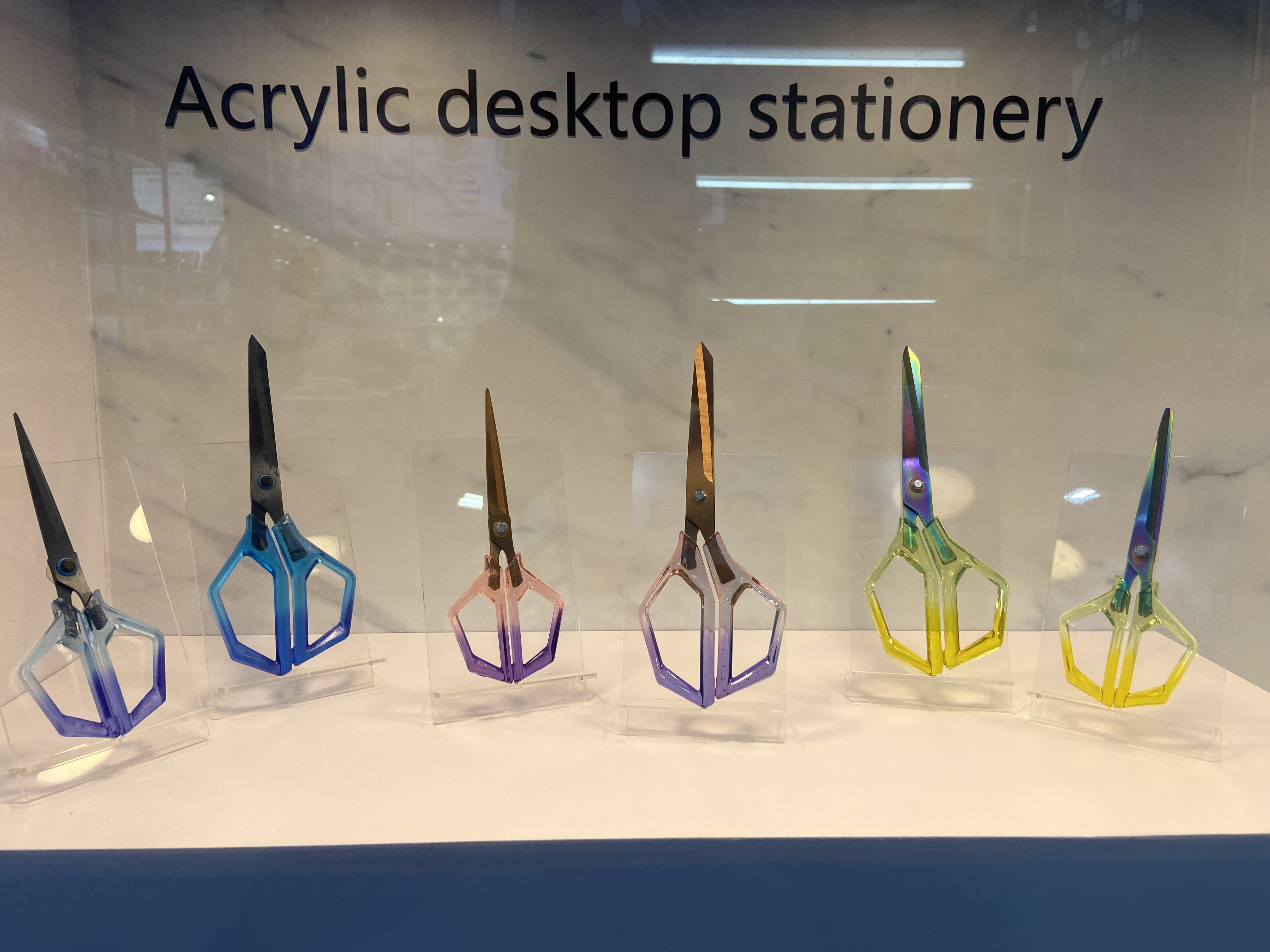
Transparent school scissors, mentioned in the source article, are one example of a visual direction. A transparent or clear handle can help the product stand out in school and stationery displays, and it may support a clean, modern look. However, buyers should not assume performance, material grade, age suitability, or compliance status from appearance alone. Those details need written confirmation from the supplier.
Customization Options to Clarify
Customization can make stationery scissors more relevant to a retail range, education program, office supply catalog, or promotional campaign. At the same time, too many changes can increase complexity. A buyer should separate essential requirements from optional preferences before approaching a supplier.
- Handle design: Ask whether existing handle shapes can be used or whether new tooling would be required.
- Color and transparency: Confirm available color options, whether transparent effects are possible, and whether color matching can be reviewed by sample.
- Branding: Ask where a logo can be placed and which method is suitable for the product and packaging.
- Packaging: Consider blister cards, paper cards, bulk packing, display boxes, or other formats depending on the sales channel.
- Assortments: If selling to schools or retailers, ask whether mixed colors or multi-piece sets can be packed consistently.
Because the source content does not provide material grades, sizes, blade specifications, or certified test results, those should not be assumed. Treat them as supplier qualification questions.
Comparison Checklist for Supplier Evaluation
| Evaluation Area | What to Check | Questions to Ask the Supplier |
|---|---|---|
| Product fit | Use case, age group, cutting task, retail positioning | Which existing models match our target user and price tier? |
| Customization | Handle color, transparent style, logo, packaging | Which changes require new tooling or extra development time? |
| Samples | Cutting feel, comfort, appearance, packaging mockup | Can we approve pre-production samples before bulk production? |
| Quality control | Consistency, blade alignment, handle finish, packing accuracy | What inspection steps are used before shipment? |
| Commercial terms | MOQ, lead time, payment terms, carton details | What are the current order requirements and timeline for this model? |
| Documentation | Export paperwork, test reports if required, product labeling | Which documents can be provided for our market and channel? |
How to Prepare a Strong OEM Inquiry
A clear inquiry helps the supplier respond with useful information. Instead of asking only for a low price, provide the intended market, sales channel, target user, preferred appearance, approximate order quantity, packaging idea, and any required documentation. If you already sell stationery products, include reference photos or a product brief so the supplier can understand your positioning.
For example, a school supply distributor may need a durable, easy-to-pack item for seasonal programs. A craft retailer may care more about color range, display appeal, and smooth cutting for paper projects. A promotional buyer may prioritize logo placement and deadline reliability. Each scenario leads to a different sourcing decision.
Quality Points Buyers Should Not Overlook
Stationery scissors are handled frequently, often by students, office workers, crafters, or home users. Quality should be reviewed from both functional and presentation perspectives. The blades should meet the expected cutting task, the handle should feel comfortable for the intended user, and the finished product should not show obvious defects. Packaging should protect the item and present it clearly.
Ask whether the supplier can provide samples from current production or make a sample using your preferred color and packaging. Review several pieces, not just one. Check opening and closing movement, blade alignment, handle edges, surface finish, printed information, barcode placement, and carton packing. If your market has specific safety or labeling requirements, confirm them with the supplier and, when necessary, with an independent compliance adviser.
Building a Reliable Supplier Relationship
The original article describes finding the right partner in craft. In B2B sourcing, partnership means responsive communication, realistic promises, consistent samples, and transparent handling of production details. A supplier should be willing to answer questions about what can be customized, what cannot, and what needs additional time or cost.
Before placing a bulk order, ask about sample approval, production confirmation, in-process checks, final inspection options, shipment packing, and how changes are documented. If you are comparing several stationery scissors suppliers, use the same checklist for each one. This makes quotations easier to compare and reduces the risk of choosing based only on price.
Practical FAQ
What are OEM stationery scissors?
They are stationery scissors produced for a buyer's brand, design, packaging, or distribution needs. The exact customization depends on the supplier's available models and production options.
Can transparent school scissors be customized?
They may be customizable in color, branding, or packaging, but buyers should confirm available options, sample timing, and whether any change affects tooling or cost.
What should I ask before requesting a quotation?
Ask about available models, customization scope, MOQ, lead time, packaging choices, sample process, inspection steps, carton packing, and required documents for your market.
Should I choose the cheapest supplier?
Not automatically. Compare total value, including product consistency, communication, packaging reliability, documentation support, and the supplier's ability to repeat approved samples in bulk production.
Do I need testing or compliance documents?
That depends on your destination market, user group, and sales channel. Ask the supplier what documents are available, and verify requirements with your importer, retailer, or compliance adviser.
Final Sourcing Advice
OEM stationery scissors can support creativity, school use, office supply programs, retail assortments, and branded promotions. The best results come from a practical brief and a supplier that communicates clearly. Focus on the end user, confirm every customization detail, approve samples carefully, and document expectations before production. That approach helps turn a simple cutting tool into a dependable product for your market.
